
The new Pope is a White Sox fan.
Robert Francis Prevost, 69, was named the successor to Pope Francis on Tuesday, with the French Cardinal Dominique Mamberti announcing around 1:15 p.m. Eastern time (7:15 in Rome), "Habemus Papam!" ("We have a Pope!")
White smoke emitted from a chimney at the Sistine Chapel about an hour prior, signifying the Conclave had made its decision by a two-thirds vote of the 400-some Cardinals participating. They held a vote without reaching the two-thirds majority Wednesday afternoon, leading to black smoke coming from the chimney.
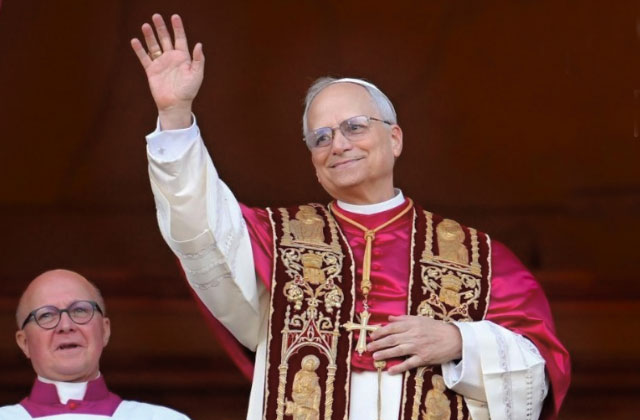
The Chicago-born Prevost, who took the papal moniker Leo XIV, is the first American pope in the near 2,000-year history of the papacy. He appeared in front of a crowd of tens of thousands Thursday on the Ioggia (outside porch) of St. Peter's Square wearing the traditional red cape of the papacy. Bells rang at St. Peter's Basilica rang as crowds cheered the 267th pope following his first Urbi et Orbi (papal blessing) to the crowd.
Speaking in Spanish and Italian, the new Pope, described by the Cardinals as a "modest man, not a prince of the Church," offered prayers for Pope Francis, who passed away on April 21, the day after Easter.
"He loves you all, and we remain all in God. We go forward," he said. "We must help one another, and build bridges and a dialogue, of people always in peace with our arms open. All of the cardinals chose me to be the successor in a united church. We walk together as St. Augustin said towards Christ. The church searches for peace, and and to help those who are in need."
He concluded his greeting by reciting the Hail Mary.
Pope Leo XIV was most recently the Cardinal Bishop of the Diocese of Albano in Rome, and Deacon of the Chapel of Santa Monica degli Agostiniani, immediately south of the Vatican.
While he was born on the south side of Chicago in 1995 and earned a Bachelor's degree in mathematics from Villanova University in suburban Philadelphia in 1977, he spent much of his time as a priest outside the United States, in Peru and later in Rome.