

Prosecutors, lawyer for media say coverage alone doesn’t warrant it
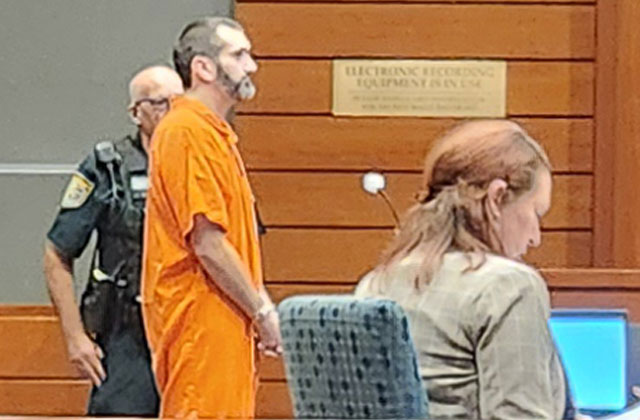
While his defense team isn’t asking for his upcoming trial to be closed to the public and media, lawyers for Stephan Sterns are asking that pretrial hearings be closed to stem the tide of worldwide media coverage of his case.
The state has charged Sterns, 38, with the murder of Kissimmee 13-year-old Madeline Soto, although the trial in question is for the 60 charges levied against him for sexual assault and possession of child pornography, which investigators say depicted acts against Soto.
Sterns was present in court Thursday for just the second time in 13 months of the case, but court officials refused to allow photography in Judge Keith Carstens’ courtroom during the hearing.
One of the motions filed by Sterns' defense asks for upcoming pre-trial hearings — not the trial itself — be closed to the public and media, based on the extensive worldwide coverage of the case, including on social media and the internet.
Defense attorney Alesha Smith Thursday called the move, “An attempt to protect Mr. Sterns’ rights,” while also arguing that access to pre-trial hearings is not bound by laws.
Smith showed a presentation of the numerous Reddit, Twitter/X, Facebook and Youtube channels and pages dedicated to the case, and the abundant Google searches and public records requests regarding it.
Legal precedent to close a courtroom like this would have to prove there is no alternative to “prevent the dangers of this publicity, other than a change of venue.” But Smith said this was the case, making it nearly impossible for Sterns to get a fair trial.
While another lawyer representing a number of Orlando market TV stations and news outlets (while it did seek legal advice, the News-Gazette is not among them) filed a counter-motion to keep the hearings open, Smith said the case law attorney Minch Minchin cited about it is from the early 1980s.
“(Current internet-age media) didn’t exist when laws and cases in the matter were heard,” Smith said. “The court can control proceedings and decorum, or else the court becomes a stage. The public gets access to things it normally wouldn’t have access to. Those (who could be on the jury) could be receiving opinions against Sterns.”
But Minchin maintained this case is “not an unprecedented situation,” citing cases that featured cases against Casey Anthony and George Zimmerman were similarly covered.
“The defense just assumes the coverage is prejudicial,” he said. “There is no evidence that there is no alternative other than a change in venue.”
The counter-motion file notes the Supreme Court, “Has noted repeatedly that a trial is a public event … What transpires in the courtroom is public property,” and that, rather than a hindrance to fair trial rights, heightened public attention only increases the need for the “appearance of fairness so essential to public confidence in the system.”
In arguing against the motion, State Attorney Homicide Prosecutor William Jay said the number of potential jurors who actually view any news, in his experience, is “shockingly small.”
“There is no proof the media has been critical to influencing anything,” he said.
Among the many motions filed by Sterns’ defense, some involve ruling on the constitutionality of the death penalty as a defense, and the admissibility of evidence found on and through his phone; the defense said detectives’ may have acquired the phone without Sterns’ consent. Those would likely be heard during the hearings in question.
During the hearing, Judge Carstens did acknowledge “A tremendous amount of news coverage” of the case, and that it was his presumption, before hearing arguments, that all pre-trial hearings are open as a default. He did not rule on the motion Thursday; he said by law he has 10 business days to return a decision and would do so.