

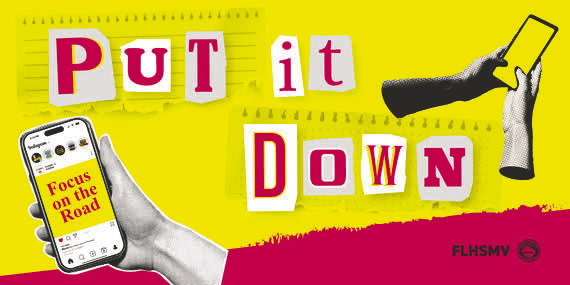
With the Florida Department of Highway Safety and Motor Vehicles (FLHSMV), the Florida Highway Patrol (FHP)and its public safety partners reminding drivers to stay distraction-free while behind the wheel during National Distracted Driving Awareness Month, in April, AAA notes how some smartphone apps may help make drivers safer.
Preliminary 2024 data from FHP shows nearly 300 people died and over 2,200 people suffered serious bodily injuries due to a distracted driver in Florida that year. FHP defines a distraction as, “Anything that takes your hands off the wheel, your eyes off the road, or your mind off the act of driving.”
While you may not think you are a distracted driver because you do not engage in more well-known distractions such as texting, you may be engaging in other distractions that put you, your passengers and others on the roadway at risk, officials say. This could include listening to loud music, eating, engaging with passengers or adjusting the radio or navigation systems.
“Just like the driver, passengers have a duty and responsibility to cultivate a safe driving environment,” an FHP release on the subject said. “As a passenger, refrain from distracting behaviors such as, but not limited to, playing music loudly, shouting or talking loudly or unnecessarily directing the driver’s attention to objects or events taking place outside the vehicle.
“If the driver is engaging in distraction, you as a passenger have the right to speak up and inform them their actions are dangerous. To remedy, offer to send a text, help with navigation or make needed in-vehicle adjustments for them.”
This is where AAA’s research comes in. Its AAA Foundation for Traffic Safety studied the effectiveness of ‘usage-based insurance’ (UBI) programs, used by insurance companies to offer customers incentives for safe driving. Drivers download a smartphone app which monitors their driving habits, and tracks risky driving behaviors like hard braking, speeding and distracted driving. Feedback and safe driving tips are then provided to improve the driver’s score.
After a series of drives, a final UBI score is issued, which determines whether the customer is eligible to save on their auto insurance. After completing a number of drives over six weeks to establish a baseline score, through the next 12 weeks drivers received weekly text messages with a safe driving tip, designed to motivate and help them change a risky driving behavior. Participants were then monitored for an additional six weeks without any feedback or incentives to determine if their habits persisted. The study found that, generally, participants continued to drive more safely, indicating that they did so without receiving feedback or incentives.
“When you engage in a distraction while behind the wheel, even briefly, you put your life and others’ on the roadway in danger,” said FLHSMV Executive Director Dave Kerner. “No matter how important a text, call or other distraction may be, it can wait. Your primary focus should be ensuring you and your passengers arrive to your destination safely.”
“Steering clear from distractions while driving prevents tragedies,” said FHP Colonel Gary Howze II. “It is your duty and responsibility to stay alert and operate your vehicle in a vigilant manner each time you drive. Distractions can wait, but the safety of you and those around you cannot.”
Keep in mind that, In Florida, texting and driving is a primary offense under Florida’s Wireless Communications While Driving Law, however, due to the nature of distracted driving as an offense, citations can fall under various other statutes including Careless Driving, Failure to Maintain a Single Lane and Aggressive Careless Driving.
“As a result, distracted driving is often underreported. Even still, a crash occurs every 44 seconds in Florida, and one in seven of those crashes is the result of a distracted driver,” FHP said.