

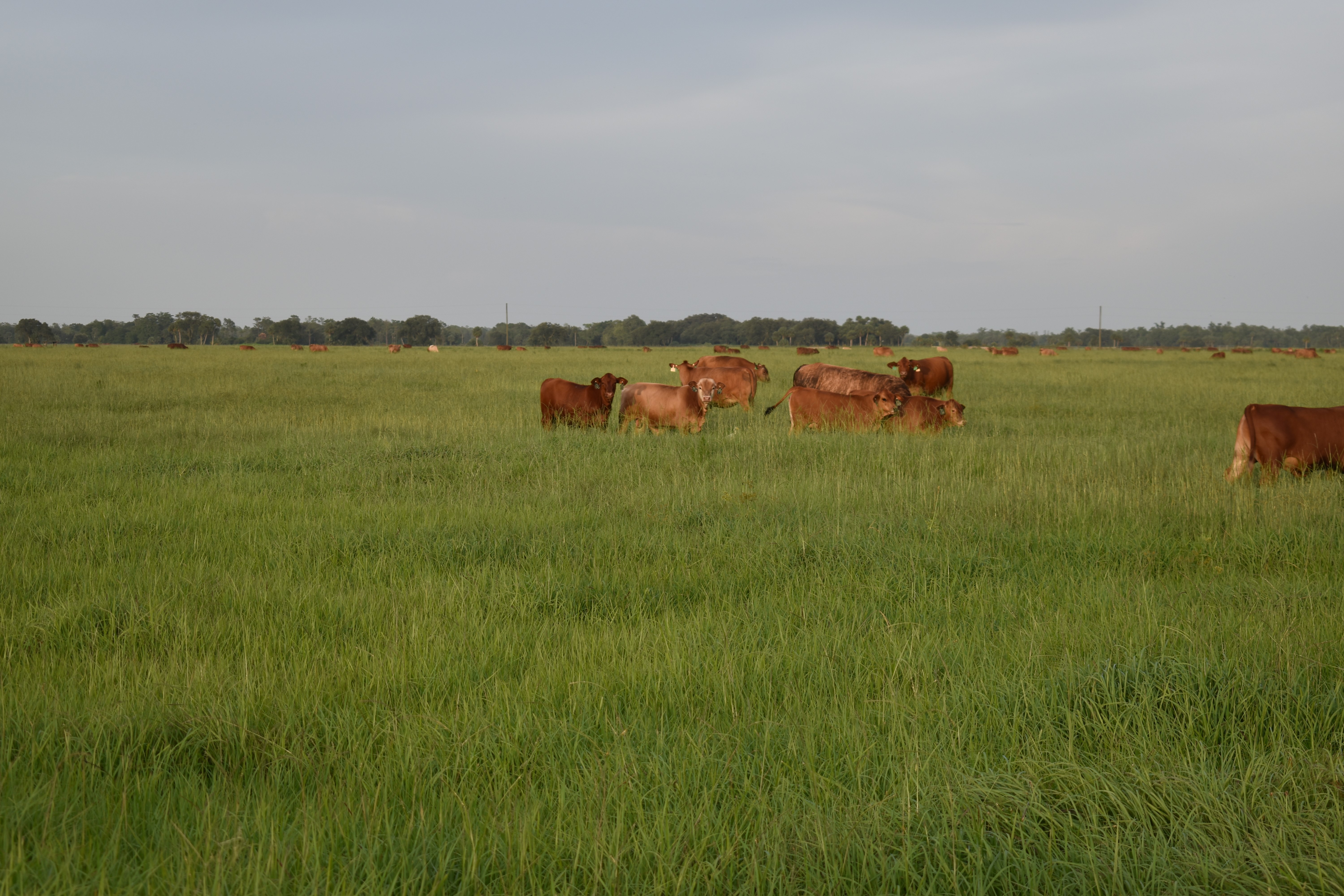
Warm-season perennial grasses cover most of the state of Florida, and can be a wonderful tool in a livestock production system. They can be used for grazing and hay production. Hay production allows the surplus of forage to be harvested and stored to help increase a producer’s profit.
Most of the warmseason forages that allow Florida to be such a productive state originated from Africa and South America. These forages were brought to the United States on shipping containers and plant collection trips. Since the mid-1950s, these warmseason perennial grasses have been implemented into many operations and covers most of Florida’s pastures. These perennial grasses go dormant during the winter months from November through February and grow back every year. In contrast, annual forages complete their growth in one growing season and must be reestablished. When preparing a seed bed every year to replant annuals, this can cause erosion, runoff, and leaching.
Planting annuals can be hard on the environment and can cost a producer’s time and money to reestablish yearly. Unlike annuals, perennial grasses go dormant during the winter months and can endure freezing temperatures by maintaining a meristem and stored energy at or below soil level. The plant’s meristem, rhizomes, stolons, stems, bases, and crowns all promote growth. Without leaves during the winter to complete photosynthesis the perennial plant must use the stored energy in rhizomes, roots, and stolons. During those winter month’s annuals can be planted to extend forage production and provide livestock with higher nutritional value forage. Annuals can also be used during pasture renovation before planting warmseason perennial grasses.
Producers across the state can benefit from the use of both annuals and warmseason perennial grasses to complement each other and their operation. Perennial grasses can also benefit the Environment by providing soil organic matter and converting carbon from the atmosphere.
For more information, contact Brittany Justesen, UF/IFAS Extension Osceola County at 321- 697-3000 or visit http://sfyl.ifas.ufl.edu/osceola.