


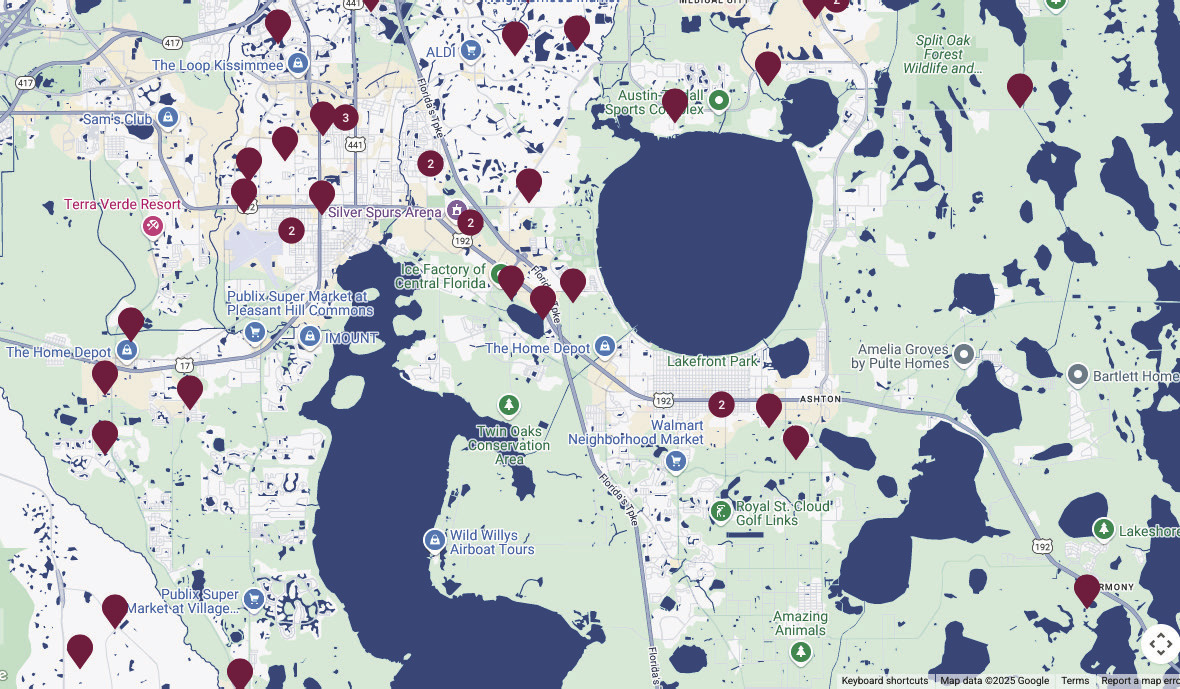
Summer can be a hungry time for many Osceola County families. With nearly 18,000 students qualifying for free or reduced lunch during the school year, local children often lose a reliable meal source once classes end. Thanks to the Summer BreakSpot Program from the U.S. Department of Agriculture, free meals will be available again this summer at local schools, libraries, and parks.
“We invite our community members to come in and join us for a meal,” said Michelle Reed, Field Supervisor for Osceola School Nutrition Services. “It’s at no cost. I need no IDs. I don’t need to know what school they go to … it doesn’t have to be their home school. It doesn’t even have to be an Osceola County resident. It is open to anybody under the age of 18.”
Residents can find a feeding site near them by going to https://www.summerbreakspot.org/find-location. Each site lists the schedule, meals offered, and contact information.
While Osceola School District personnel staff school feeding sites, nine other sites are sponsored by Second Harvest Food Bank, which has operated its Summer Food Service Program for the last 18 years.
“Second Harvest Food Bank is projected to invest approximately $90,000 in supporting its Summer Food Service Program in Osceola County this summer,” said Nancy Brumbaugh, Chief Food Service Officer at Second Harvest Food Bank of Central Florida.
Staff and volunteers will serve meals at those sites, which are hosted by community partners, such as YMCA.
Meals are to be consumed at the feeding site. While the program offered meal pickup during the pandemic, that was an adaptation because of the quarantine directive, Reed said.
“Covid feeding was different than the way that this program is intended to work. But this is the regular summer feeding protocol, and a lot of it’s just for safety,” she said. “I can’t guarantee that that kid or that parent is not going to put their milk in a backpack for hours and then decide at 7:00 at night that the meal that they picked up at 10:30 is what they want to eat. If you eat it on campus, you know that it just came out of a cooler at 35 degrees. So it was consumed safely. It was handled safely. They’re getting the best quality food that they can.”
According to Reed, the program served over 110,000 meals in June 2024. “It is a great program that really helps bridge the gap,” she said.