

UF-IFAS Osceola Extension Services
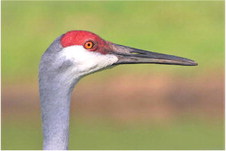
Of all the larger birds in Florida, the Sandhill Crane may be the one most seen. Some of these giant birds seem to have gotten used to people being around. It is not so unusual to hear the loud bugling sound they make, or to even see a few of the birds strutting around in yards. They will even come to bird feeders. But in spite of all this, the Sandhill Crane is still considered a Threatened Species in Florida.
The bird is native to a combination of both wetlands and grasslands, nesting in wet areas while foraging in dry places. Nests are built in freshwater marshes or shallow ponds, and look like a large platform of sticks above the water level. The purpose is to discourage predators such as hogs, coyotes, and raccoons. But the young are also subject to attack by eagles, hawks, otters, and alligators. Nearby open uplands are necessary for a crane to forage for food. There, they eat seeds, berries, grain, green plant shoots, insects, earthworms, rodents, lizards, and snakes. They also find crayfish and small invertebrates.
These striking birds can reach a height of four feet with a wing span of six feet. They marry for life and begin a family at age 2. If a nest is disturbed by humans, cranes may abandon it. Young ones are grown up after 10 months and usually leave the family by the time they are a year old.
So why are the cranes threatened? An obvious reason is that undeveloped lands are disappearing and being replaced by subdivisions. This leaves less space for the birds to forage and nest. As these changes take place, life becomes more perilous for the cranes. Roaming dogs and cats are a hazard, and cars and other vehicles take out a few, since the cranes generally walk around on the ground all day while raising young. Lawn pesticides are poisonous, especially to the young birds. Retention ponds are generally deeper than the waters that cranes nest in, so they don’t help anything.
So what should we do to help the cranes out? The answer does not involve attracting them to bird feeders of any kind, since this food is detrimental to their health. They will not get the nutrients that they need. For this reason, bird feeders should be placed high enough to prevent cranes from reaching into them. It is even illegal to feed them.
But there are a few things people can do. First, stay at least 100 yards away from nests, and observe with binoculars. Next, slow down on the road and watch for cranes crossing or flying low while taking off. As always, it is important to keep pets contained or on a leash while outdoors.
Another thing to remember concerns your own protection. Attracting cranes into a yard can even be detrimental to your property when the cranes lose their fear of humans. Here are a few examples of what has happened to crane feeders in our own area. Screens can quickly get pecked up and full of holes, as the birds come to visit. They will also peck on windows. Lawns can get quite a few holes in them from cranes pecking on the ground. An exposed irrigation line looks like a snake to a crane, and is subject to getting pecked up if spotted by the bird. More than once, a resident found a geyser shooting up in the front yard after a crane had pulled up and broken the line.
In any case, it is easy enough not to feed the birds in order to keep them healthy and to preserve your property. But be sure to take your binoculars and telephoto lenses to the parks to enjoy the beauty of the Sandhill Crane.