

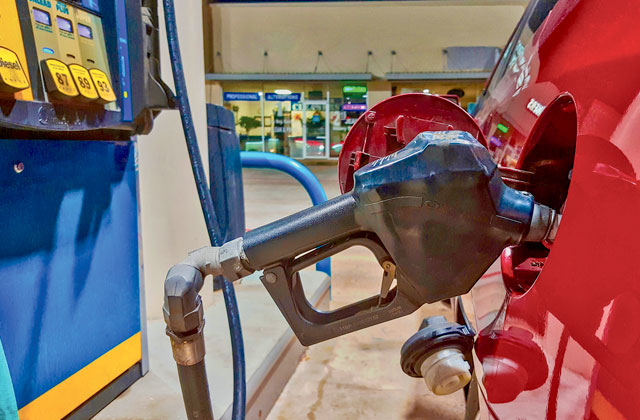
Gas prices have retreated a bit since the end of last week, falling from the $4.50s range to the $4.40s.
It's a trend, right?
Nnnnnnope.
The decline isn’t expected to continue as oil prices surged early Monday after President Donald Trump called Iran’s response to a U.S. proposal to end the war “totally unacceptable," the News Service of Florida reported.
Florida’s average pump price dipped to $4.40 per gallon Monday, a 7 cent decline from the prior Monday. The price has fallen for four consecutive days. But even with the recent decline, the state average is $1.50 more than on Feb. 28, when the U.S. and Israel began military strikes on Iran. Prices rose about 35 cents per gallon in Florida over the course of April, depending on where in the state you are, according to AAA's data.
Figures for the Orlando area, which includes Osceola County, shows local prices up 4 cents per gallon over the last week, and up 34 cents over the last month. (This time last year, we were paying $2.95/gallon, just about what it was before the conflict in Iran began.)
Locally, diesel is down 70 cents from April 3, when it reached an all-time high of $5.866 per gallon locally.
While Trump didn’t disclose details of Iran’s response, following his statement oil prices were up 4 percent on U.S. West Texas Intermediate by Monday morning and 2 percent on the international benchmark Brent crude.
Diesel dipped 12 cents a gallon in Florida over the week to $5.28 — up from $3.81 at the end of February, according to the U.S. Energy Administration.
Patrick De Haan of Gasbuddy.com noted Monday morning that there has been talk about waiving the 18.4 cent/gallon federal tax on gasoline, a figure that hasn't increased since 1993.
"If the fed tax on gasoline is waived, it would cost the government $2.1 billion in lost revenue per month," De Haan said.