

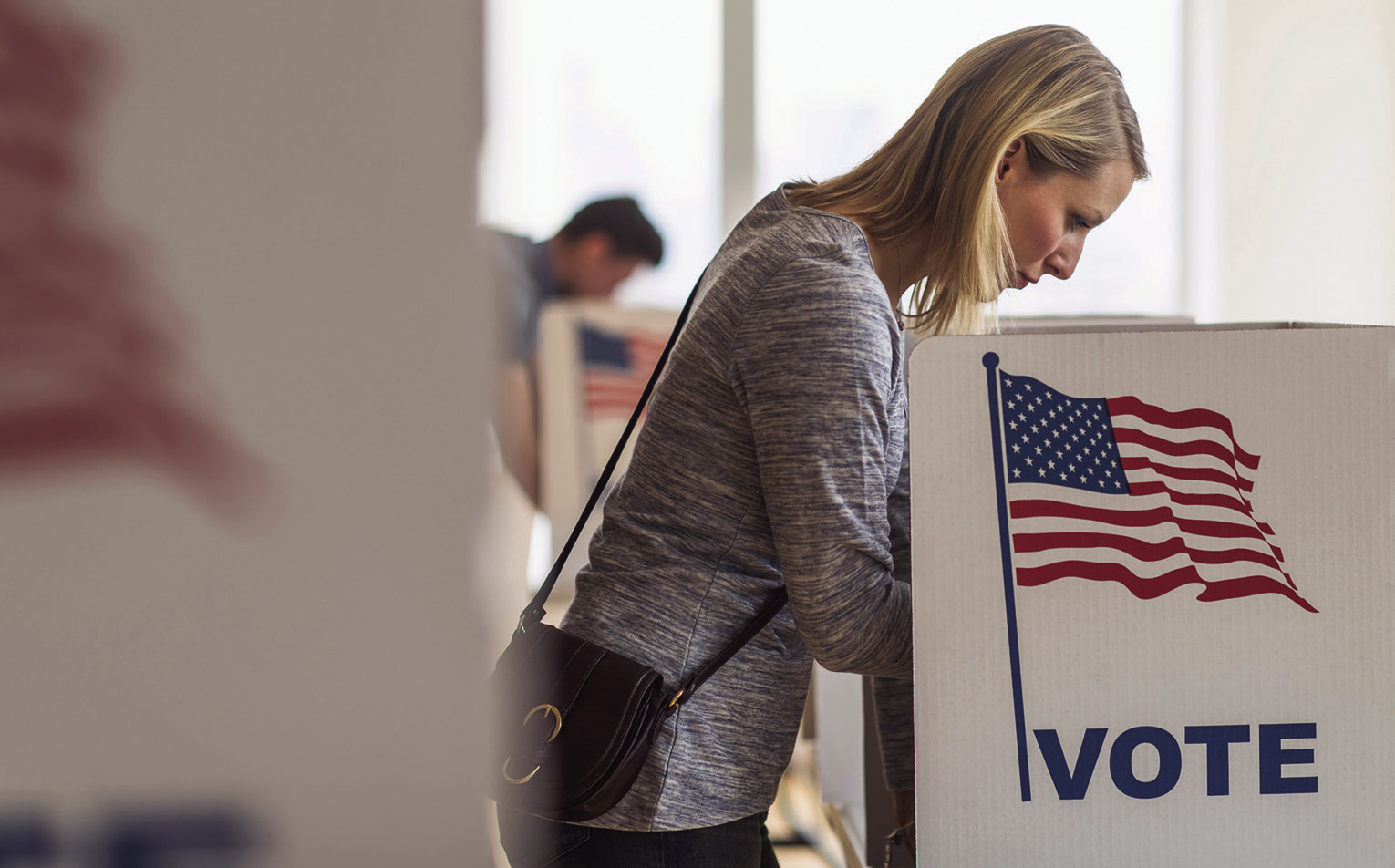
My Democrat uncle was elected sheriff in an otherwise completely Republican county in Indiana in the 1950s. As a youngster, I saw how he refused to evict a young man and his wife and young child from their rented house when the man’s employer had gone bankrupt and he could not pay the rent. Instead, the sheriff helped the man find work. That is what the public saw, and how he continued to be re-elected in a county that was overwhelmingly run by the other party.
That might be why I cannot remember voting a straight party ticket after I could vote. Our system is supposed to work by voting for the best person, not for one of the two powerseeking political clubs. But our Party system, not ordained by the Constitution, tries to reduce our choices and simplify life into us-against-them tribalism. Both party platforms contain a few positions that many citizens would question or find wrong. And when you actually talk offrecord with many candidates, it is obvious that they also do not agree 100 percent with their party platform.
Yet political parties, at both state and national levels, are a critical source of money for political advertising. When a person decides to run for the lowest of local political positions, it is now critical to declare a party affiliation and gain party support. That makes it awkward to make any judgment independent from party leaders. The party, not the candidate, establishes the policies. Fail to be a party loyalist and your candidacy can soon be over. But we do see situations where not every politician toes the party line. Therefore, it is my duty as an informed citizen to carefully examine the fuller positions of each candidate. That often reveals the best candidate for one position might be a Republican while the best candidate for another position might be a Democrat.
But there is a risk for intelligent candidates who do not always vote party line. Their party sees their independent thinking and when the next primary elections come around, unidentified PACs—from the person’s Party—call voters promoting a newcomer who will toe the party line. Parties are bullies.
In U.S. history, there have been third party or independent candidates. But their chances of succeeding are low because a large number of voting Americans vote party line without thinking. We only have to look as the success of one recent New York candidate who won a seat in Congress only to be exposed on so many falsehoods that he was recently evicted from Congress. How did he get elected in the first place? Many folks voted their party line without really checking him out. I suspect it may come down to know-nothings voting their Party line.
Splitting your ticket indicates you have closely examined the candidates and you are voting for persons who will listen to all sides of an issue and will do the right thing.
And some questions have more than two answers, so third party or independent candidates can provide important alternatives. Republican Mickey Edwards suggested additional actions in his book “The Parties Versus the People: How to Turn Republicans and Democrats into Americans.” This included removing parties’ control of access to the ballot and control over redistricting, limiting political spending and especially PACs, establishing nonpartisan congressional leadership and committees, and eliminating partisan seating.
If we spend the time to closely examine the candidates on the upcoming ballot, we might very well end up putting up signs in our front yard for unique candidates from both parties. But when you see a yard full of candidate signs all from the same Party, you can suspect that less thought has gone into the selection.
John Schrock is a former teacher and newspaper columnist, and appears on Kansas public radio.