


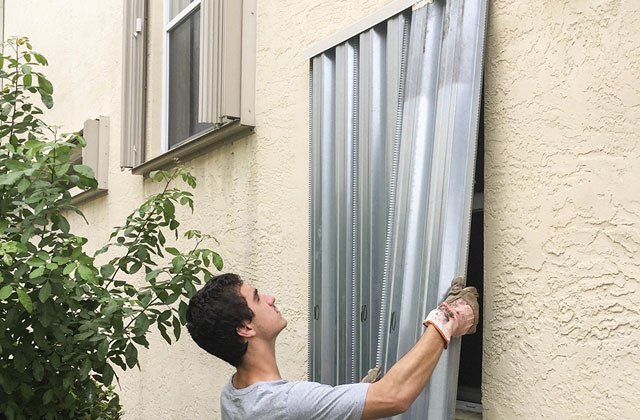
With hurricane season beginning Monday, now is the time to strengthen your property to reduce potential damage and check your insurance coverage to make sure you are financially prepared if a storm damages your property, says the American Property Casualty Insurance Association (APCIA).
“The forecast for below-average activity, while welcome news, does not mean residents in hurricane-prone states can let their guard down,” says Michael Richmond-Crum, senior director of personal lines at APCIA. “It only takes one storm to devastate communities and cause billions of dollars in damage, so it is critical to be prepared for the worst-case scenario.”
The following steps are low-cost ways homeowners can strengthen their property for hurricane season:
Check around your home or business and trim back any nearby branches or trees, especially ones that hang over or close to your home.
Inspect the roof and repair any loose or damaged shingles.
Secure loose gutters and seal gaps and cracks around windows and doors to prevent water intrusion.
Installing a wind-rated garage door or hurricane shutters and upgrading the home to the Insurance Institute for Business & Home Safety’s Fortified construction standard are additional measures to consider.
“As part of your hurricane season prep, take time to review your insurance policy and verify with your insurer or agent that your coverage is keeping pace with these cost increases,” added Richmond-Crum. “You want to make sure you have enough insurance cover to rebuild or repair your home.”
When reviewing your insurance policy, the APCIA says to consider:
Carefully review your policy limits and deductible (i.e., the amount you will pay out of pocket if you have a claim), and make adjustments, if needed, to ensure you have an appropriate amount of coverage to recover if your property is damaged. Raising your deductible is one way to potentially lower your premium, but make sure you can afford the higher deductible and understand that any damage that falls below the deductible will be out of pocket.
Ask if your policy pays replacement cost or actual cash value. Replacement cost is the amount necessary to rebuild your home with materials of like kind and quality (up to the policy limits), and actual cash value takes depreciation into account when the policy is paid.
Evaluate your need for flood insurance. Flood damage is typically not covered under a standard homeowners policy. Flood insurance is available as a separate policy through the National Flood Insurance Program or the private market.
Consider adding key additional coverages, such as automatic inflation guard, extended replacement cost, and building code/ordinance coverage.
Make a home inventory using your cell phone to take pictures and videos of your home and your home’s contents.
Gather copies of your home, auto, and flood insurance policies and keep them in a safe, accessible place.
Save your insurer’s contact info to your phone’s contacts so you can easily and quickly start the claims process if your home is damaged.
If your insurer has an app available, download it on to your phone for easy access to policy information.