

As you pour your morning coffee, do you think about its journey to your cup?
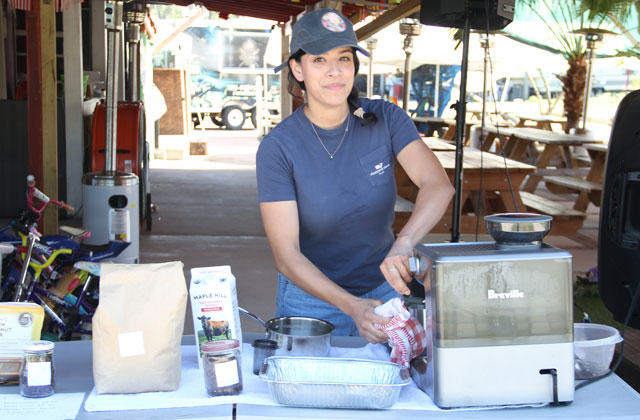
Nadya Ali does, and that’s one of the things that drove her to start Mango Bird Coffee Project, an ethical, sustainable Puerto Rican coffee brand in the Kissimmee area.
The multi-billion dollar worldwide coffee industry is robust and has notoriously been plagued by the exploitation of people and resources. Puerto Rican coffee is no exception. Since its start in the 1700s, deforestation for mono-cropped coffee farms has threatened habitats, creating loss of biodiversity.
It’s an issue that concerns Ali. Her in-depth doctoral studies focused on endangered black-footed ferrets and their destroyed habitats.
“They basically were wiped out because of agriculture,” she said. “My interest in sustainable agriculture and working with the Earth came from realizing that this is the devastation that agriculture can cause.”
In addition, farming industries such as coffee have a dark history of using enslaved or underpaid people to work their fields. Ali’s solution is to ensure a transparent supply chain for her product. This starts with harvesting from Puerto Rican coffee farms that prioritize preservation of the island’s natural ecosystems and employ workers that are paid fairly according to the U.S. guidelines for minimum wage.
She said she does this “by going to the farms myself, seeing the coffee pickers, knowing how much they make and how many hours a day they’re working, and then sourcing the beans, knowing the farmers.” She then roasts the beans herself in California-based roasting facilities to create a socially responsible blend, now introduced to the Kissimmee area.
The timing couldn’t be better. The recent 12th Annual State of Osceola County in November 2024 presented “Passport to Sustainability” as a theme for local eco-friendly practices.
“Osceola County is always striving to make life better and more sustainable for all of our residents,” said Osceola County Commission Chair Cheryl Grieb. “Overall we have implemented numerous initiatives aimed at conservation and sustainability.”
The efforts range from protecting the local ecosystem to fostering eco-tourism to encouraging environmentally-conscious businesses such as Mango Bird Coffee Project.
Ali looks to tap into Osceola’s population as customers. Census figures show 56.8% of the county demographic is Hispanic, over half of which originate from Puerto Rico.
“I hope to be able to connect with that community and have them drink their own coffee that’s actually 100% pure Puerto Rican coffee beans and not like blended coffee from other countries. This is real Puerto Rican coffee.”
It’s also a way to honor her heritage. The maternal side of Ali’s family is Puerto Rican and has roots in the island’s once-booming coffee history, where her grandfather grew up. “He used to pick coffee as a kid from other farms that were around him. He grew up around coffee, so there is some nostalgia in that time.”
Coffee can vary based on where it is grown, how it is processed, and how it is roasted. Ali's blend is a combination of Arabica beans from two different Puerto Rican farms in the Adjuntas region.
“Dark chocolate-covered cherry is the flavor that I really get from it,” she said.
The brand uses compostable packaging and is named for the mango bird of the Puerto Rican mountains. The simple logo is a reproduction of a Yaboa bird petroglyph by the Taino people, historically enslaved workers of the island’s past colonial coffee plantations.
“We’re trying to improve the industry in the small ways that we can.”