

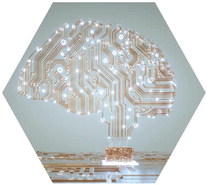
The existence of artificial intelligence (AI) is expansive and profound. It helps diagnose diseases and personalize treatments. It also predicts financial trends and detects fraud. But no matter how much we think we understand, AI leads humanity into an unpredictable future. Where AI will take us as a species is currently on the fence. Change is constant in our world, and when things change, opinions and debates are inevitable. The one thing we can’t debate is the incalculableness of our future. Will AI change us for better or worse?
“AI is a means to enhance us. It’s a tool with endless possibilities, possibilities we can’t comprehend. It’s the solutions to questions and issues that don’t even exist,” said Nicholas Ishak, CEO of Kissimmee’s Nia Riddle House, a small company working towards intelligence enhancement through AI.
Here’s some “pros” of AI:
Enhances efficiency and productivity
AI introduces automation and intelligent decision-making that optimizes processes across various sectors, handling tasks with precision and speed minimizes errors and boosts productivity. These systems utilize real-time data and sophisticated algorithms to make split-second decisions, preventing accidents and saving lives.
Helps solve complex problems and accelerates research AI swiftly analyzes massive datasets and identifies patterns to tackle complex issues. From climate change modeling to advanced medical diagnosis, it provides insights that drive informed decision-making. AI helps researchers by providing advantages to process and interpret data at unprecedented speeds. It has expedited breakthroughs in drug discovery, genomics, astrophysics, and many more scientific studies. This acceleration of research is advancing our comprehension of the universe at an alarming rate.
Aids in creativity
AI assists artists and creators by generating ideas, designs, or compositions based on existing data. It collaborates between human creativity and machine-generated or reinforcement suggestions that lead to innovative and unique outcomes. AI can help progress one’s craft and increase the outputs from creatives.
Reduces operational costs — AI operates around the clock without fatigue. It ensures service availability. It is particularly valuable for customer support, data analysis, and other functions that demand constant attention. AI streamlines workflows to reduce the need for extensive manual labor. It enhances efficiency and lowers operational expenses to make business more costeffective. Today, AI tools can easily allow one person to operate a company formidable against its competition.
As for the “cons”:
Replaces human workers
A notable concern is the potential for job displacement — a phenomenon wherein AI executes tasks traditionally done by human workers. The transition holds profound implications, as the efficiency and precision of machines encroach upon roles previously fulfilled by human hands.
Misuse of data
In a world where machines increasingly capture our actions, preferences, and interactions, the sheer volume of data amassed is staggering. AI-driven systems meticulously track and analyze every digital footprint, from our online activities and shopping choices to our medical histories and social interactions. The comprehensive profiling raises questions about the boundaries of consent and security.
Being biased and lacking emotion
AI’s decision-making processes are susceptible to biases in the training data. It leads to discriminatory outcomes, perpetuating existing prejudices and inequalities within the systems that AI influences. This means one could train and reinforce outputs designed to do things atrocious, like harm to human life. AI is accompanied by an intrinsic deficiency: the inability to replicate the nuanced emotional intelligence that humans effortlessly possess. Emotional intelligence is a uniquely human trait that governs empathy, understanding, and navigating our choices in many cases. Lacking no emotions and needed to be trained or reinforced Used for illegal things The rapid integration of AI systems presents security risks. The malicious can exploit vulnerabilities in these intelligent systems to gain unauthorized access, manipulate data, and orchestrate cyber-attacks or other harmful activities. Navigating the interplay of AI’s pros and cons underscores the complex terrain humanity traverses. We do not have to imagine the possibility that the world of technology will one day become a vast playground where anyone can frolic. AI already holds endless possibilities and undiscovered frontiers accessible at the fingertips of even our children.
There is no fighting AI. It is already here, and understanding how one can be harmed and helped by it, is quickly becoming a requirement for using technology most of us use frequently.
Sylmaria Glynda Miano is a published author on a number of topics, including futuristic and paranormal themes.