

Weather Channel says Kissimmee hit 100 Tuesday
Here's your list of "broken record" items for the day. Ready?
The heat's not going anywhere.
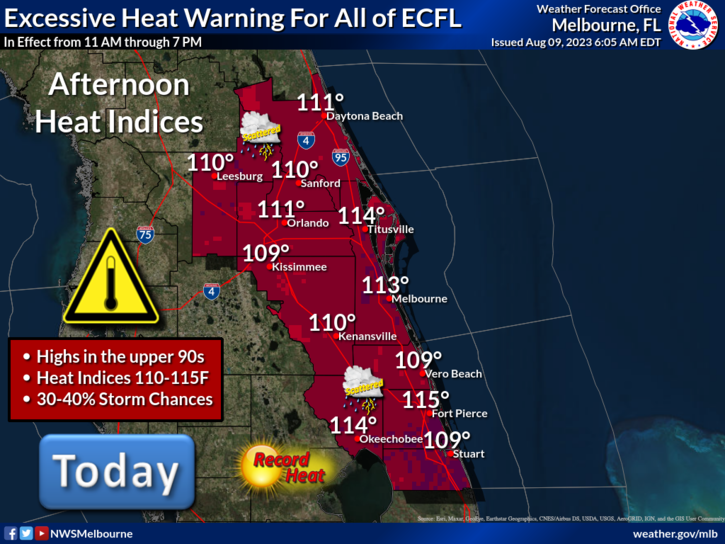
There's a heat advisory in effect for our area that was upgraded to an excessive heat warning by the National Weather Service in Melbourne at 10 a.m. Wednesday.
Daytime highs have been reaching into the upper 90s — the official Orlando recording station for Tuesday hit 98 degrees, and a Kissimmee reporting station used by The Weather Channel reached 100 Tuesday, both record highs for the day. The forecast doesn't change through the early part of next week: high temperatures of 96-98, with low temperatures barely getting under 80, creating constant warm, steamy air around us. And, the afternoon thunderstorms that often cool us down just aren't firing up — there's just a 30 percent chance of that rain daily through the end of the week.
It's all part of a dome of high pressure entrenched over the northern Gulf Coast near Texas that's keeping the entire southern portion of the country, from El Paso to Miami and points in between, on full broil. It's what's resulted in heat indexes routinely of 110, as high as 115, prompting the National Weather Service to issue the excessive heat warning.
"Afternoon temperatures will reach the mid to upper 90s and combined with high humidity will produce life threatening heat index values today. An Excessive Heat Warning is in effect across all of east central Florida for peak heat index values of 113 to 117," a notice from the NWS reads. "Take extra precautions if you work or spend time outside. If outside in this dangerous heat, stay hydrated and take frequent breaks out of the sun and preferably in an air conditioned environment. NEVER leave children or pets in a vehicle unattended for ANY length of time."
Kissimmee Utility Authority announced the utility Tuesday recorded an all-time usage peak of 439.2 megawatts at 5:12 p.m. Monday, the utility recorded a system peak load of 435.7 megawatts, shattering the previous record of 416.2 set on July 13, 2022. KUA offered up the following energy-saving tips that require little or no expense and can help to reduce summertime energy costs and keep your power bill from soaring like the thermometer:
- Set the thermostat on the highest comfortable setting (KUA recommends 78-80 degrees). Raising the temperature just two degrees can reduce cooling costs by as much as 5%.
- Change or clean air conditioner filters monthly. Dirty filters can increase operating costs by 20 percent.
- Use ceiling and portable fans to keep air moving. Fans only use about as much energy as a light bulb — but turn them off in empty rooms. Fans cool people, not rooms.
- Close blinds, drapes and shades during the hottest part of the day. This keeps the sun’s rays from heating the house.