

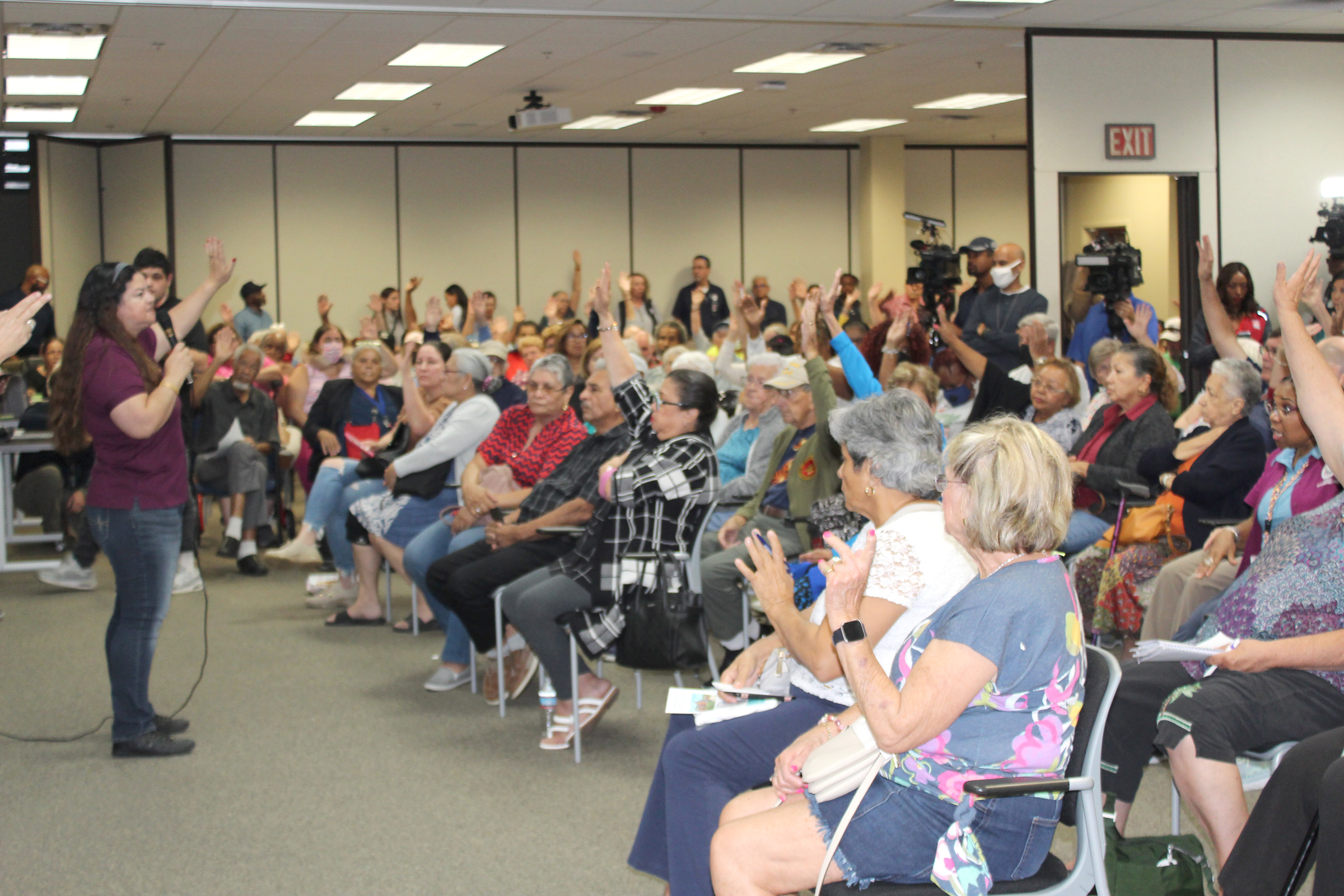

On the same day that Osceola County lifted the mandatory evacuation order for Good Samaritan Village due to the incredible flooding from Hurricane Ian’s 15 inches of rain, County Commissioner Peggy Choudhry helped gather representatives from the county, FEMA, a non-profit legal service and others to help village residents.
Their situations run the gamut. Some still have relatively damage-free homes on higher ground, away from the Shingle Creek flooding, and now have power and water service back. Some are flooded out of their homes, which will not be rebuilt, and are looking for help navigating their next steps.
“I wanted to bring in as many agencies to help these residents fill as many needs at one time as I could,” Choudhry said at Monday’s meeting.
But representatives from one group were not present — Good Samaritan management.
It left residents seeking answers.
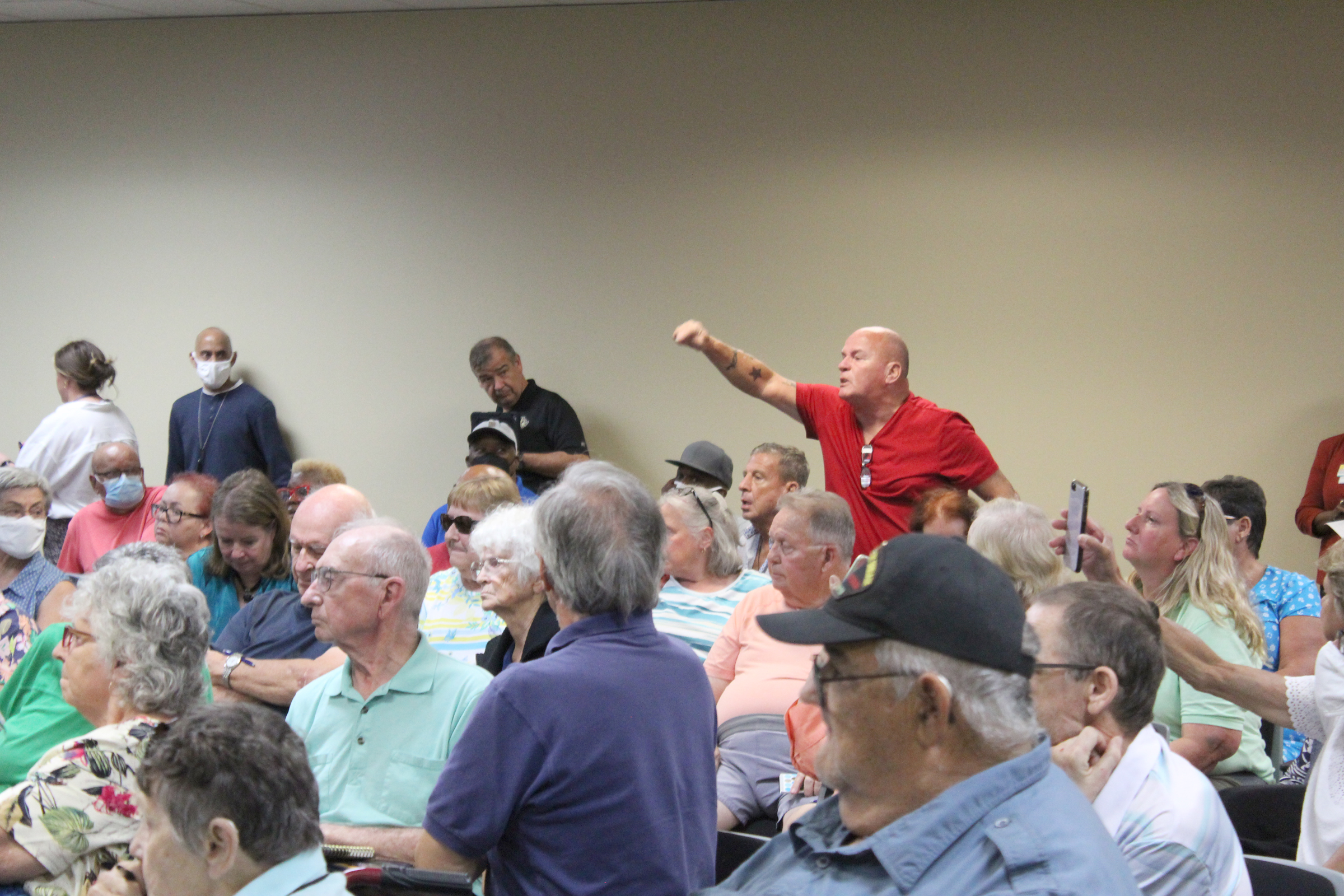
Some residents demanded answers, getting heated as those representing agencies spoke.
“The county realized there wasn’t such great communication coming, unfortunately, from Good Samaritan, and things were being said that aren’t true,” Choudhry told the assembled crowd of hundreds — a size that surprised those who put on Monday’s meeting. “The county, for three weeks, has been talking about Good Samaritan. Our (emergency management) team has been working hard to bring the resources needed. We want to make sure that the residents are being heard.”
She said solutions to hold Good Samaritan responsible, and talk of eminent domain — where Osceola County could purchase the most flood-prone land, a solution for down the line as the county has to find the way to accomplish it — have been discussed.
“Nothing is off the table,” she said. “We’re continuing seeing what we can legally do.”
Osceola County Emergency Operations Director Bill Litton confirmed that Toho Water Authority said water coming into homes is safe, but residents who are returning should avoid any standing sewer water.
The FEMA and Community Legal Services representatives stayed late into the night, helping residents who qualify for assistance get registered. Jeff Harvey from the legal team said most of its help would fall into three categories: short-term relief applications, a longer-term solution of a lawsuit where residents would be listed as plaintiffs (although not specifically a class-action lawsuit), and referrals to agencies for other needs.
Harvey noted some residents’ concerns that management asked them to sign documents in order to receive the security deposits back — at the cost of those residents giving up rights to litigate or sue later.
“I don’t want to give specific information to people, as some rent and some own mobile on rented lots,” he said. “But, do not sign anything. You are signing away rights.”
The News-Gazette spoke with a few residents; they shared information while asking not to use their names. One resident said communication from Good Samaritan was coming in the form of phone calls with recorded messages and emails. She showed a recent email that listed parts of the area management said would not be rebuilt, including the apartment she lived in with her 85-year-old mother on dialysis. It listed a lease termination date effective Dec. 1.
She had also recently purchased a fixer-upper mobile home in another part of the village, which also received water damage.
“But I’m still listed as an assisted-living resident in the apartment. We’re in the part where we’ve lost our home. They’ve still done nothing to personally check on their residents,” she said, noting she’d only lived there for about a year and didn’t experience the flooding from Hurricane Irma in 2017.
One of the gathering halls in Good Samaritan has management officials on hand to answer questions, she said, but she found out about that by chance when someone else mentioned it.
“No communication about anything when they started; this meeting was the most communication we’ve had, and the news,” she said.
Another woman said she was on a month-to-month housing agreement so she had no lease — the one form of proof of residency FEMA requires in order to receive assistance.
Choudhry said Monday would not be the end of the flow of information from the county; she said several more meetings like Monday’s would be planned.