

Friday morning, Kissimmee’s Bike Bonanza was held as part of the annual “ReThink Your Commute” initiative of biking to work if you live close enough.
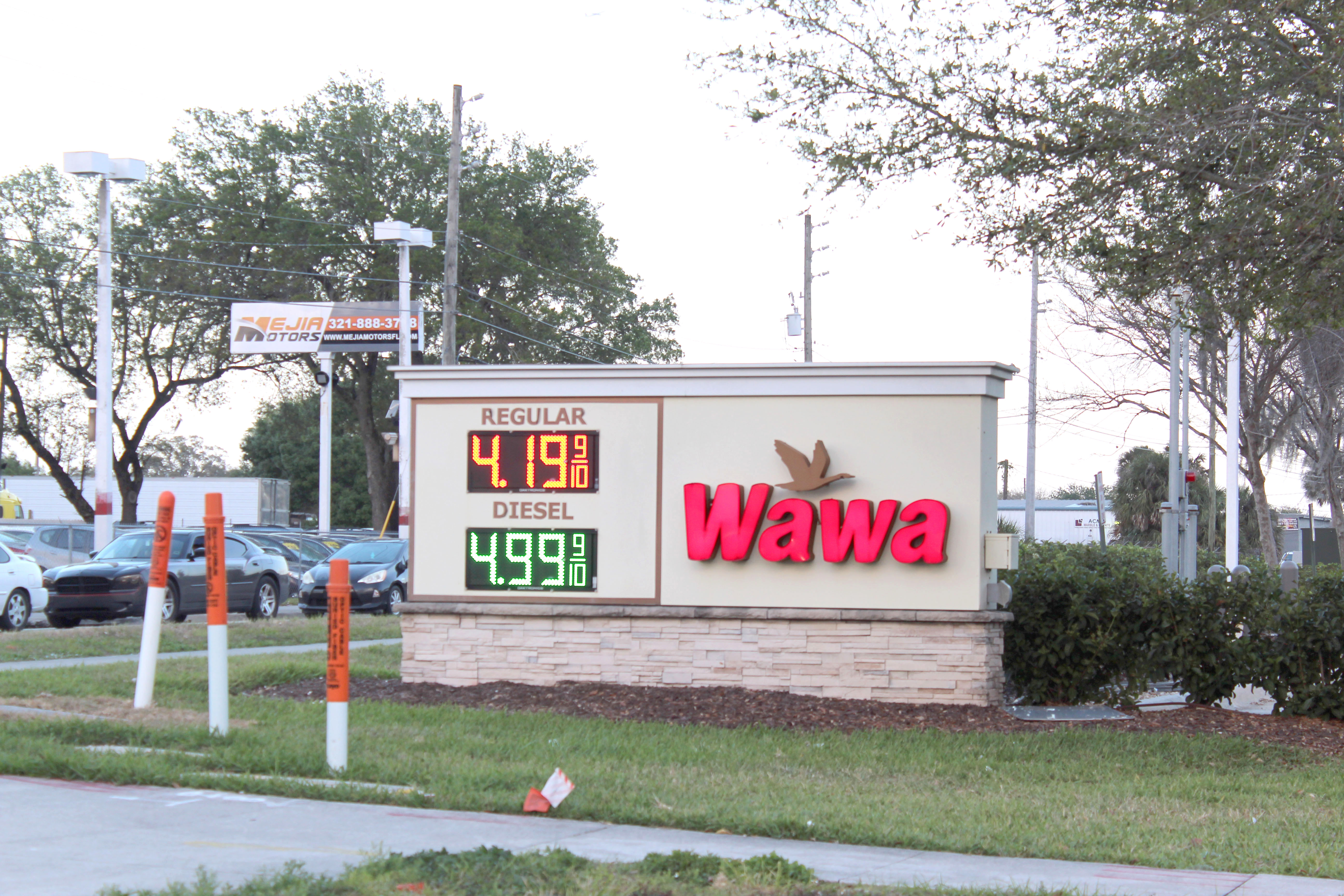
Looking at gas prices, they may have had the right idea.
On Friday, pump prices increased by 20 cents. That’s not abnormal.
On Saturday, it did it again.
Then on Monday it happened once more, blowing through barriers to a national average of $4.17 as of Tuesday, the highest in history. It’s a hike of 56 cents in a week, 72 cents in a month and $1.40 in a year.
In the fallout of the Russian invasion of Ukraine, the Associated Press reported President Joe Biden was expected Tuesday to ban Russian oil, natural gas and coal imports (about 12 percent of the world’s exports) to the U.S., which will strain an already low global stockpile. And that strains the price.
American oil and gas stockpiles have decreased while the demand for gas continues to slightly increase. That “supply and demand” exercise combined with the Ukraine invasion is putting pressure on gas prices unseen since 2008 — and now, ever.
As a response, the International Energy Agency (IEA)’s 31 member countries have committed to releasing 61.7 million barrels of oil from reserves, the largest coordinated release since IEA was founded in 1974.
It’s not going to help much, as the conditions causing inflated oil and gas prices will stay in place.
“Consumers can expect the current trend at the pump to continue as long as crude prices climb,” according to a release from AAA — the Auto Club this week.
The average price in Florida reached $4.15 per gallon Tuesday, about midpack of the 50 states, after reaching the $4 barrier Monday. Osceola County’s average was also $4.15 per gallon, the same as Orange and Seminole counties. Polk County sat at $4.10.
Here’s tips on how to ease the headache, and make sure your car is getting its best fuel economy:
Keep tires properly inflated, air filters clean, and address that “Check Engine” light as soon as it comes on;
Slow down and drive the speed limit. Fuel economy drops off significantly at speeds over 50 mph;
Avoid “jackrabbit” starts and hard acceleration, which greatly increase fuel consumption. Coast up to an oncoming red light (in might change to green without you stopping) or stop signs;
Avoid prolonged idling in general. If your car will be stopped for more than 60 seconds, shut off the engine to save fuel;
Clean out your back seat and trunk and remove roof and bike racks if not in use. It takes more fuel to accelerate a heavier car.