

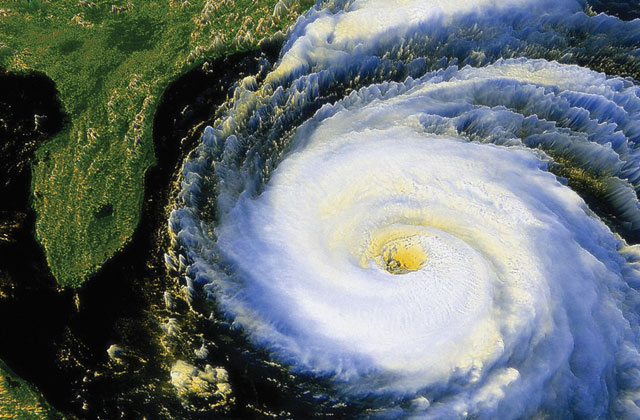
The possible arrival later this weekend of Tropical Storm Fred, with another developing system that could be on its heels 10 days from now, comes as national hurricane researchers say to hold on and stay storm ready — this storm season is expected to ramp up and be busy again.
The team at Colorado State University, widely-respected storm researchers, have reduced their forecast from earlier in the year slightly but continue to call for an above-average Atlantic hurricane season, citing the likely absence of El Niño as a primary factor.
After predicting 20 named storms earlier this year, the prediction has been lowered a bit to 18, but still calls for eight hurricanes, with four reaching “major hurricane” — a Category 3-5 storm with winds over 110 mph.
The figure includes the five storms already named in 2021, and take us through the ‘S’ storm. The National Hurricane Center does not use Q, U, X, Y or Z names. Thanks to an incredible 33 named storms last year, the National Hurricane Center blasted through the alphabet and into the Greek alphabet for the second time ever. (If that happens again, a backup list of names will be used instead of Alpha, Beta, Gamma and such.)
Sea surface temperatures averaged across the tropical Atlantic and Caribbean are now warmer than normal, just one factor considered favorable for an active 2021 Atlantic hurricane season.
The CSU group believes El Niño is extremely unlike this year.
El Niño tends to increase upper-level westerly winds across the Caribbean into the tropical Atlantic, tearing apart hurricanes as they try to form.
The team bases its forecasts on models are built on 25 to 40 years of historical hurricane seasons and evaluate conditions including Atlantic sea surface temperatures, sea level pressures, vertical wind shear levels — the change in wind direction and speed with height in the atmosphere — El Niño or warming of waters in the central and eastern tropical Pacific and other factors.
So far, the 2021 hurricane season is exhibiting characteristics similar to 1996, 2001, 2008, 2011, 2016 and 2017 — the year of destructive Hurricane Irma in our backyard and Maria in Puerto Rico and the Virgin Islands.
“2001, 2008, 2011, and 2016 had near to slightly above-average activity, while 1996 and 2017 were extremely active seasons,” said Phil Klotzbach, research scientist in the Department of Atmospheric Science and lead author of the report.
The team predicts that 2021 hurricane activity will be about 120 percent of the average season. By comparison, the raging 2020 season’s hurricane activity was about 145 percent of the average season.
As always, the researchers caution residents to take proper precautions.
“It takes only one storm near you to make this an active season,” Michael Bell, professor in the CSU Department of Atmospheric Science, said.
The Colorado State forecasters also said there is a 65 percent chance a major hurricane will strike the U.S. coastlines. In an average year that’s 52 percent. They also noted a 40 percent chance for the East Coast including Florida to be hit (up from 31) and a 43 percent chance of the Gulf Coast from the Florida Panhandle to Brownsville, Texas (up from 30) to get one. There is a 54 percent probability for at least one major hurricane to trek through the Caribbean; the average for the last century is 42 percent. Those percentages for this year are down slightly from the last report.
For a deeper look into the science of hurricane tracking and forecasting, view the latest full report at: https://tropical.colostate.edu/