

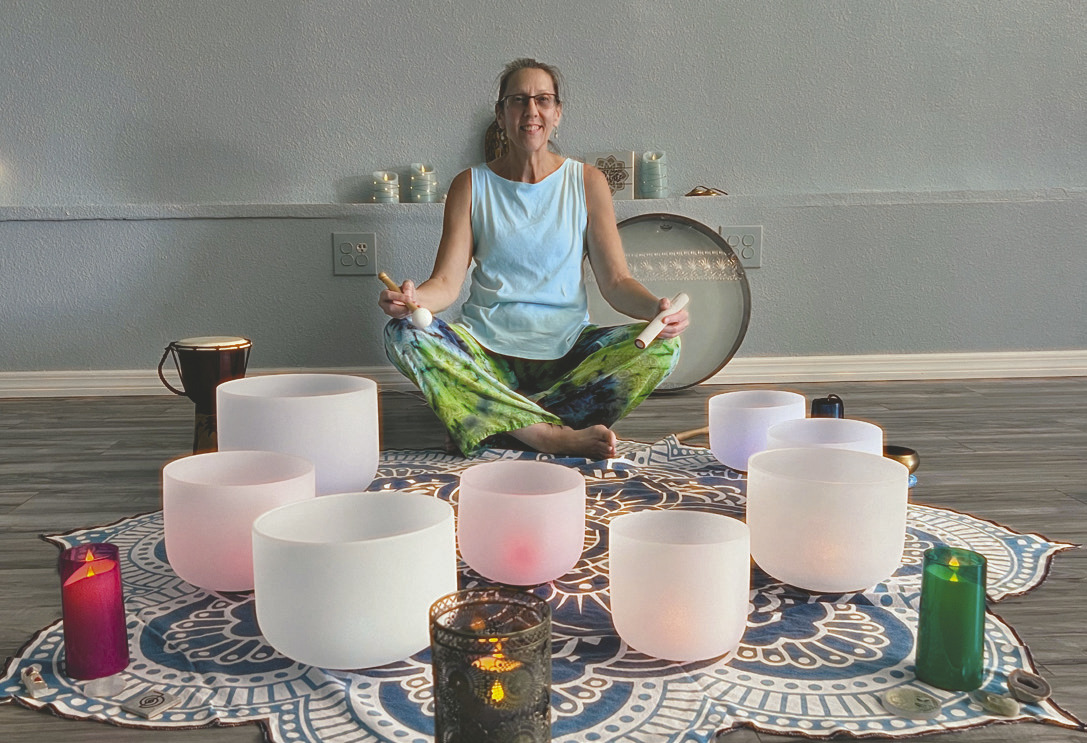
April is National Stress Awareness Month, dedicated to spreading awareness to stress, it’s causes, and how to take steps to manage it.
Stress can be caused by a multitude of factors, but it shouldn’t rule your life. That’s the sentiment of St. Cloud’s Debbie Smith and daughter Carissa Woerner, co-owners of Blue Lotus and Wellness.
“For a lot of people, what they don’t understand about stress is how, scientifically, it raises your cortisol, and over time, that elevated cortisol really wreaks havoc on your entire nervous system, endocrine system, your whole body,” Woerner said. “When we do yoga and meditation, we seek to calm everything down, just to get back to a base level.”
Stress is how the body responds to pressure or tension. The CDC says stress can cause feelings of unease, anxiety, frustration, nervousness, fearfulness, and helplessness.
According to the American Institute of Stress, there are two types of stress: the positive stress called eustress helps improve performance, such as the stress of preparing for a job interview, and negative distress comes from being overwhelmed at work and lowering productivity.
Understanding how stress affects you, as well as the difference between eustress and distress, can help turn stress into a tool for growth while minimizing its negative impact, which can help improve both well-being and overall performance.
Smith said social media, news reports, daily encounters, and happenings on the road are all things the body takes in through our five senses.
“We live in a very stressful world nowadays,” she said. “There is so much information that has to be processed.”
Smith said Ayurveda—the sister science to yoga—takes that into account when dealing with lifestyles to promote a harmonious life that allows for processing and decompressing stress.
“It’s unique in that it works individually with each person to identify their body’s constitution and put them on a diet and lifestyle practice that will help them be more in balance with nature and their own internal workings of their body,” Smith said. “More aware of what their body’s trying to tell them, the signs and symptoms, so that they can just be happier and healthier. “You can learn to live more in harmony by taking that time to process and decompress yourself so that the stress that you do deal with doesn’t start to fester in the body. Stress festering in the body is what causes disease.”
Woerner said her stress relief is working in the gym.
“I teach a lot of the yoga classes, so I like to balance it out with eight training,” Woerner said. “For me and a lot of the clients that I take on in personal training, it’s not even getting out aggression, but just getting out those feelings that maybe you don’t know how to process otherwise.”
Woerner said she also works as a nutrition counselor and has worked with clients that seek to lose weight, gain muscle, and clean up their eating habits. She said she does macro base, a macronutrient that prioritizes protein, fats, and carbs.
According to data from the American Institute of Stress, 80% of U.S. workers experience work stress because of ineffective company communications and 71% of adults with private health insurance say the cost of healthcare causes them stress, while 53% with public insurance say the same.
Woerner said they’ve gotten feedback from those revering from injuries or car accidents, and their doctors have prescribed yoga or gentle stretching.
“Over time, they’re building up that strength and mobility, and it’s alleviating back pain, knee aches, and joint aches,” Woerner said. “For most people dealing with past trauma or just maybe overwhelmed at home, there are some people that open up to us, and we have conversations about things going on in their lives,” Woerner said. “They do seek refuge to be able to talk to the community or certain people to process that.”