



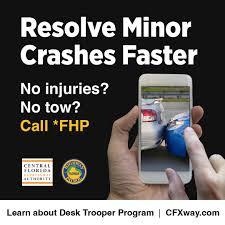
Instead of waiting, now drivers involved in minor crashes can get back on the road in minutes with the Desk Trooper Program—a partnership between the Central Florida Expressway Authority and Florida Highway Patrol.
Apply now for City of St. Cloud Citizens Academy
The application period for the City of St. Cloud Citizens Academy is now open.
Residents who live within the city limits are encouraged to apply for Citizens Academy, which runs Jan. 20 through April 21, 2026. The free program is designed to give residents a behind-the-scenes look at how the city operates and the services it provides. The class meets weekly on Tuesdays from 6-8 p.m. and provides hands-on interactive learning experiences.
To apply, go to www. stcloudfl.gov/citizensacademy and review more details, FAQs, attendance requirements and the full class schedule. Online applications must be completed by 11:59 p.m. on Nov. 30. Class size is limited. Selected applicants will be notified in December.
Osceola County cuts ribbon on more affordable housing
Osceola County and its partners celebrated the grand opening last week of Falcon Trace II, a new 354-unit affordable housing community along Poinciana Boulevard adjacent to the Poinciana SunRail station.
County, state, and private collaborators put the $117 million project together, which included over $22 million in land contribution, according to the county. Support also came from the Florida Housing Finance Corporation, Osceola County Housing Finance Agency, and programs such as SAIL, Low-Income Housing Tax Credits, and Tax-Exempt Mortgage Revenue Bonds.
Amenities include Energy Star appliances, granite countertops, a resort-style pool, playgrounds, dog park, computer lab, fitness room, and an Osceola County Sheriff’s Office annex.
The development will remain affordable for at least 50 years, providing lasting stability and opportunity for working families, the county said.
“Projects like Falcon Trace II show what’s possible when local government, private partners, and our community work together to meet the needs of working families,” said County Commission Vice Chairman Brandon Arrington, whose district 3 includes Falcon Trace II. “We don’t just cut a ribbon—we open a door to opportunity. Together, we’re making Osceola County a place where everyone can live, work, and thrive. Falcon Trace II represents an investment not only in housing, but in people and opportunity. Each new home reflects our commitment to building stronger, more inclusive communities.”
For more information on the housing complex visit falcontrace2.pmiflorida.com.
CFX, FHP pilot new remote system to clear minor crashes
Imagine you’ve just gotten into a minor fender bender on a major highway. Nobody is hurt, and there is minimal vehicle damage. You need to report it for insurance documentation—but you don’t have an hour, or more to wait for law enforcement to help file the report.
Instead of waiting, now drivers can get back on the road in minutes with the Desk Trooper Program—a partnership between the Central Florida Expressway Authority and Florida Highway Patrol.
With a busy holiday travel season looming, CFX and FHP officials hope the Desk Trooper Program can be a big part of keeping Florida roadways clear and safe, having already resolved several thousand minor crashes through the program.
The program enables troopers to respond to minor car crashes within minutes virtually through interactive technology.
Here’s how it works: drivers call *347 (*FHP) to report a crash. After a dispatcher assesses if the minor crash meets the criteria for the Desk Trooper program, and the drivers involved agree to use the program, the technology allows troopers to remotely connect to smartphones of those involved and immediately create a crash assessment documentation, all from a secure, remote interface.
Crashes are cleared in an average of 24 minutes, and critical resources are freed up for law enforcement to respond to higher priority. It aims to decrease roadside risk, help clear incidents more efficiently, minimize traffic disruption and improve highway safety for all motorists.
