

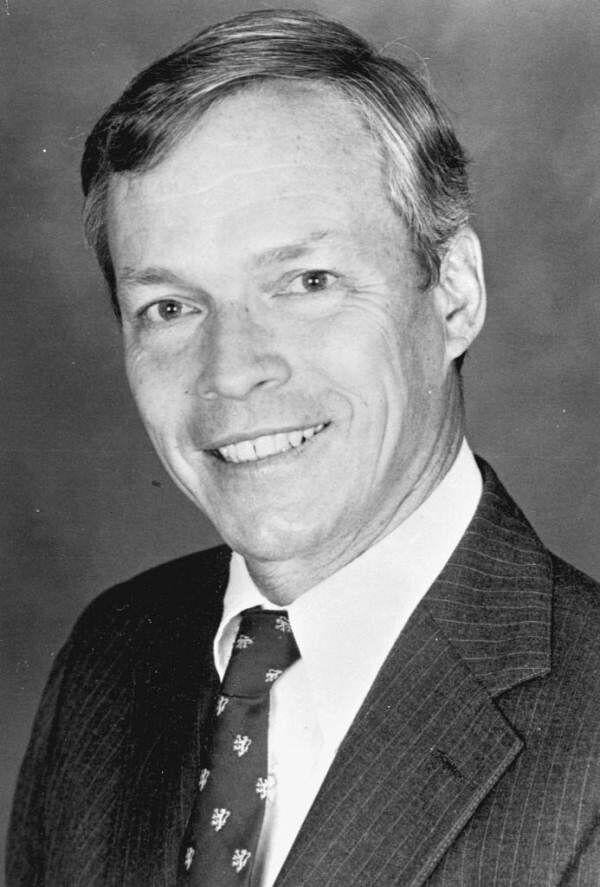
Former Florida Gov. Kenneth “Buddy” MacKay, 91, died peacefully during an afternoon nap at his home in Ocala surrounded by his wife and sons on New Year’s Eve, a family spokesman said Thursday.
MacKay’s decades-long public-service career included stints as a state legislator, U.S. representative, lieutenant governor and — briefly — governor.
MacKay was elected lieutenant governor in 1990 alongside the late Gov. Lawton Chiles. The Democrats were re-elected in 1994.
MacKay ran to succeed Chiles in 1998, but was defeated by Republican Jeb Bush. Shortly before leaving office, however, MacKay stepped in as governor after Chiles’ sudden death on Dec. 12, 1998. MacKay’s tenure as the state’s chief executive lasted until Bush was sworn in on Jan. 6, 1999.
“Gov MacKay was one of Florida’s greatest leaders and statesmen with a career of service that benefited all the people of Florida,” Ron Sachs, who served as communications director in the Chiles administration, said Thursday in a phone call speaking on behalf of the MacKay family.
At the time of his death, MacKay was with his wife, Anne, and all four of his adult sons who were visiting during the holidays, according to Sachs. MacKay “had a regimen of taking a short afternoon nap most of his adult life,” Sachs added
Bush and his wife, Columba, offered condolences.
“Columba and I send our deepest sympathies to Anne and the MacKay family as they mourn the loss of their beloved husband and father,” Bush said in a post on the social-media platform X. “Governor MacKay’s life was dedicated to serving the state of Florida, which he did with honor and distinction.”
MacKay, Chiles and other leaders, such as former Gov. and U.S. Sen. Bob Graham, were part of a bygone era when Democrats controlled the state. Graham died in April at age 87.
Sachs credited MacKay with encouraging Chiles, a former U.S. senator and legendary figure in Florida politics, to “come off the sidelines and run for governor” in 1990. Chiles demonstrated his confidence in his second-in-command by using MacKay as a fixer for a variety of high-profile issues, including overseeing the response to Hurricane Andrew. The storm tore through Miami-Dade County in 1992.
MacKay also helped sort out the city of Miami’s financial woes and stepped in to temporarily lead the troubled Florida Department of Health and Rehabilitative Services. The agency later was broken apart into separate agencies to oversee health and human-services issues.
“He came into the job of lieutenant governor as probably the most accomplished person to ever hold the job, and that’s why Gov. Chiles gave him so many responsibilities,” Sachs said.
MacKay, a softspoken Ocala native with a Southern twang and a humble demeanor, was a lawyer who was elected to the Florida House in 1968 and the Florida Senate in 1975, according to information on the Florida Department of State website. He was elected to the U.S. House in 1982 in a district that included all or parts of eight counties and served three terms in Washington.
But in 1988, MacKay lost a bruising U.S. Senate race to Republican Connie Mack by less than 35,000 votes out of more than 4 million cast.
Two years later, MacKay joined Chiles on the ticket as Democrats won back the governor’s mansion by unseating Republican Gov. Bob Martinez.
Chiles’ death in the final weeks of his administration shook the state and thrust MacKay into the spotlight. MacKay was the state’s last Democratic governor.
“Always thought the true Shakespearean tragedy of Florida politics was this man got to live his dream for 24 days only because his best friend died,” Steve Schale, a Democratic consultant who ran former President Barack Obama’s Florida campaign in 2008 and earlier worked as a legislative aide, said in a text message. “He was very kind to me when I was a pup aide and I always remembered that.”
— News Service Executive Editor Jim Saunders contributed to this report.
Biographical information
Born in Ocala, Florida, to a citrus-farming family, MacKay’s upbringing instilled in him a deep connection to Florida’s agricultural roots. In fact, throughout his career, he would retreat to his citrus groves for rest and reflection. After graduating from Ocala High School in 1950, he earned degrees in agricultural economics and law from the University of Florida, where he made lifelong friends and allies among his fellow students.
MacKay served as a pilot and captain in the United States Air Force from 1955 to 1958. This early military service not only reflected his patriotism but also shaped his disciplined approach to leadership.
Legislative Courage
MacKay began his political career in the Florida House of Representatives in 1968, serving until 1974. He then moved to the Florida Senate, where he served until 1980. Throughout his time in the legislature, MacKay took courageous stands on controversial issues, including his support for school busing to achieve desegregation. Representing a mostly rural district, MacKay’s stance put him at odds with constituents and the powerful "Pork Chop Gang," a bloc of legislators who wielded outsized influence in Florida politics. MacKay’s willingness to defy political norms underscored his commitment to fairness and progress, even at personal political risk.
In 1983, MacKay was elected to the U.S. House of Representatives, where he served until 1989. His legislative focus included environmental conservation, infrastructure investment, and economic development, advancing policies that benefitted Florida’s long-term growth. Working with Marjorie Harris Carr, MacKay was instrumental in killing the environmentally disastrous Cross-Florida Barge Canal.
Lieutenant Governor: A Legacy of Leadership
In 1990, MacKay played a pivotal role in convincing Lawton Chiles to come out of retirement and run for governor, a decision that would shape Florida’s political landscape for years to come. Elected as Lieutenant Governor alongside Chiles, MacKay served from 1991 to 1998, becoming one of the most active and influential lieutenant governors in Florida’s history.
Key contributions during his tenure included:
- Environmental Leadership: MacKay led efforts to restore the Everglades and manage water allocation in Southwest Florida, balancing environmental preservation with the needs of a growing population.
- Healthcare Reform: He was instrumental in creating Community Health Purchasing Alliances, a groundbreaking initiative to improve access to affordable healthcare.
- City of Miami Financial Crisis: MacKay chaired the oversight board that resolved the City of Miami’s financial crisis, restoring fiscal stability and safeguarding public trust.
- Reorganization of HRS: He spearheaded the restructuring of Florida’s Health and Rehabilitative Services Department, decentralizing and streamlining that agency, moving more resources out of Tallahassee and into the communities where they were most needed.
MacKay’s leadership as Lieutenant Governor reflected his deep understanding of policy and his ability to mediate complex issues, earning respect across party lines.
Governor and Diplomatic Service
MacKay became Florida’s 42nd governor following Chiles’ death on December 12, 1998, serving from December 13, 1998, to January 5, 1999. Though his tenure was brief, MacKay provided continuity and steady leadership, ensuring the smooth transition of state operations.
In 1999, President Bill Clinton appointed MacKay as the United States Special Envoy for the Americas, a position he held until 2001. In this role, he strengthened diplomatic relations and promoted economic cooperation throughout the Western Hemisphere, demonstrating his global vision and commitment to service.
