

Proposed tax package aids Back-to-School shoppers, businesses
News Service of Florida: Six weeks after the state budget was expected to be completed, legislative leaders Friday finished negotiating details of a spending plan for the 2025-2026 fiscal year and set the stage for the House and Senate to vote on Monday.
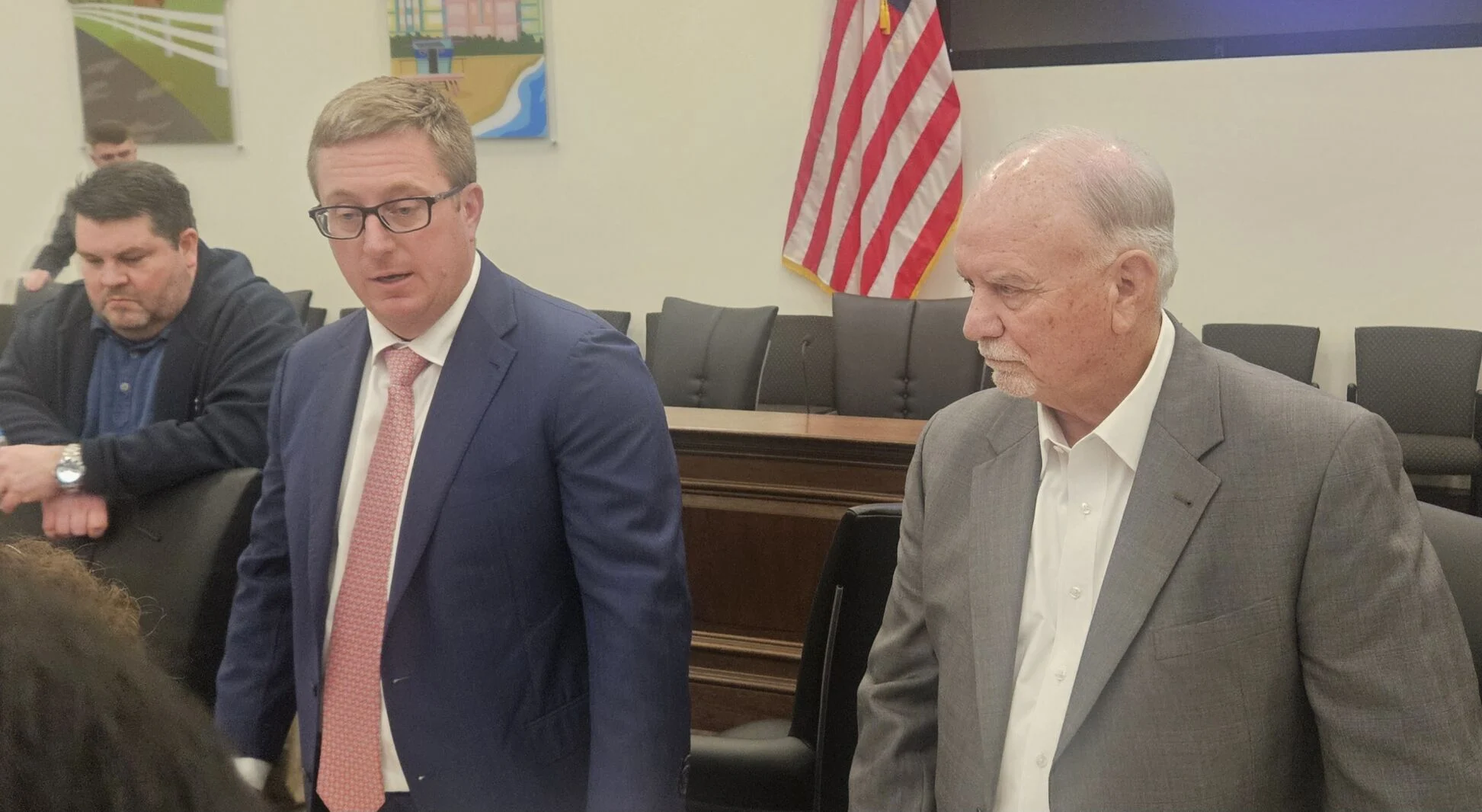
Senate Appropriations Chairman Ed Hooper, R-Trinity, and House Budget Chairman Lawrence McClure, R-Dover, resolved remaining issues. A bottom-line total for the budget was not immediately available, though it is expected to be smaller than a $115.6 billion spending plan proposed by Gov. Ron DeSantis.
Because of a required “cooling off” period, lawmakers will not be able to vote on the budget before Monday. It remained unclear what time they could vote Monday because the budget had not been printed as of late Friday afternoon.
House and Senate leaders also were working Friday to finish a tax-cut package and what are known as budget “conforming” bills — though those measures are not bound by the 72-hour requirement.
DeSantis would have about two weeks to sign the budget and issue vetoes before the July 1 start of the fiscal year. DeSantis will be in France early next week on a trade mission.
The annual legislative session was scheduled to end May 2, but the House and Senate could not reach agreement on a budget and tax cuts. That led to weeks of uncertainty before lawmakers restarted formal negotiations last week.
“A lot of people have spoken to us about, you know, ‘You took a month away from here and nothing happened,’” Hooper said Friday. “Well, there was stuff happening, and we knew that we had to come here, to get to where we are today. Because come July 1, nobody wanted a government shutdown. Nobody wanted employees to be without a paycheck.”
This year’s budget process came after the state stopped receiving a torrent of federal money linked to the COVID-19 pandemic. Also, lawmakers worked on the budget amid the prospect that future federal money is expected to slow under President Donald Trump.
McClure also said special legislative sessions early this year on immigration issues were taxing on lawmakers and staff members.
“I'm not excusing that we're delayed in getting this budget done, but there were contributing factors that largely were out of the control of either chamber,” McClure said. “I'm glad we did the work on immigration. It was important, but I am thankful that we were as thorough as we were.”
Budget talks resumed after House and Senate leaders on May 30 jointly released a framework involving tax cuts and other big-ticket issues.
The framework included a $900 million tax cut through eliminating a tax on commercial leases, a longtime priority of business lobbyists. The framework also included what leaders described in memos as $350 million in “permanent sales tax exemptions targeted towards Florida families,” $250 million in debt reduction and $750 million in payments into a state rainy-day fund.
Among issues approved Friday were money for about 280 projects and programs across the state, including such things as parks, schools, emergency management programs, roads, museums and cultural groups. Those projects and proposals totaled about $560 million.
Spending on such projects and programs had grown from $174 million in 2019 to $1.3 billion in 2024.
Hooper and McClure also settled on $460.7 million for water-related projects. The Senate initially sought $505 million for water projects. The House started at $193.2 million.
As for tax cuts ... "You will save some"
Florida would hold its traditional sales-tax “holiday” each August for back-to-school items, while sales taxes would be eliminated on commercial leases and such things as hurricane supplies and sunscreen, under a tax package that House and Senate leaders released Friday evening.
The House and Senate will vote on the tax package early next week along with the state budget. The tax package is projected to reduce state and local government revenue by about $1.3 billion next fiscal year.
Hooper told reporters Friday nobody will “get rich and go have a European vacation” on the tax cuts.
“Will you save a ton of money because of what we do? Probably not,” he said. “But you will save some.”
House and Senate leaders had earlier said they planned to eliminate the 2 percent sales tax on commercial leases, a cut long sought by business lobbyists. The lease-tax elimination makes up an estimated $904.8 million of the projected cuts in the package.
McClure, pushed back on the suggestion that the package is tilted toward businesses instead of individuals. “The notion that businesses don't employ people that are part of families is nonsense," he said. "If those tax breaks give relief to corporations to allow them to grow and prosper in Florida, that is good for the employees, the Floridians that work for those companies."
DeSantis pushed to give a property-tax rebate this year to homeowners as a prelude to asking voters in 2026 to pass a constitutional amendment to reduce or eliminate property taxes. But the tax rebate idea was not included in the package released Friday evening. The package, however, includes $1 million for the Legislature’s Office of Economic and Demographic Research to study property tax changes.
The second-largest tax cut in the package, projected at $167.7 million next fiscal year, would come from the back-to-school tax holiday. The state has held such tax-free shopping periods almost every year, but they have needed to be approved annually; the new package would make the holidays happen throughout each August.
The package also includes sales-tax exemptions for hurricane supplies such as certain types of batteries and portable generators. Other exemptions included in the package bill would eliminate taxes on such things as sunscreen, insect repellant, tickets to NASCAR Championship races, fire extinguishers, smoke detectors, life jackets, bicycle helmets, and admission to state parks. The state in the past has held tax holidays related to hurricane preparation and recreational activities.
The package also would lead to a one-time tax holiday on hunting, fishing and camping supplies from Sept. 8 through Dec. 31. In addition, it includes repealing an aviation fuel tax and reducing pari-mutuel cardroom taxes by 2 percent.