

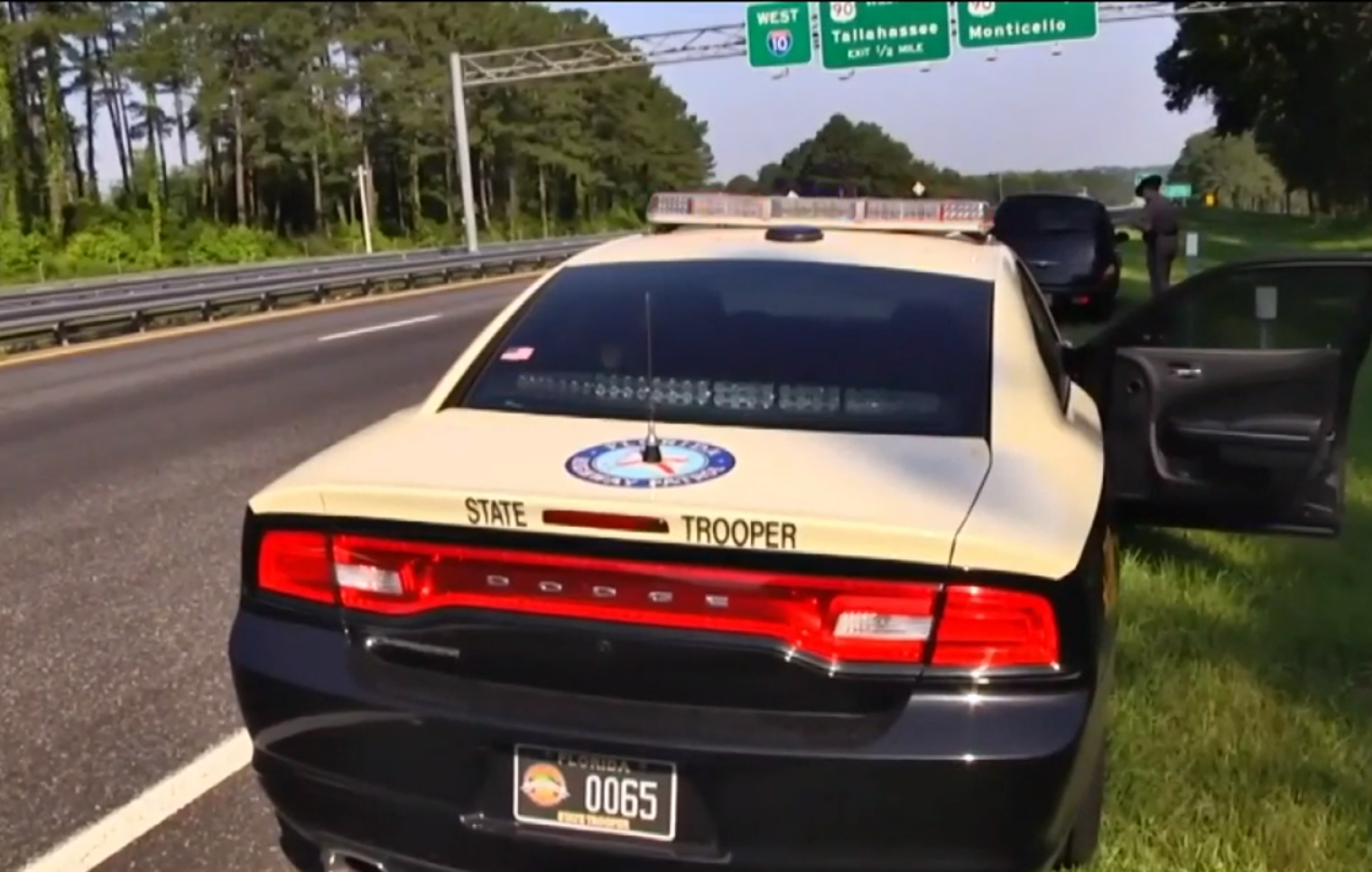
Here's a message for drivers from the Florida Highway Patrol:
Slow down.
It's the driving force behind 'Operation Southern Slow Down' a joint effort of FHP, the National Highway Traffic Safety Administration (NHTSA) and the Florida Department of Transportation in the southeastern states of Alabama, Florida, Georgia, South Carolina, and Tennessee. State and local law enforcement agencies in all five states will be conducting a week-long speed enforcement awareness campaign this week, from July 17-21 aimed at saving lives and preventing reckless driving and speeding.
This campaign has been done in years past, with increased patrols on local highways with a focus on aggressive high-speed drivers.
Over the past two years, multiple law enforcement agencies said they’ve seen a substantial increase in vehicles traveling over 100 miles per hour, and other similar aggressive driving. Law enforcement said the pandemic caused a cutback in people driving, and traffic enforcement. Use of turn signals and following at a safe distance are other things traffic enforcers will be on the lookout for.
For more than two decades, speeding has been involved in approximately one-third of all motor vehicle fatalities. In 2021, speeding was a contributing factor in 29% of all traffic fatalities.
According to the NHTSA, Traffic congestion is one of the most frequently mentioned contributing factors to aggressive driving, such as speeding. Drivers may respond by using aggressive driving behaviors, including speeding, changing lanes frequently, or becoming angry at anyone who they believe impedes their progress. Some people drive aggressively because they have too much to do and are “running late” for work, school, their next meeting, lesson, soccer game, or other appointment. A motor vehicle insulates the driver from the world. Shielded from the outside environment, a driver can develop a sense of detachment, as if an observer of their surroundings, rather than a participant. This can lead to some people feeling less constrained in their behavior when they cannot be seen by others and/or when it is unlikely that they will ever again see those who witness their behavior. If it seems that there are more cases of rude and outrageous behavior on the road now than in the past, the observation is correct—if for no other reason than there are more drivers driving more miles on the same roads than ever before.