

The World Day of Remembrance for Road Traffic Victims (WDR) is commemorated on the third Sunday of November each year.
It is a high-profile global event to remember the many millions who have been killed and seriously injured on the world’s roads and to acknowledge the suffering of all affected victims, families and communities – millions added each year to countless millions already suffering: a truly tremendous cumulative toll.
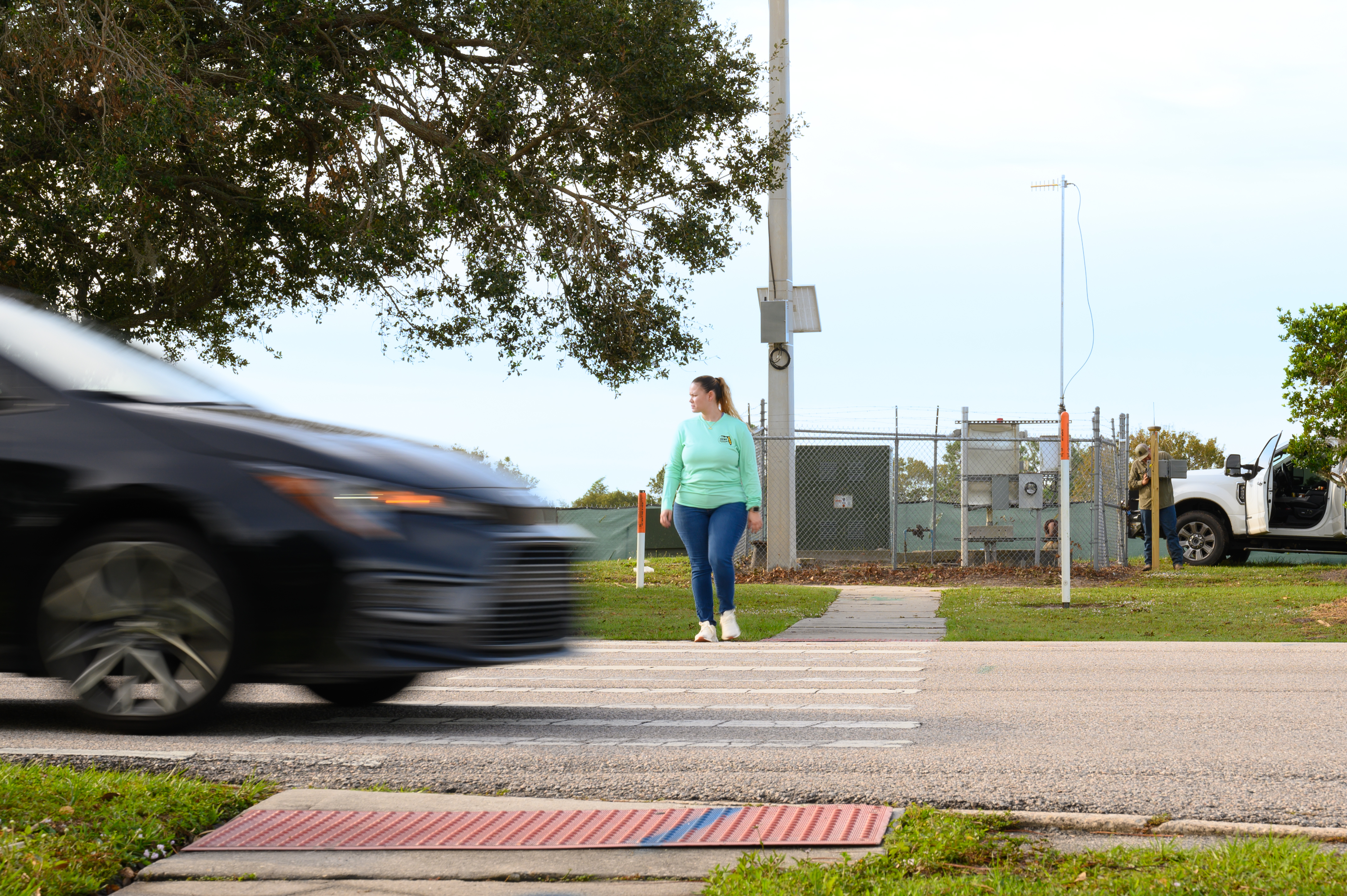
According to the Best Food Forward Coalition, a pedestrian safety initiative focused on keeping pedestrians safer by getting more drivers to yield and stop for pedestrians in marked crosswalks as Florida law requires, 879 people were hit while walking in Orange, Osceola and Seminole counties; tragically, 82 of those people never made it home.
The group annually holds what it calls an “education and enforcement” event called Operation Best Foot Forward, a law enforcement crack down on drivers who fail to stop for people in marked crosswalks.
The Osceola County Sheriff’s Office and Kissimmee Police Department participated this week, issuing 83 warnings and citations for failing to yield to a pedestrian in a crosswalk in four enforcement periods Tuesday. That ticket carries a $164 minimum fine, a good chunk of change that could go elsewhere this time of year, and three points on a driver’s license.
Police were set up at Buenaventura Boulevard and Briarwood Drive, Thacker Avenue and Ernest Street, Dyer Boulevard and Kensington Road and Miami Terrace and Carroll Street.
In Florida, drivers must yield – slow down or stop – for a pedestrian crossing the street in a crosswalk, even when traffic control signals are not present.
“Our goal is to remind drivers to be cautious around crosswalks and intersections,” said Emily Hanna, Bike/Walk Central Florida’s Executive Director. “We are all trying to get somewhere safely. Stopping at a crosswalk might cost you a few seconds of time, but not stopping might cost someone else their life.”
Operation Best Foot Forward is part of the coalition’s larger effort to improve road safety through consistent and persistent education, high-visibility crosswalk enforcement, and low-cost engineering updates. Studies show that driver behavior changes when you combine these enforcement strategies, education, and engineering over a prolonged period.