

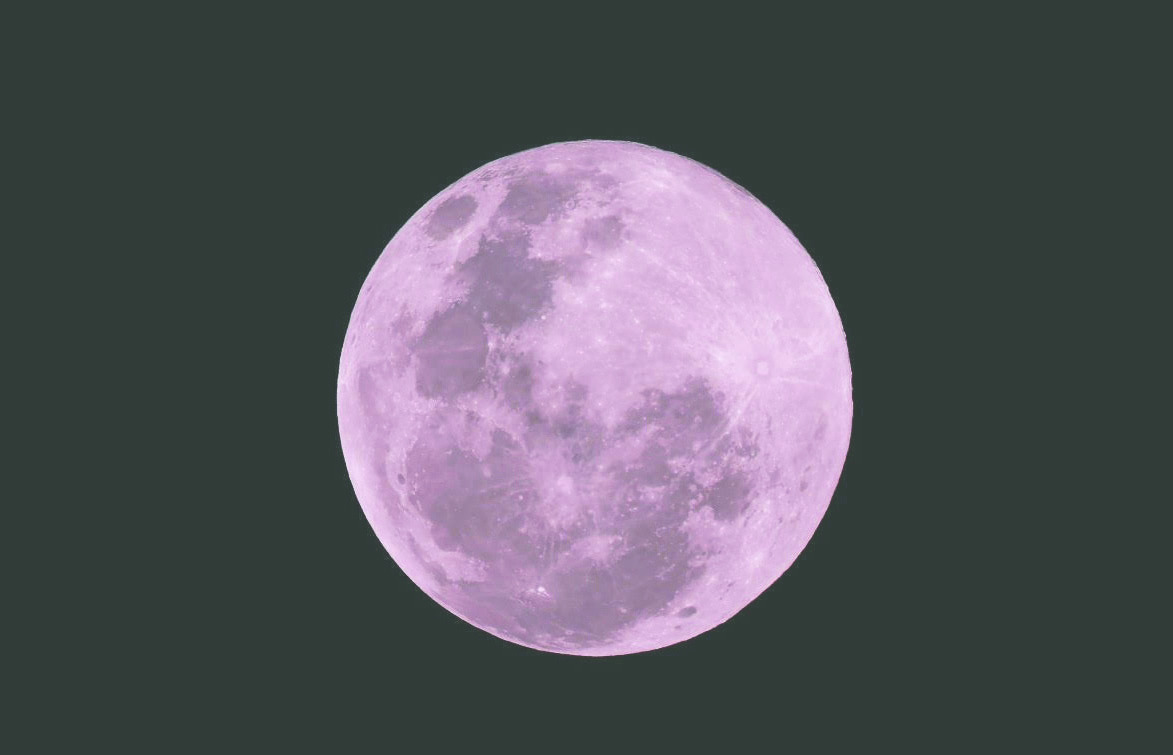
Stargazers, get your binoculars and telescopes ready for three celestial events happening this April!
On Saturday, April 12, a full “pink” moon will appear in the night sky at 8:22 p.m. Eastern Daylight Time. According to Time and Date, the Pink Moon in April gets its name from pink wildflowers that bloom in the early spring. The name comes from the brightly colored pink phlox wildflowers that are native to North America and that often bloom around the time of April’s Full Moon.
This full pink moon doubles as a micromoon, when a full moon or a new moon coincides with apogee, the point in the moon’s orbit farthest away from Earth.
Next on April’s heavenly events is the Lyrid meteor shower, which has been observed for 2,700 years and will reach its peak April 21-22. NASA stated that during its peak is when 15 meteors will shoot across the night sky per hour during the darkest hours, after moonset and before dawn, and produce bright flashes of fireballs, instead of the familiar glowing dust trails.
According to NASA, when comets come around the sun, the dust they emit gradually spreads into a dusty trail around their orbits. The Earth then passes through these debris trails, which allows the bits to collide with our atmosphere where they disintegrate to create fiery and colorful streaks in the sky.
NASA says the pieces of meteor shower originated from comet C/1861 G1 Thatcher, which was discovered on April 5, 1861 by A.E. Thatcher.
Stargazers can expect a clear night sky with the moon to be 40% brighter, according to the American Meteor Society.
For the best viewing experience, find an area outside away from street lamps and let your eyes adjust to the night sky to see the oldest meteor shower that dates back to 687 BC China.
Later down the line, observers can shift their eyes from the night sky to the brink of dawn to witness the final rarity that this month brings. On April 25, observers can expect to see a smiley face in the 30 minutes before sunrise, according to EarthSky. A crescent moon will form a triangle with Venus and Saturn, which will create the depiction of a celestial face staring down upon us.
Get ready to mark your calendars for this one-in-alifetime celestial events to make memorable moments with those around you.