

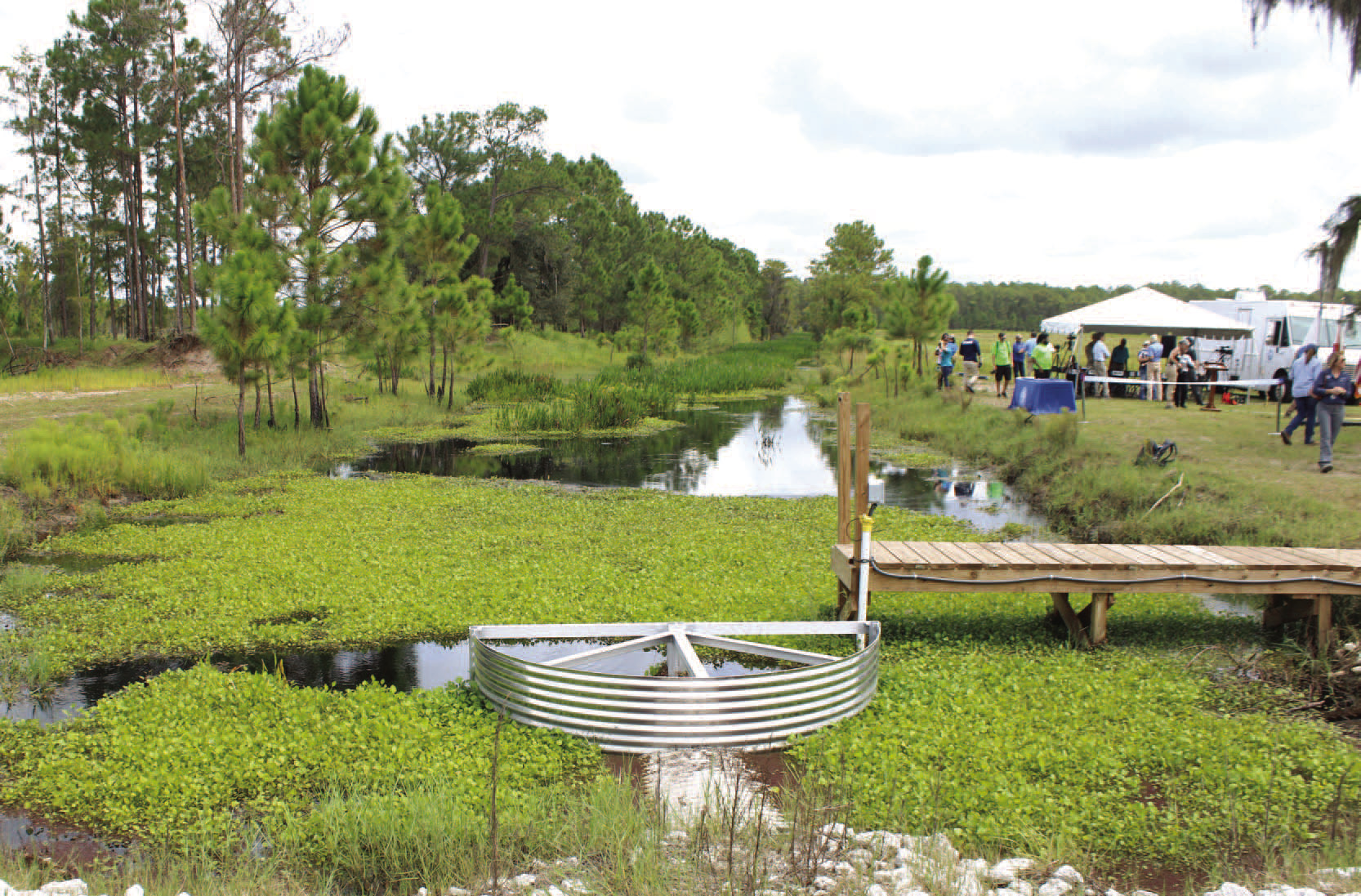
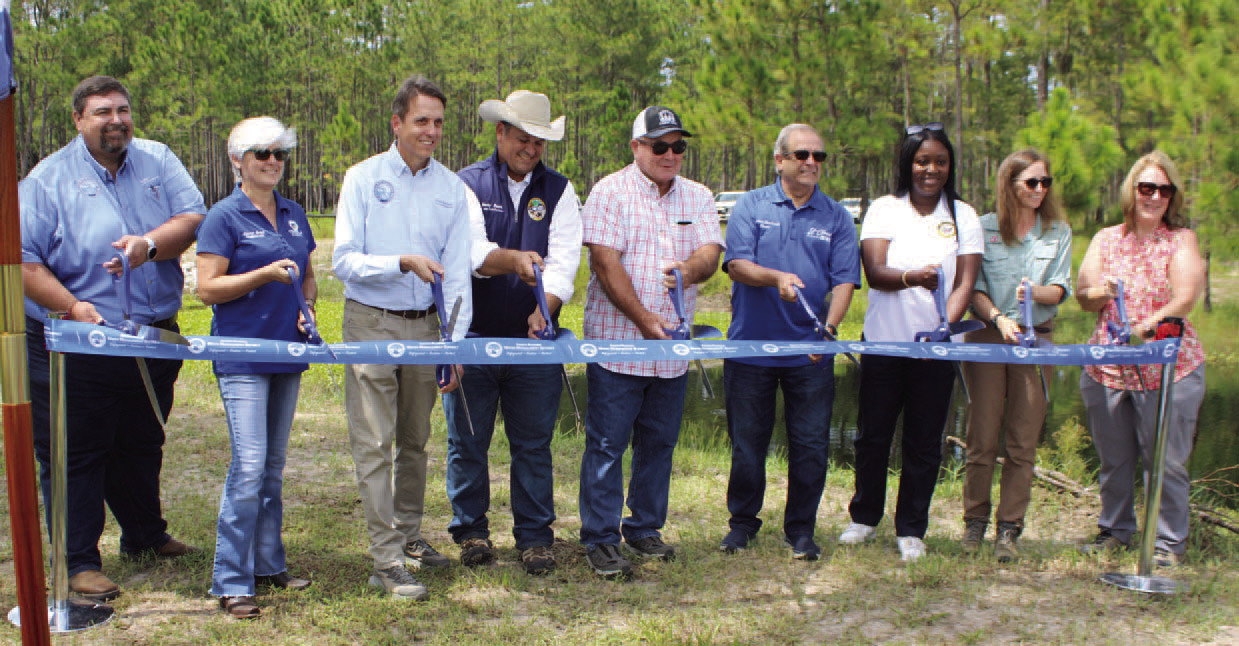
South Florida Water Management District and local officials cut the ribbon Monday on a combined flood control and pollution prevention project located on the Partin Family Ranch off of Canoe Creek Road in Osceola County.
“This project is a direct response to the flooding that occurred in the area from Hurricane Ian in September 2022,” said Megan Jacoby, SFWMD Bureau Chief for Everglades and Estuary Protection for the district.
The project started in April 2024 and has a total cost of $2 million over the next ten years. The project will store over one billion gallons of water in two separate water management areas and will take overflow from nearby Lake Gentry.
Osceola County Commissioner for District 5 Ricky Booth and a member of the Partin family, cited the high level of cooperation between the ranch, SFWMD, the Florida Department of Environmental Protection, Osceola County, and the Army Corps of Engineers to complete the project in a timely manner.
In addition to the local flood control benefits, the ranch project is one of 26 sites north of Lake Okeechobee, in the district’s Dispersed Water Management Program. The program started in 2005, and is a cooperative effort with private landowners, mostly ranchers, and provides a number of environmental benefits. It is currently the northernmost project in the program and the only one in Osceola County.
The water management areas hold back water and remove nutrients that can contribute to algae blooms before eventually flowing into Lake Okeechobee. The decreased flow into that lake reduces the pressure to release large volumes of freshwater into estuaries on both the Atlantic and Gulf coasts. Existing wetlands, in this case the Big Bend Swamp east of the ranch, are used for the management areas to the greatest extent possible, and keeping those areas hydrated fosters native plant and wildlife habitat. The areas also contribute to local groundwater recharge.
“We anticipate this project will remove 11,000 pounds of nitrogen and 800 pounds of phosphorus per year from flowing into Lake Okeechobee through the regional canal system,” said Jacoby.
Stormwater runoff, rich in nutrients from commercial, agricultural, and residential lawn fertilizers and septic tanks from areas north of Lake Okeechobee, are major causes of summer algal blooms that impact the lakes and the estuaries downstream. Keeping the water north of the lake for longer helps replicate the previous natural slow flow of the Everglades system before widespread development.
For more information on the South Florida Water Management District’s water storage strategies and programs, see https://bit.ly/3XtdCqr