


Florida Department of Emergency Management
On May 31 the Florida Division of Emergency Management Executive Director Kevin Guthrie was joined by the Adjutant General of Florida Major General John D. Haas at the Museum of Discovery and Science Eye of the Storm event, urging Floridians to make their final preparations for the 2025 Atlantic hurricane season now, and not when a storm is bearing down on Florida.
“Hurricane season is here, and preparation should be a priority for residents,” Guthrie said. “Thanks to Governor DeSantis’ leadership, Florida is well-prepared with the resources needed to support communities through whatever this hurricane season brings. Each hurricane season is unique, so I strongly encourage all Floridians to complete their plans now to ensure that you and your family can weather any storm safely.”
Amongst the messaging, residents statewide should prepare for the many hazards that come with a tropical weather system. Possible weather hazards include: tornadoes, damaging winds, flooding and storm surge, rip currents and severe thunderstorms. These conditions have the potential to impact areas across Florida before, during and after the landfall of a tropical system, so Floridians are urged to plan ahead for what to do if a hurricane threatens your community. See more information on how to make a plan for your household at FloridaDisaster.org/PlanPrepare.
For instance, power outages or damaged cell towers are possible as a result of damaging winds or tornadoes. Residents are urged to have multiple ways to receive weather alerts, such as a battery-operated radio with extra batteries to stay informed of essential weather updates and alerts.
Whether from a hurricane or severe storm, flooding can occur suddenly and create unsafe conditions. If flooding occurs, seek higher ground immediately. Residents are urged to never drive or walk in flooded areas, as it only takes one foot of floodwater to move most vehicles and only six inches of floodwater can knock over an adult. It can be difficult to judge the depth of floodwater while driving, making it dangerous. More than half of all flood-related deaths result from swept away vehicles. Remember, turn around, don’t drown!
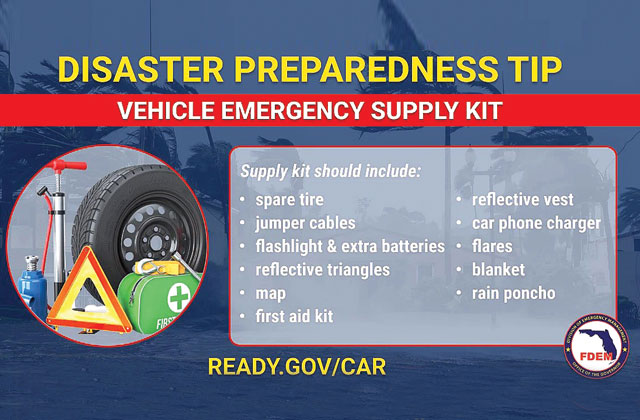
And while much of the messaging around having a disaster supply kit of water, non-perishable food and medication, and knowing where to go if an evacuation is ordered—go tens, not hundreds, of miles—new messaging regards keeping vehicle gas tanks at least half full during hurricane season to ensure there’s enough fuel to evacuate without worrying about long lines at gas stations and potential gas shortages. For Floridians with electric vehicles, it is recommended to keep the battery at 50-80% capacity at all times. For more information visit FloridaDisaster.org/HalfwayFull.