


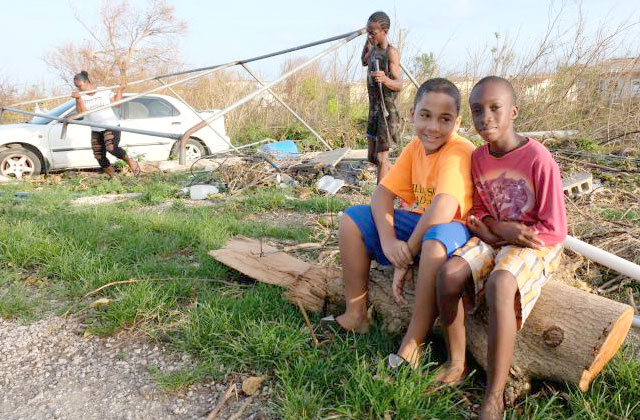
Provided by Nicklaus Children’s Hospitals
In the midst of hurricane season, it’s important for parents to talk with their children and provide guidance and support in the case of an emergency, like a hurricane.
A young child may be worried about being separated from his/her mother. A 10-year-old may wonder if the house can withstand the storm, and a teenager may be concerned about helping a friend whose family is out of the country.
Parents should try to address those fears in a factual, reassuring manner. If you remain calm, your children will often follow your behavior.
Here are some suggestions to help your children through the hurricane season:
Create a family emergency plan
Sit down with your children and discuss where you would go if you need to leave your home. Be sure to write down everyone’s cell phone number — parents, children, families and friends — and put them into your child’s phone.
Prepare for the storm
If a hurricane is heading for Osceola County or Central Florida, have your child help with the preparations, such as bringing in lawn furniture, checking flashlight batteries, getting out window coverings, and packing a three-day supply of water, medications and nonperishable foods. Remind teens to fill up their cars with gas.
Watch television together - in limited amounts
TV news is a good way to get information in advance of a storm. But watching too much news coverage can increase a child’s fears. It’s better to watch the news together and then switch off the TV, particularly if a storm is still several days away. Remember that graphic images of storm damage can be upsetting to young children.
The storm is an ‘it’ – not a ‘he or ‘she’
Yes, storms are given boy and girl names. But it is a weather system, it doesn’t have a gender or personality. Refer to it around children not as a ‘he’ or ‘she’, but an ‘it’.
Get ready to go
If you family needs to evacuate, have your child help with packing. Be sure they include a few special items such a teddy bear, photos or portable gaming device. Your son or daughter can also help gather food, water and any medications for the family pet - a responsibility that can help the child feel more in control. Remember, children take cues from adult emotions, so be sure to remain calm.
Work together
after the storm
Once the storm has passed, your children can help pick up tree limbs or other debris that blew into your yard. If there is serious damage to the home, living arrangements may need to be altered, such as sharing a bedroom. Once things settle down, set aside time to talk with your children about how they feel. Emotional trauma can take months to heal at any age.
Sara Rivero-Conil, Psy. D is a licensed psychologist with the Nicklaus Children’s Hospital, Department of Psychiatry.
