

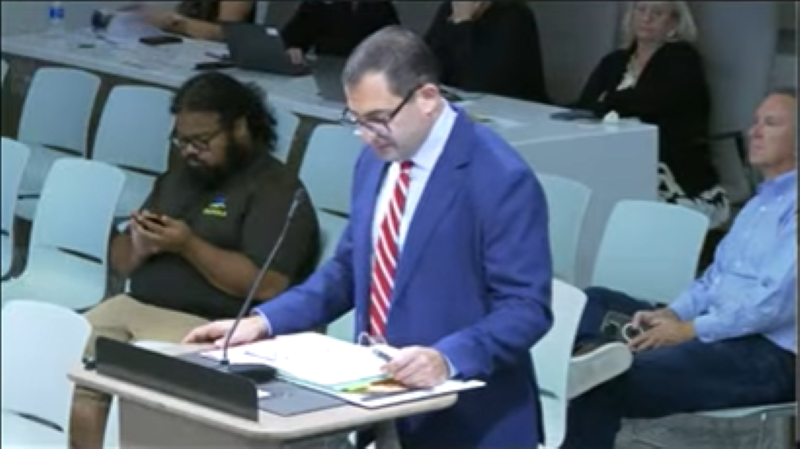
While an additional operational millage referendum requested by the School District of Osceola County was not on Tuesday’s primary ballot, and won’t appear until the Nov. 3 general election ballot, School District Superintendent Dr. Mark Shanoff is already offering up the facts behind it.
“This is coming from the School District and not any other elected body,” he said at last Tuesday’s School Board meeting. “We are seeking the consideration of the voters because of the competitive landscape school districts have become.”
It will not fund capital and building projects; they are funded by a special half-penny sales tax voted in by voters in 2016. This will enhance the budget for day-to-day education operations, Shanoff said.
He noted increased fees for game officials, field maintenance, instruments, uniforms and equipment, travel and SRO training is rising, and with the state’s amendment to lower property tax collections by increasing the homestead exemption also appearing on the November ballot, asking local governments to help with funding things like SROs would become “increasingly burdensome” if it passes.
Federal funding for schools is forecast to drop in the 2027-28 fiscal year, and state funding is not keeping up with inflation, Shanoff said, noting 29 of Florida’s 67 counties are asking to initiate or renew their own millage referendums, aside from others that already have them in place.
“The education market doesn’t take into account other factors, like the timing of the property tax amendment,” he said. “When we see neighboring districts already leveraging their voter-approved special millage, it is time for us to pursue this as a community. While the timing of the property tax amendment might complicate message, we are committed to presenting facts with our community so they can make the decision that’s best for them.”
An extra mill assessed on a home with a $200,000 taxable value would be $200 annually, or $16.67 per month in the mortgage payment for those who escrow their taxes.
The millage, which must be voted on again to be renewed after four years, is earmarked for adding to teacher and staff compensation and benefits, safety and security measures like the School Resource Officer program and to “preserve academic programs, arts, music, athletics and student activities.”
“Preservation” was a common theme of Shanoff’s. He shared that, ahead of an expected $100 million budget shortfall over the next four years, 785 positions have been cut between last school year and this, with a reduction of $37.7 million in salaries. Even with those cuts, district documents show it has spent down about $20 million of its reserves over the last three years, while spending the second-least of all 67 counties per student in administrative costs.
“We have nothing left to cut, and no money left to give,” Shanoff said. “We have a plan to bring the fund balance up with or without the millage, but it will still require significant cuts. We have reduced and reduced. There will be more position cuts, reduced services across the district, reduction in arts and athletics and potential changes in who we protect and how we protect the schools unless we’re able to have the millage.”
The funding would be shared with charter schools and be monitored by an independent advisory committee, just like the sales tax is monitored.