

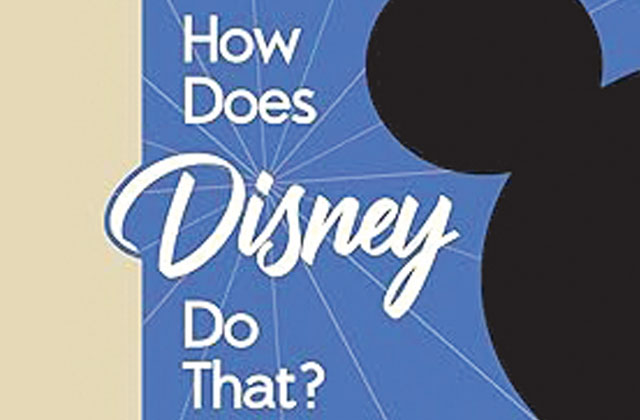
In writing “How Does Disney Do That,” James Warda of St. Cloud, along with fellow author Theron Skees, distill the intangible “magic” of Disney into something tangible that can be used in everyday personal and business pursuits.
Warda said he relocated to Osceola County partly due to its proximity to Walt’s East Coast Disney dream. That came following a career writing for the Chicago Tribune and Pioneer Press. Warda said he became enamored with the Disney magic later in life after seeing and feeling the effect of the Disney experience on his wife and son.
He set out to understand how the Disney brand can make such a strong emotional connection with its guests, and foster some of the most dedicated fans among any entertainment or sports enterprise.
The book delves into the multipart Disney formula that seamlessly combines storytelling with design, science, and innovation. Skees, a former Imagineer, serves as Warda’s “banshee” wingman by providing his professional experiences and insights gained from leading major Disney projects from “inside the magic.” Skees also has separate sections of the book, “Theron’s Keys,” that dive deeply into the contributing author’s creative experiences as they generally relate to chapter themes.
Sprinkled throughout the book are numerous side bars and snippets on Disney history, and unusual facts and observations. Included is the telling of how Disney professionals and other volunteers made the “magic” during the creation of Give Kids the World, the 89-acre nonprofit resort in Kissimmee that provides critically ill children and their families with week-long wish vacations at no cost, and keeps that magic going to this very day.
Not content with just peeling back the curtain into Disney’s innovative entertainment processes, Warda devotes chapters to integrating these processes and storytelling into organizations and products, with an emphasis on understanding how people react to what they feel. Insightful and thought-provoking questions are included at the end of every chapter to enable the reader to help personalize their take on the chapter’s information.
“This can also be applied by individuals, such as creative gig workers,” Warda said. “The key is to consistently build trust that the next iteration will be just as great, or greater, than the last, said Warda in a recent telephone interview.
In addition to the books, Warda created both a Facebook and a LinkedIn group dedicated to the message of the book. Warda is actively seeking new material for another book, and hinted that there may be a series of books to follow, perhaps with specific aspects derived from the central theme.