

After the holidays, we may feel we have spent more than that for which we budgeted. We start the New Year with resolutions for our lives, our family, our work, and our financial stability.
Starting the New Year with a vision and a plan for your financial wellbeing can be challenging, especially if one of your goals is to start saving money for an emergency fund, retirement, short-term, or long-term goal.
One of the myths of saving money is the thought that we do not have enough money to save. To change your mindset, I would like you to think you can save money and make it your goal to pay yourself first. Start small; for example, save loose change or a dollar a week. You can save it and you will not miss it! Once you have established the habit of saving the next step will be to increase your saving amount accordingly and set a specific goal as motivation.
The sooner you start the easier it will be to create a money saving habit. Set your goals and consider the following strategies: Save Bonus Money: money earned or received unexpectedly such as tax refunds, gift money, overtime pay, rebates and refunds. Saving this money will boost your savings dollars.
Save Coupon Money: use coupons to reduce your grocery shopping and then put aside the amount you “saved.” Installment Loans: when you pay off a loan — a car loan, a personal loan, credit card, or any other type — if you have no other debt to pay down, take the amount of money you were paying to the loan and continue paying it towards your savings.
Save Lunch Money: bring lunch from home instead of eating out. It will help increase the amount you are saving.
Shop Deals: when you get a special deal on an item, save a portion of the difference in price.
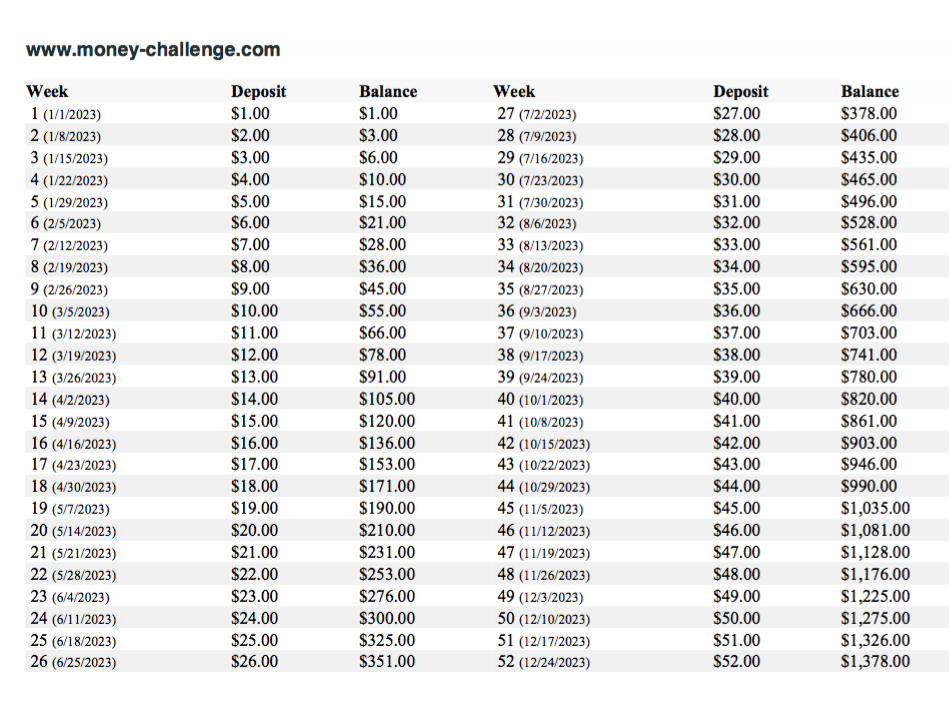
The only thing limiting us is our belief that there are limits. Consider the “52 Weeks Saving Money Challenge” (pictured) and start it today!