

District approves tentative budget, employee contract
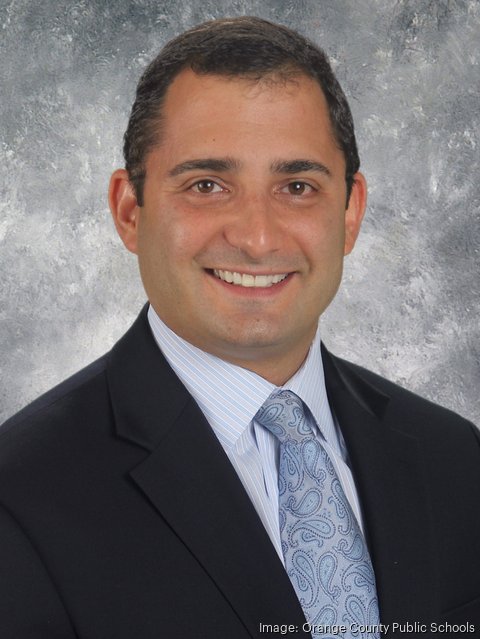
The Osceola County School Board met for the first time last week since the state Department of Education released school grades on July 1, and it was the first time district officials like Superintendent Dr. Mark Shanoff could publicly give feedback.
To review, the School District of Osceola County collected 773 points across 12 data categories the DOE tracks, including achievement and learning gains in core subjects, middle school acceleration, graduation rate and college and career acceleration. That tally earned the Osceola district a solid ‘B’.
But it took 774 points to earn an ‘A’, meaning SDOC came as close as it could to getting that top grade without getting there.
At Tuesday’s meeting, Shanoff was very pointed about the performance of the county’s charter schools, which represent about 25% of Osceola students.
“We earned 773 points which, among our district schools, should have earned us an ‘A’, which I think our district-managed schools need to hear,” he said. “Collectively, our charters did not perform as well.”
According to the DOE’s annual accountability study, which included the school grades, Florida Cyber Charter Academy earned a ‘D’, and Virtual Preparatory Academy was the district’s only ‘F’ school. Seven other charter schools scored ‘C’s. The rest of the two-dozen or so county schools listed as charters earned ‘A’s or ‘B’s.
“My message to our ‘C’-graded, ‘D’-graded and ‘F’-graded charter schools: do better by our kids, do better by our community. Everybody is working very hard to ensure that our school system is a point of pride for this community,” Shanoff said. “It’s very hard to see teachers and principals and paraprofessionals pour in as much as they have, only to be denied by a tenth of a point, because we have partners who are not performing where they need to be. They will be held accountable this year for their performance, in the same way that we hold our folks accountable.”
Since districts have been issued grades (since 2010) based on the school grades that have been assigned to schools (since 1999), the Osceola district has never earned an ‘A’ grade, and Shanoff said “It was hard to swallow the pill” to be that close for the 2025-26 year.
“I feel it for the community, and I carry it as a chip on my shoulder for the upcoming year because I will fiercely defend the work that’s being done in our school by tremendous professionals doing great work,” he said. “And I will continue to battle for them.
“So I say congratulations to our district for the achievement, and our charters that performed at a high level … you contribute to that. To those that need to improve … improve. Improve! It needs to get done. Our community is counting on us.”
District 1 Board Member Terry Castillo said in her eight years on the board she’s been told about the chances of Osceola earning an ‘A’, “Don’t worry about it, we can’t get there.”
“I refuse to believe that,” she said. “You all have worked hard, and you deserve to be acknowledged. It’s not just a grade. It’s a lot of hard work. Having the right people in place who are champions for our students and parents, we are going to get there. I thank the Superintendent for acknowledging that.”
Budget, teacher contract talks
The district at the Tuesday meeting approved a tentative 2026-27 budget, and announced a preliminary deal with the Osceola County Education Association teachers union on compensation packages for teachers and ESP employees.
Board members voted unanimously on a $1.9 billion budget that includes $343.81 million generated from local property taxes at a school funding millage rate of 5.277 mills, a number that’s down from 5.306 in the last budget and reduced annually for the last five years. The board will hold its final budget public hearing Sept. 8 at 5:30 p.m.
Shanoff also addressed the district’s fiscal situation, which includes reserves dipping below 6% of its budget, which could impact its credit rating and ability to borrow money.
“Over the last two years we’ve had to find cost savings of $60 million-plus while receiving a very modest increase from the state that’s significantly short of inflation rates,” he said. “Critics like to tell us that if school districts operated more like businesses we’d be in better shape. But to those critics, I have a business degree, and this is how we are different: businesses get to set their prices for customers, dictated by the market. Sadly, our revenue doesn’t take that into account. It’s our job to operate within our means.”
Operating within those means could be helped by levying an additional one mill to help fund operational costs, which County Commissioners approved to place on the November general election ballot in order to help retain teacher and staff, maintain its school resource officer (SRO) program and preserve extracurricular academic programs, arts, music, athletics and student activities.
“We can’t do those things with the way we are funded. We need additional funding,” Shanoff said. “Who is forcing the school district into this bind? Twelve percent of our budget comes from federal funding, but the federal government is looking to end funding to local school districts.
“It is wrong to be putting public education in this situation. I’m not sure when the school boards became the bottom line around decisions to fund schools that our not ours to make. Yet here we are. Holding schools harmless from the property tax amendment would not move the needle.”
Friday, the District announced it had ratified compensation packages for teachers and ESP employees for the new school year. It includes a 2% pay raise for employees with up to nine years of experience, with more experienced teachers receiving a percentage from the Classroom Teacher and Other Instructional Personnel Salary Increase (CTOIPS) fund, a pool of state-budgeted money allocated directly to school districts and charter schools.
“This board has prioritized pay increases over the last several years. When the money is available the money is shared,” Shanoff said. “We continue to operate within our means, but clearly we’re still seeing a decline in fund balance.”
The tentative agreements will now go to final OCEA ratification and settlement, and then salary dollars will go into the pockets of employees.