

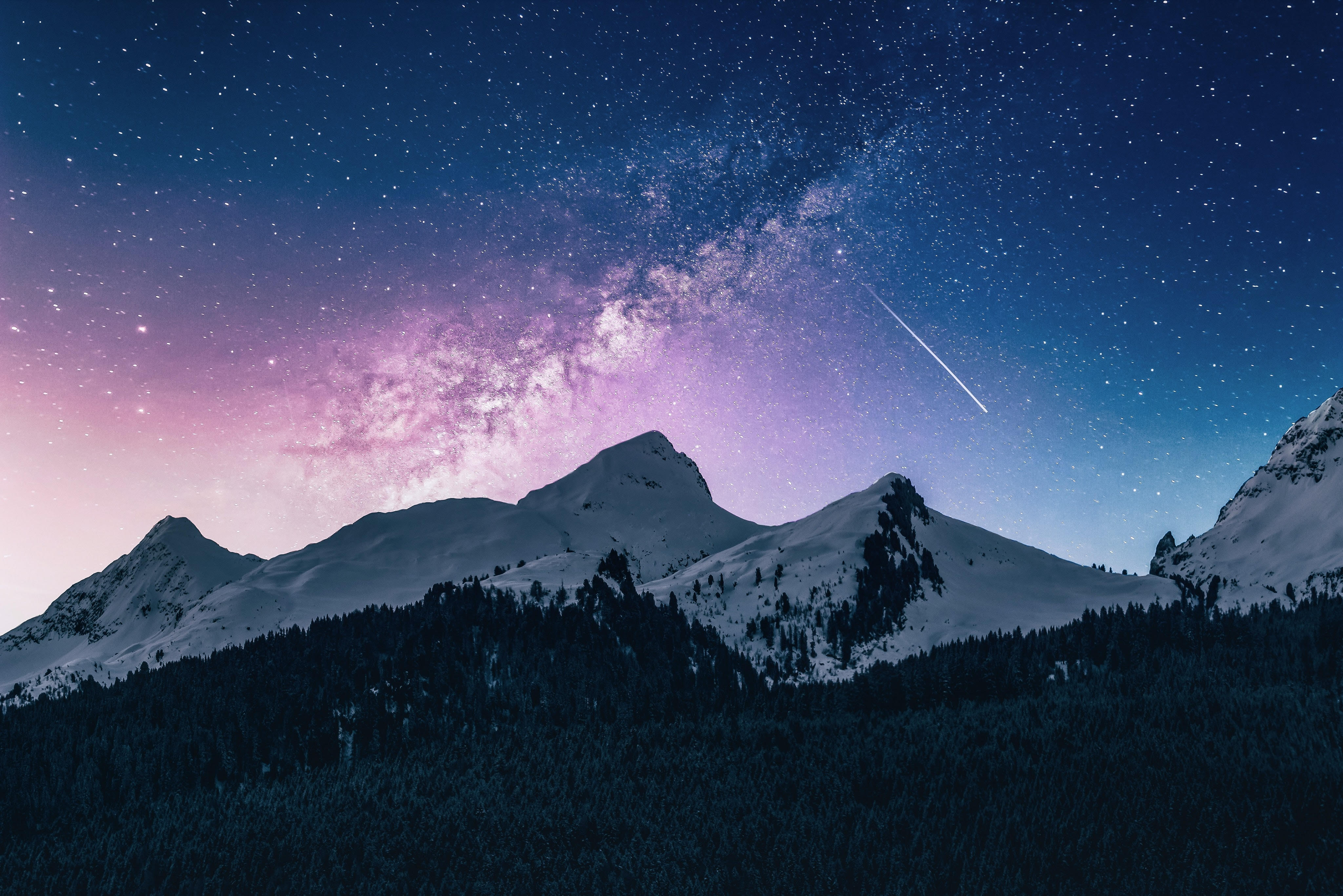
If you're looking for a nighttime activity this weekend, gazing up at heavenly bodies in the night sky and getting pictures could be an option.
Starting this weekend, the annual Delta Aquariids meteor shower falls in line with a New Moon this year, making this week the perfect time to see 'shooting stars' at their best and brightest, and have great chances at capturing them on camera. They'll still be visible in our area through Aug. 23, but this weekend is the peak.
Thanks to a guide from Pixsy, here's some tips to get the most out of this meteor shower.
You'll want to find a location that's away from light pollution. (In Osceola County, areas off of Nova Road near Deer Park Road on the northeast side, or along Canoe Creek Road or U.S. Highway 441 headed south around Kenansville, should be ideal.)
Once you're set up, lie flat on your back and look up to take in as much of the sky as possible. Look towards the Aquarius constellation (an augmented reality app like SkyView can help you find it) for your best chance of seeing the Delta Aquariids.
If you're an experienced photographer with lots of equipment, you know what to do with it. If you're just rocking your camera-enabled smartphone, Pixsy says some of the best ones are:
- Samsung Galaxy S21 Pro / Ultra
- Apple iPhone 13 Pro / Pro Max
- Google Pixel 6 Pro
- OnePlus 9 Pro
- Apple iPhone 12 Pro
- Huawei P40 Pro / Pro Plus
- Google Pixel 5 / 5a
Can't get out and check out the skies this weekend? Pixsy has shared some other lunar and astronomical events to capture on camera later this year:
Perseid meteor shower, Aug. 11-12, 2022
The Perseid meteor shower is one of the most celebrated annual showers in the Northern Hemisphere. This year, the predicted peak of the shower falls near to the full moon, which will make photographing it trickier. But fear not, the shower ranges all the way from July 14 to Sept. 1.Start watching for these meteors at the start of August in the early hours of the morning when the moon is waxing, or try again later in August after sunset, as the moon rises.
Jupiter at opposition, Sept. 26-27, 2022
On the night of September 26, Jupiter will be directly opposite the sun (with Earth in the middle). This is when the planet is at its brightest and most visible, so it’s the best time of year to get a good shot of it. In 2022, Jupiter is in opposition at the time of the new moon, and it’s will also be closer to Earth than it has been for 70 years! You’ll see it rising in the east at sunset and, so long as the skies are clear, it will remain visible all night.
Orionids meteor shower, Oct. 21-22, 2022
The Orionids meteor shower in 2022 takes place when the moon is a thin, waning crescent, so the visibility and photo opportunity should be good! Watch for the meteors in the early hours before dawn on the night of October 21. There will be a maximum of 10 to 20 fast-moving meteors per hour, and they sometimes produce bright fireballs that you might be lucky (and skilled) enough to capture on camera.
Total lunar eclipse, Nov. 8, 2022
The next lunar eclipse will take place on the night of Nov. 8, and will last from about 3-6:45 a.m. Eastern time. The total eclipse begins at 5:16 and ends at 6:41, with the Earth’s shadow completely covering the moon at 5:59.