


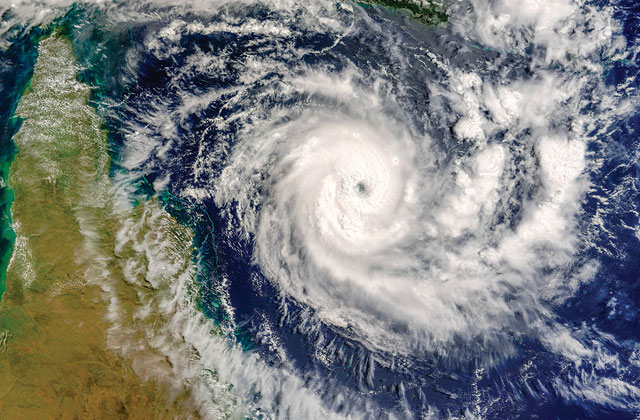
Hurricane season requires preparation even though weather is unpredictable. Meteorologists do their best to forecast coming storms and their potential impact, but it’s not always possible to know just how an early swirling mass of weather will perform.
Factors that can affect hurricane season include the weather patterns El Niño and La Niña. According to the National Ocean Service, these weather patterns occur in the Pacific Ocean. During normal conditions, trade winds blow west along the equator, taking warm water from South America towards Asia. Replacing that warm water, cold water rises from the depths of the ocean in a process called upswelling.
El Niño and La Niña are opposing climate patterns that change the normal conditions. Scientists refer to these patterns as the El Niño-Southern Oscillation (ENSO) cycle. The World Meteorological Organization says ENSO involves fluctuating ocean temperatures in the central and eastern equatorial Pacific, coupled with changes in the overlying atmosphere. The warm phase is known as El Niño and the cold phase is known as La Niña. El Niño can typically last up to 18 months and La Ñiña up to three years.
El Niño
El Niño is characterized by weakened trade winds that allow warm surface water to move eastward toward South America. When this occurs, it can result in wetter, stormier weather in the Gulf Coast and southeast and dryer, warmer conditions in the northern United States and Canada.
La Niña
La Niña is the opposite of El Niño. During La Niña events, trade winds are even stronger than usual, pushing more warm water toward Asia. As a result, upswelling increases, bringing cold, nutrient-rich water to the surface of the ocean. The National Ocean Service says when this happens during a La Niña year, conditions across the southern U.S. will typically be dryer. The North and Pacific Northwest often experience colder, wetter and snowier conditions, while the Midwest and Ohio Valley can see an active storm track.
Hurricane season impact
These weather patterns can affect hurricane seasons. The National Oceanic and Atmospheric Administration says El Niño favors stronger hurricane activity in the central and eastern Pacific basins and suppresses it in the Atlantic basin. Conversely, La Niña suppresses hurricane activity in the central and eastern Pacific basins and enhances it in the Atlantic basin.
In mid-June 2026, the NOAA issued an El Niño Advisory. This means El Niño conditions are observed and expected to continue. Its latest forecast anticipates the development of a strong El Niño in the fall, with a 63 percent chance of a very strong El Niño between November 2026 and January 2027. This can exacerbate drought and heavy rainfall and increase the risk of heat waves both on land and in the ocean. This may translate to more Pacific hurricanes but below average activity in the Atlantic.
Understanding weather patterns can help the public prepare for severe weather, including hurricanes.