

According to data collected from the U.S. Census Bureau in a 2018 study, 94.4% of water and wastewater treatment plant and system operators are male, making them the usual gender in the occupation. While it is hard to deny that women are historically underrepresented in water utilities, this trend has been changing.
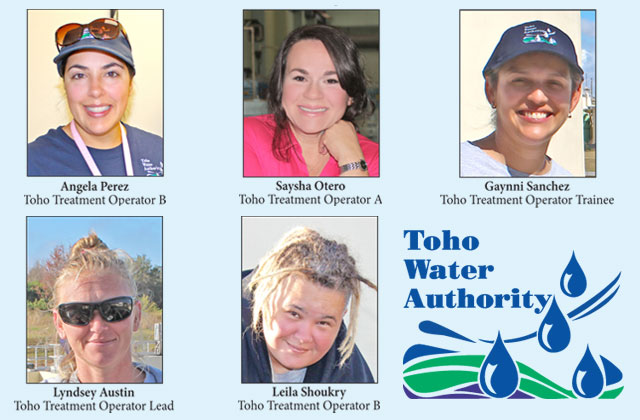
Toho Water Authority (Toho) is helping to lead that change in Florida and, currently, touts having among the largest workforce of female water plant operators. Even with leading the trend, Toho currently has only five female water operators. However, they each attest that being in the hands-on environment is a perfect fit because they are serving in an essential role that provides a must for the community served – water services.
Water operators carry out a range of duties to support utility activities, from ensuring compliance with federal, state, and local water quality standards, collecting and testing water and sewage samples, preventive maintenance and monitoring facility operations round-the-clock.
A COMMON MOTIVATION TO PURSUE WATER CAREERS
Despite different backgrounds and paths to the water sector, all five women working as operators at Toho plants chose working in water because they wanted to pursue a career that is meaningful, purposeful and rewarding.
“It is a good way to make an impact in the environment and community we live in,” Angela Perez, a wastewater operator at Toho, said when asked about what motivated her to pursue a career in the water industry.
Likewise, Gaynni Sanchez, who also serves in a wastewater operator position on the Toho team, said, “Being able to contribute in making a safe and better environment for people, made me choose this field.”
Working in water provides a sense of pride and gratitude because you are working with a resource that is vital for existence and important for future generations.
When asked to share what advice she would give to other women pursuing a career in the water industry, Saysha Otero, a Toho water operator, said; “Don’t hesitate – be confident. Successful water workers who exhibit technical proficiencies typically get noticed more, no matter which gender.”
Wastewater operator Lyndsey Austin explained that her role is a vocation that takes continued dedication. “I love the complexity in my field, and the ever-changing environment,” Austin adds.
Similar to colleagues in the health and public safety industries, water workers are ready to respond to unplanned emergencies and are on a 24/7/365 rotation. There is never a time where water personnel are unavailable to assist with the community’s water needs.
“As the water industry continues to become more visible to the public, we hope that our workforce attracts more females who want to make a positive difference in the water industry,” said Leila Shoukry, a Toho wastewater operator.
Change is happening, and the future is female at Toho and other water utilities. To learn more about Toho Water and the career opportunities available, visit tohowater.com.