

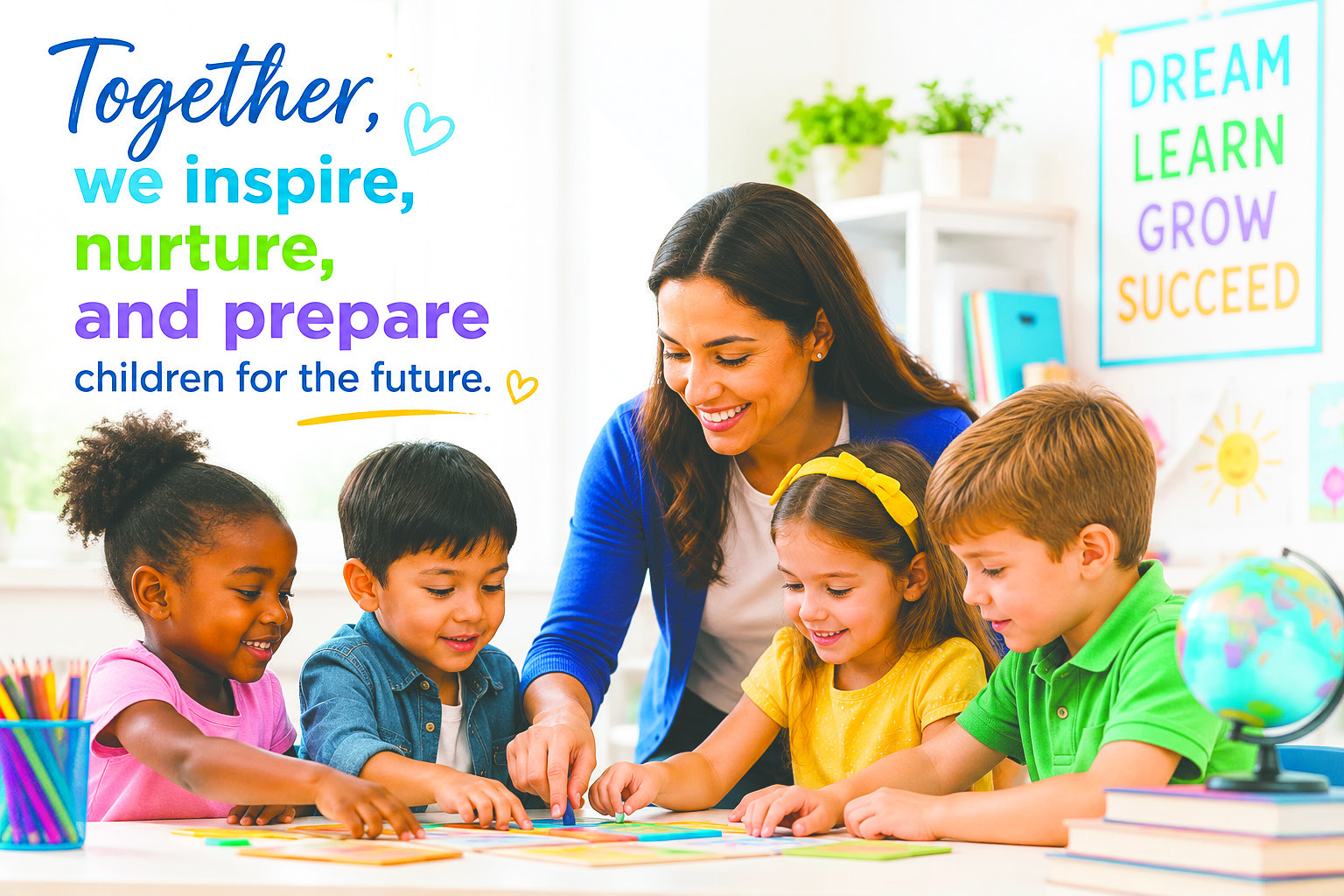
When people think about early childhood education, they often picture what happens inside a classroom: a teacher reading a story, preschoolers learning their letters, toddlers exploring through play, or children sitting together at a table creating an art project.
Those moments are at the heart of early childhood education. But after many years of working with young children, families, and educators, I have learned that the quality of what happens inside a classroom depends greatly on the systems we create outside of it.
Through that process, I have been reminded of an important lesson: quality early childhood education is not simply about caring for children while their parents work. It is about building a community around children that helps them learn, develop, communicate, and feel that they belong.
For instance, parents should know more about their child’s day than whether he or she ate lunch, took a nap, or “had a good day.” They should understand what their children are learning and how they can participate.
This is why careful observation and documentation are so important. If we only record what a child did, we may miss the opportunity to understand what the child was trying to tell us.
Young children are still learning self-control, empathy, communication, problem-solving, and how to participate in a group. Those skills do not develop because we tell a child once to “be nice.” They develop through repetition, modeling, guidance, relationships, and time.
Another area that has become increasingly important in our program is collaboration with early intervention professionals.
Some children receive speech therapy, occupational therapy, developmental intervention, or other services. These professionals bring valuable expertise, but they may only spend a limited amount of time with the child each week.
The child’s teachers spend many more hours with that child. That presents an opportunity.
If a speech therapist recommends encouraging certain words or communication strategies, teachers may be able to reinforce those skills during play, meals, outdoor activities, transitions, and conversations with friends. If an occupational therapist recommends an appropriate strategy to support fine-motor development, sensory needs, or participation, that strategy may be incorporated into the child’s regular classroom experiences.
Meaningful inclusion changes the question from “What is wrong with this child?” to “What does this child need from us to be successful?”
Every child develops differently. Some need additional time. Some need additional support. Some communicate differently. Some need us to adjust the environment or the way we teach a skill. Our responsibility is to recognize the individual child while still creating a safe and successful learning environment for everyone.
Quality early childhood programs also depend on quality educators.
Finding and retaining qualified early childhood professionals is one of the greatest challenges facing many programs today. Directors must consider credentials and experience, but we also look for patience, reliability, communication skills, professionalism, and a genuine understanding of young children.
Once we hire someone, our responsibility does not end. Teachers need orientation, expectations, resources, encouragement, feedback, and support. Even a substitute entering a classroom for one day should understand the children’s routines, supervision expectations, meals, transitions, toileting or diapering procedures, and whom to contact when assistance is needed.
Children thrive on consistency. When we support the adults caring for them, we are also supporting the children. Early childhood education is truly a team effort.
This year has also encouraged me to think differently about technology. Early childhood administrators manage enormous amounts of information. We communicate with families, develop policies and forms, organize staff information, research requirements, document incidents, plan programs, support curriculum, and solve new problems almost every day.
Our leadership team has explored the use of digital tools, including artificial intelligence, to help organize ideas, develop drafts, improve communications, create administrative resources, and consider different approaches to problems. I have found these tools valuable, but I have also learned something important: Technology can assist professional judgment. It should never replace it. Artificial intelligence does not know the child sitting in our classroom. It does not replace a teacher’s observations, a parent’s knowledge of their child, a therapist’s expertise, or a director’s responsibility.
Perhaps the most important lesson I have learned is that early childhood leadership is often invisible. Parents may never see the hours spent reviewing policies, checking credentials, developing procedures, planning staffing, coordinating services, or improving forms and communication systems.
But eventually, every one of those decisions reaches a classroom.
Every policy eventually reaches a child.
Every staffing decision affects a classroom.
Every family communication influences a relationship.
Every professionaldevelopment decision influences teaching.
Every inclusion practice affects whether a child feels capable and accepted.
And every administrative system either makes it easier or more difficult for educators to focus on children.
This is why I believe early childhood education deserves to be recognized for what it truly is. It is not simply supervision while parents are at work. It is education, relationships, child development, family partnership, health and safety, early intervention, and community support coming together during some of the most important years of a child’s life.
As early childhood professionals, we will continue learning. We will revise policies, try new strategies, embrace useful technology, listen to families, support teachers, and sometimes realize that something we have always done can be done better.
Our goal should be to create a community where children are safe, families are respected, educators are supported, differences are embraced, and every decision keeps the child at the center.
Hilda Berrios is an Early Childhood Administrator at Alma Mater Lyceum Learning Connections Center in Kissimmee.