
Was just one Democrat and the incumbent Republican running for the State House seat in District 35, which runs from eastern Orange County areas like Bithlo, Avalon Park, Waterford Lakes, Wedgefield and Christmas south to Osceola County from east of St. Cloud to Yeehaw Junction, this race was not on the August primary ballot.
The questions below are based on voter questions and expressed priorities. Each of the candidates within a race were asked the same questions and given the same amount of time to respond. The candidates' answers were fact checked and only edited for space considerations.
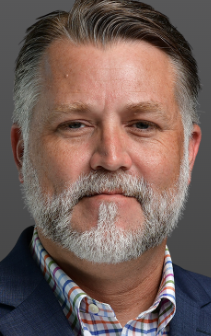 Eric Gray (Democrat challenger)
Age: 50
Occupation: President, Christian Service Center for the Homeless
Residence: Orlando
Political background: First time candidate active with the Orange County Democratic Party.
Why should District 35 voters choose you as a candidate for change?
District 35 voters have an opportunity to elect an experienced former chair of a local chamber of commerce, a voting commissioner on the Orange County Planning & Zoning Commission, and a father of four raising the eighth generation of the Gray family in Florida.
For more than three decades, I’ve led Central Florida organizations serving families facing poverty and homelessness. I’ve seen those struggles up close. I’ve seen parents working full time who still can’t afford to pay the rent. I’ve seen seniors choosing between food and medicine. I’ve seen young people who want to stay here but can’t find work that pays the bills.
This is a time of rising costs, but it is also a dangerous time. We can’t afford to sit back and do nothing. Too many decisions in Tallahassee are hurting working families, undermining our schools, and taking away our freedoms.
My focus is simple: make Florida affordable again and make Florida leaders accountable again. That means tackling housing costs head-on. It means expanding access to health care and investing in public education and good jobs so every neighbor has a fair shot, not just those at the top. Now is the time to protect our freedoms while respecting one another.
In recent years, the Legislature and governor's administration have acted more than 50 times to take away the ability of local governments to make decisions about everything from the use of plastic straws or gas-powered leaf blowers to the height and density of buildings when it comes to certain affordable housing developments. Explain why you support state preemption of cities and counties to govern themselves? Or, if you don't support preemption, please explain why you don't agree with the measures?
Preemption has a legitimate role when Floridians truly need one statewide rule. But too often it has become a way for Tallahassee to take decisions away from the people who live with the consequences. A state law written for Miami, Pensacola, and Orlando alike can ignore the very different needs of each of our over 3,000 municipalities.
When the Legislature blocks counties and cities from addressing housing, wages, public health, environmental protection, or consumer safety, it often leaves local taxpayers to handle the problems without giving them the tools to solve them. It also gives well-connected industries one place to lobby for protection from stronger local rules.
Local government is not perfect, but it is closer to the people. Preemption should be limited to genuine statewide concerns, not to silence local innovation or local democracy.
In the legislature, would you vote to protect local government's efforts to establish rural boundaries to limit development in certain local areas? A rural boundary creates a clear line between land intended for urban growth and land intended to remain rural, agricultural, or environmentally protected.
Manhattan offers a useful illustration, though not a literal rural-boundary model, of how physical limits (like the East and Hudson Rivers) can encourage a community to grow upward rather than simply outward. Density alone does not guarantee affordability. But when a county allows enough homes of different types within areas already served by infrastructure, it can reduce the per-household cost of roads, water, sewer, electricity, transit, and emergency services. It can also make jobs, groceries, healthcare, and other daily needs easier to reach.
Outside the boundary, a county can protect farms, wetlands, wildlife habitat, open space, and the rural character that residents value. That is not just about today’s quality of life; it is about preserving options and green space for our great-grandchildren.
A successful rural boundary needs regular review, transparent exceptions, and a realistic plan for sufficient housing inside it. Done well, it can direct growth responsibly while protecting the land and natural resources that make a community worth calling home.
Do you support expanding the eligible uses of the Tourist Development Tax under state law? If so, how would you allow local governments to use the TDT (i.e., for public infrastructure, transit, affordable housing, public safety)? If not, why not?
I was the lone dissenting vote on the 2023 Orange County TDT Task Force so of course I support diversifying uses of collected taxes on hotel stays.
Tourists take showers too. They flush the toilet, use the roads and buses, sometimes even commit crimes.
According to Visit Orlando and the CFHLA, the Orlando Metro received 77 million tourists in 2025. The average domestic visitor stays for three nights. The average international tourist spends nine nights. This means that on each of our 365 days a year we average an additional 539,000 people sleeping, bathing, driving and more in our community of 2.4 million residents. Of course, collected hotel taxes should focus on defraying the expense of growing our population by 22% every day. Where the money should be spent is the decision of elected officials in the county where funds are collected and should be left entirely up to them. Personally, I would advise that all 67 counties employ an independent economic analyst from outside Florida to evaluate any options for investment proposed whether they be for Public Transit, Workforce Housing, an Aquarium or even expansion of the Convention Center. Whichever potential investment has the greatest Resident return on investment is where money should be spent.
Florida is currently fifth in the nation for measles cases because of declining vaccination rates among children. The Florida surgeon general recently introduced a new rule that would allow parents to opt out. It eliminates vaccine mandates that aren’t required by law and allows parents to opt out of four vaccines (Hib, Hepatitis B, chickenpox and pneumococcus) for “moral and ethical reasons”; and opt out of the tracking database. Herd immunity requires 92-95 percent community vaccination rates to keep dangerous diseases under control. Where do you stand on maintaining vaccine mandates for public/private school entry? Do you believe that vaccines cause autism? Do you believe that the number of vaccinations a newborn/infant receives is a contributor to autism?
I believe strongly in maintaining vaccine mandates for public & private school enrollment. I do not believe that vaccines cause autism, but my opinion on the matter is irrelevant. ALL research for decades confirms that vaccines do not have any relationship to autism spectrum disorder. I do not believe that the number of vaccinations a newborn, infant or toddler receives is a contributor to autism. I personally chose to space out vaccinations for my children across a couple of weeks rather than all at once. This decision was not based on science, just my discomfort in giving my infant or toddler children too much at one time. No evidence supports my decision to do this, but in doing so I did not put any other children at risk. The policies being discussed around the country and within Florida aren't just uncomfortable, they are DANGEROUS and no one gets to put my children at risk. No one.
What specific actions will you take regarding the findings from the grand jury report on the Hope Florida controversy, and will you pursue the recovery of disputed funds?
The use of public dollars to promote or oppose a state constitutional amendment is the kind of state propaganda seen only in third-world dictatorships. Taking funds from a children’s health insurance program to finance that propaganda is disgusting.
The governor and other officials involved have denied wrongdoing, but, in my opinion, the available evidence points most strongly to Florida Attorney General James Uthmeier as the ringleader. A court of law will need to decide what the evidence establishes.
The report raises questions about settlement oversight, nonprofit governance, and the separation of public funds from political activity. Next steps should include legislative hearings, a forensic audit, review by investigative authorities, and statutory changes governing how settlement proceeds are deposited, disclosed, and spent. I agree with the grand jury’s recommendation that state-received funds go through the General Revenue process, where lawmakers can review their use.
What will you do to protect voting rights and election integrity?
The biggest threat to voting rights are false claims of failures in election integrity. Claims of election misconduct should be evaluated through evidence and established legal procedures, not by the volume of political rhetoric. Florida law already includes several safeguards, including public manual audits of a randomly selected contest and automatic recounts when margins meet statutory thresholds. Florida Statutes §101.591
The same system can be evaluated with two goals in view: accurate administration and practical access for eligible voters. Voter-list maintenance can include eligibility verification, written notice, and an opportunity to respond before removal, as Florida law requires in specified circumstances. Florida Statutes §98.065
Election processes can also be made more transparent through publicly available audit results, documented chain of custody, cybersecurity protections, and lawful observation of ballot handling and canvassing. Florida provides early voting, vote-by-mail, and an official ballot-status lookup; procedures for correcting certain vote-by-mail ballot issues are also set in state law. Florida Division of Elections
A sound standard is straightforward: claims should be tested against records, audits, recounts, investigations, and court review.
According to a University of North Florida poll, Floridians say housing affordability is their top issue. What are your solutions for dealing with Florida’s affordability issue?
Florida families are doing the math at the kitchen table, and too often the numbers just do not work. A paycheck that once covered the basics is being stretched in every direction: housing, insurance, food, transportation, and the monthly utility bill. A steady job ought to be enough to keep a family housed, but for too many Floridians, it is not.
That is why I put forward my HOUSE BUILDERS plan: a practical, statewide effort to make it easier to build and keep homes working people can afford. We need more starter homes, townhomes, duplexes, and apartments near jobs and transportation, not just luxury development. We should make sensible use of vacant buildings and public land, allow more flexibility in local zoning when communities choose it, and cut needless delays that add cost without protecting anyone.
But building homes is only part of the answer. We must help people stay in the homes they already have through eviction prevention, rental assistance during a short-term crisis, stronger tenant protections, and real property-insurance reform. We also need fair infrastructure rules, so the cost of growth is not simply passed along to current homeowners and renters.
Florida should be a place where teachers, nurses, service workers, first responders, and young families can afford to live in the communities they serve.
Please vote yes or no on the constitutional amendment to slash property taxes and explain your position: No.
I understand why people are frustrated. Insurance is up, groceries are up, and many Florida homeowners are doing everything right but still feel like they are falling behind. Property-tax relief can be part of the answer.
But this amendment is not a careful plan for relief. It is fiscal whiplash. This amendment cuts billions from the local services we rely on every day, including police and fire protection, roads, drainage, parks, water infrastructure, and planning, without identifying how those services will be paid for instead. That means higher fees, reduced services, or costs passed along to renters, consumers, and small businesses.
Florida should provide targeted, responsible tax relief to families who need it. But we should not solve one affordability problem by creating a bigger one for the same working families and communities.
Utility costs are rising for customers in Florida, and the proliferation of data centers is expected to exacerbate that issue. How should Florida’s utility regulators respond?
What do you think is the biggest environmental issue the government should address in Florida? Florida’s utility regulators should start with a simple principle: the load should pay for the load.
Consider the scale. The proposed seven-million-square-foot data center near Yeehaw Junction has been estimated at roughly 700 megawatts of demand, although no official power requirement has yet been publicly established. That is roughly the generating capacity of an entire power plant like Osceola County’s Cane Island Power Park. Its potential water demand, depending heavily on the cooling technology used, could also reach several million gallons per day, approaching the scale of St. Cloud’s municipal water use.
When one customer requires infrastructure on that scale, Florida families shouldn’t be asked to subsidize it.
The Public Service Commission should require large-load customers to pay the incremental costs of new generation and transmission, sign long-term contracts, and guarantee minimum payments so taxpayers and existing ratepayers aren’t stuck with stranded costs if projects disappear. Florida has already begun moving in this direction with FPL’s large-load tariffs.
What is the single biggest issue the government should address when it comes to public education in Florida?
To me, the biggest issue in Florida education is straightforward: when we spend public money, we ought to know whether it is helping children learn.
I understand why parents want options. Every child is different, and no school is the right fit for every family. But public schools are still the place that must be ready for everyone: children with disabilities, students learning English, families moving from place to place, and kids who need extra help.
I think about it the way I think about a fire department. It has to answer every call, especially the difficult ones. You cannot take away its firefighters and equipment, then still expect it to handle every emergency better than before.
If a school receives public dollars, parents and taxpayers should be able to see how its students are doing. And if that school cannot meet a child’s needs, it should help that family find and afford an appropriate alternative.
Choice matters. Accountability does too.
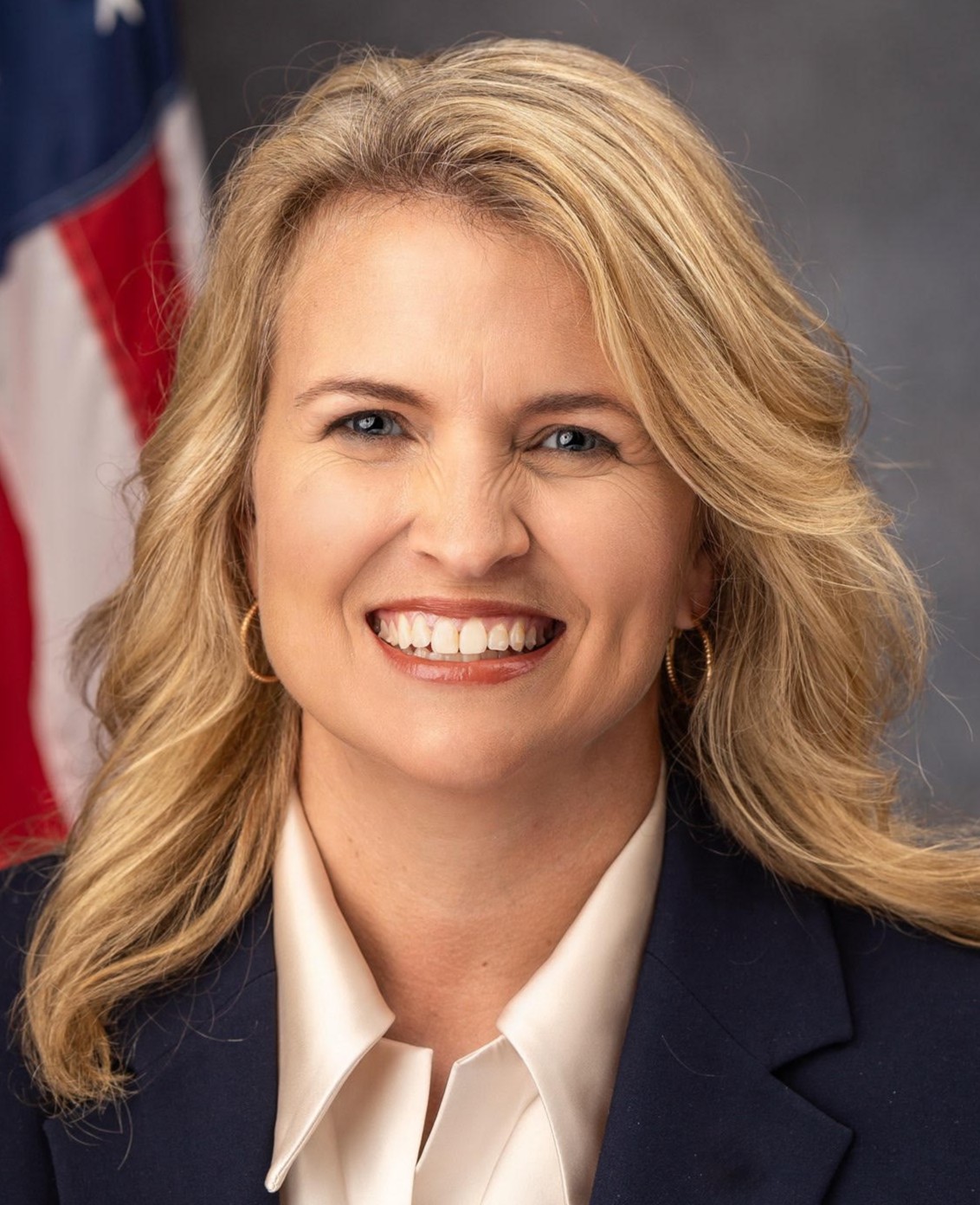 Erica Booth (Republican incumbent)
Age: 48
Occupation: Public school classroom teacher — 20 years in Orange and Osceola County classrooms
Residence: St. Cloud
Political background: Osceola County School Board, November 2022 – January 2024. Florida House of Representatives, District 35, elected 2024
Why should District 35 voters elect you to another term?
I listen, and then I go do the work.
Three of my bills were signed into law in my first session: firefighter health and safety, newborn screening for Duchenne muscular dystrophy, and human trafficking awareness training in Florida schools. All three passed unanimously. I also wrote and passed three local bills for Orange and Osceola County, every one of them unanimous in both chambers.
I lose some too, and I'll tell you about one. A Democrat senator and I each filed a $15 million request to fix Wedgefield's failing water and sewer system. The Legislature cut it to $7.5 million. The Governor vetoed it. I will keep working with residents for a solution.
In recent years, the Legislature and the Governor's administration have acted more than 50 times to take away the ability of local governments to make decisions about everything from plastic straws and leaf blowers to the height and density of certain affordable housing developments. Explain why you support state preemption of cities and counties to govern themselves — or, if you don't support preemption, explain why you disagree with the measures.
Ask my constituents about local control and they talk about what growth their County Commission approved. Here's the cycle they're living in. The county approves the subdivision. Nobody makes the growth pay for the roads, the schools, or the drainage it requires. Then the shortfall shows up as a new local tax or fee stacked right on top of the state taxes you already paid. Approve, under-build, then bill you. I'm less interested in who holds the power than in who's actually using it, and how. Growth should pay for growth: roads, schools, and drainage in the ground before the rooftops go up. And no local government should be adding another layer of taxes on top of what you already sent to Tallahassee.
On preemption itself, my test is simple. Where it protects somebody's rights, I'm for it. Where it only protects a developer from a public hearing, I'm against it.
In the Legislature, would you vote to protect local government's efforts to establish rural boundaries to limit development in certain local areas? Yes.
Orange County voters wrote a rural boundary into their own charter with 73% of the vote. When three out of four of your neighbors agree on something that specific, Tallahassee's job is to protect it and not to go looking for a way around it. Christmas, Bithlo and Wedgefield were here a long time before the subdivisions were. I'll vote to protect that line, and I'll oppose bills that quietly erase it from four hours away.
Do you support expanding the eligible uses of the Tourist Development Tax under state law? If so, how would you allow local governments to use the TDT — for public infrastructure, transit, affordable housing, public safety? If not, why not? No, not into general revenue.
Tourism is Central Florida's economy, and it isn't just theme parks. It's the hotels, the restaurants, the people who clean the rooms and cook the food. Visitors pay this tax on the promise that it comes back to the region absorbing them. There is legitimate room for the infrastructure visitors and residents use in common like roads, transit that connects workers to job centers, and the public safety costs that tourism itself creates. Those are tourism costs and I can defend spending tourism dollars on them.
I won't support turning the TDT into general fund dollars. That isn't reform. It's a tax increase with a nicer name, and it lands on the industry that pays hundreds of thousands of our neighbors.
Florida is currently fifth in the nation for measles cases because of declining vaccination rates. Where do you stand on maintaining vaccine mandates for public and private school entry? Do you believe that vaccines cause autism? Do you believe the number of vaccinations a newborn or infant receives is a contributor to autism? No.
I spent 20 years in classrooms and I have no interest in a measles outbreak in one of them. On school entry I support keeping the requirements that are established in law and backed by long-standing scientific consensus. Florida already provides religious and medical exemptions, and I'd keep them. What I won't do is broaden exemptions to the point that community immunity fails, because the child who pays for that is usually the one who couldn't be vaccinated in the first place, for a medical reason, and is sitting in the same room.
What specific actions will you take regarding the findings from the grand jury report on the Hope Florida controversy, and will you pursue the recovery of disputed funds?
On the findings: if a grand jury concludes that money from a state settlement went somewhere the Legislature never authorized, that's a problem regardless of who did it. Finish the inquiry, publish what it found, and put the guardrails in statute. Settlement dollars should go where the settlement says they go, with a public accounting on the front end instead of a grand jury on the back end.
On recovery: yes. If funds were misdirected, they should be recovered and returned to the purpose they were owed to, and I'd vote for it. Accountability shouldn't be applied selectively.
What will you do to protect voting rights and election integrity?
Easy to vote, impossible to cheat. That means voter rolls maintained accurately and on a schedule rather than in a panic, results reported quickly, real penalties for fraud, and one clear statewide standard so a ballot isn't handled one way in Osceola County and a different way in Orange.
According to a University of North Florida poll, Floridians say housing affordability is their top issue. What are your solutions for dealing with Florida's affordability issue?
Start with the bill that's actually breaking household budgets, which is insurance. Florida has had an excess profit law on the books since 1977. When an auto insurer or a commercial property insurer takes a profit the state calls excessive, that money goes back to policyholders. It covers your car. It covers a strip mall. It does not cover your house. That's the fix.
This year I voted for HB 1399. It passed the Florida House 106 to 3, then died in a Senate committee without ever reaching the floor. I'll carry that fight back in January.
After insurance, I would say growth has to pay for growth. Roads, schools, and drainage in the ground before the subdivision is approved and not promised for some future budget year. We are not going to permit our way out of an affordability problem while the same streets flood every summer.
Please vote yes or no on the constitutional amendment to slash property taxes, and explain your position. Yes.
And here's the honest objection, this comes off the top of county budgets, and county budgets pay deputies and firefighters. I'm endorsed by the Fraternal Order of Police, the Police Benevolent Association, Florida's Professional Firefighters, and Osceola County Sheriff Chris Blackmon. I would not ask anyone to vote for this if I believed it defunded them, and I intend to be in the room when the implementing bill is written. Amendment 3 protects homesteads and the people who live here at a time when insurance, utility, and housing costs are all rising. My vote put it on the ballot. Yours will decide it.
Utility costs are rising for customers in Florida, and the proliferation of data centers is expected to exacerbate that issue. How should Florida's utility regulators respond?
A large share of my constituents are served by OUC and the Kissimmee Utility Authority, which are municipal utilities. The Public Service Commission doesn't set their base rates. Their own boards do. So part of this answer is Tallahassee and part of it is city hall. Where the state does have a say, the rule is the same one I apply to housing which is growth pays for growth. A data center that requires new generation and new transmission pays for that generation and transmission. It does not belong in a retiree's monthly bill in St. Cloud. Put it in the interconnection agreement, in writing, before a shovel moves.
Decisions stay local. Moratoriums, land use permits, noise, truck traffic, and the water these facilities use for cooling are exactly what the people living next door should get to weigh through the commission they elect.
What do you think is the biggest environmental issue the government should address in Florida?
Water, and specifically, where it goes when it rains. Orange County has identified roughly a billion dollars in unfunded drainage and water-quality work against about $11 million a year in current spending. Meanwhile we keep approving subdivisions that pave over the ground that used to absorb the water, and then act surprised when the street floods.
In this district that isn't an abstract environmental issue. It's property damage, and it's the same failure underneath nutrient pollution, aging wastewater systems, and stormwater runoff; and that’s the infrastructure that never kept pace with growth.
What is the single biggest issue the government should address when it comes to public education in Florida?
Teacher recruitment and retention, and I say that as someone who did the job for 20 years in Orange and Osceola public school classrooms.
We don't have enough qualified teachers in front of students, and nearly every other education argument in this state is downstream of that one. Fixing it means competitive pay. It also means the things nobody puts in a press release: fewer required data platforms, fewer duplicate reports, planning periods actually used for planning, and buildings that are safe.