

It’s a heart-stopping moment no family should go through: a family member with a cognitive impairment — commonly elderly residents and children or adults with disabilities — goes missing.
Police are notified, and they put the call out to the community to help find this family member. Often they are found in a matter of hours. Sometimes … they’re not.
The Osceola County Sheriff’s Office hopes to eliminate the latter and cut down the search for those missing persons to 30 minutes through a partnership with the Project Lifesaver program.
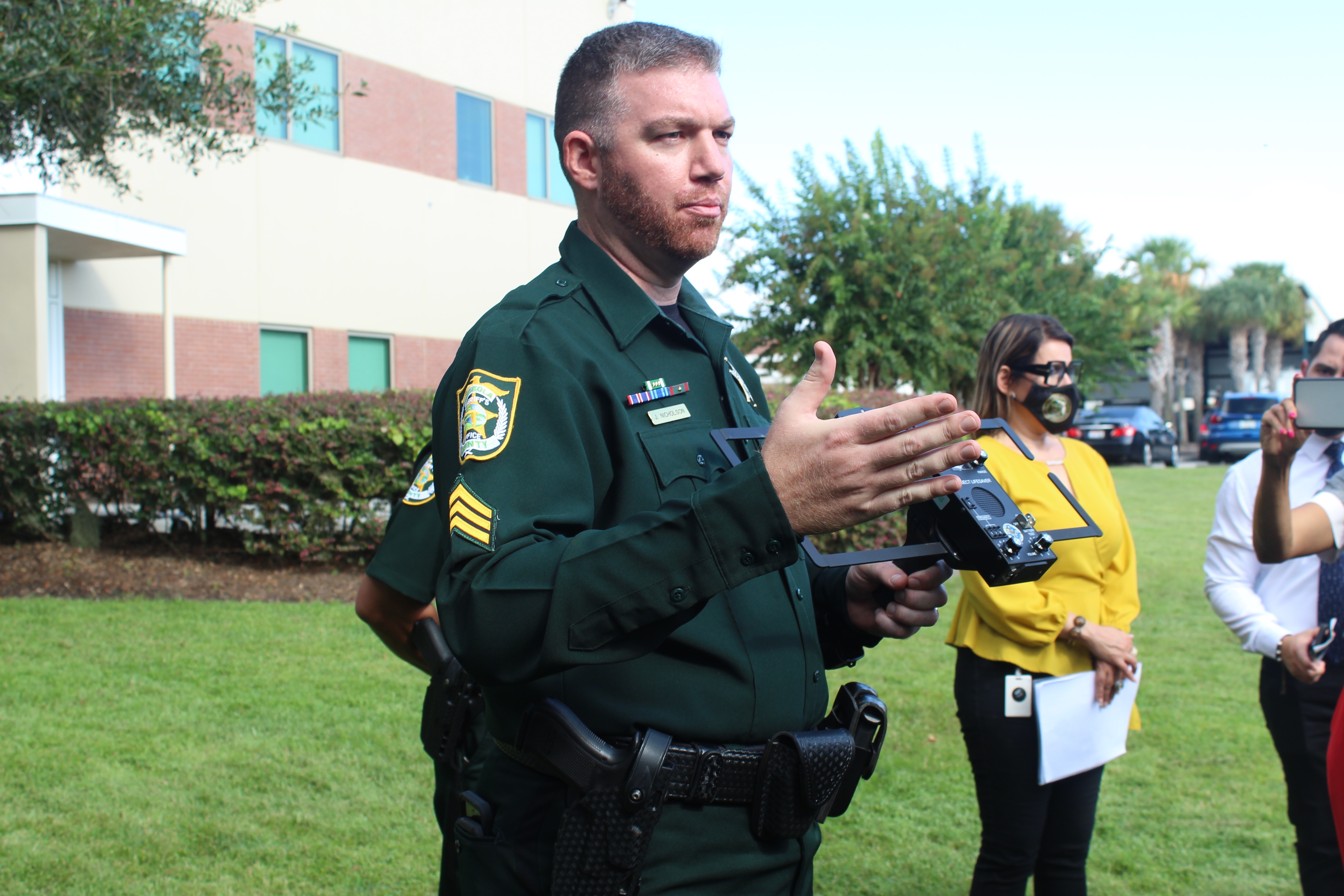
Sheriff Marco Lopez and his staff showed off the program, which already has about 35 clients, Wednesday.
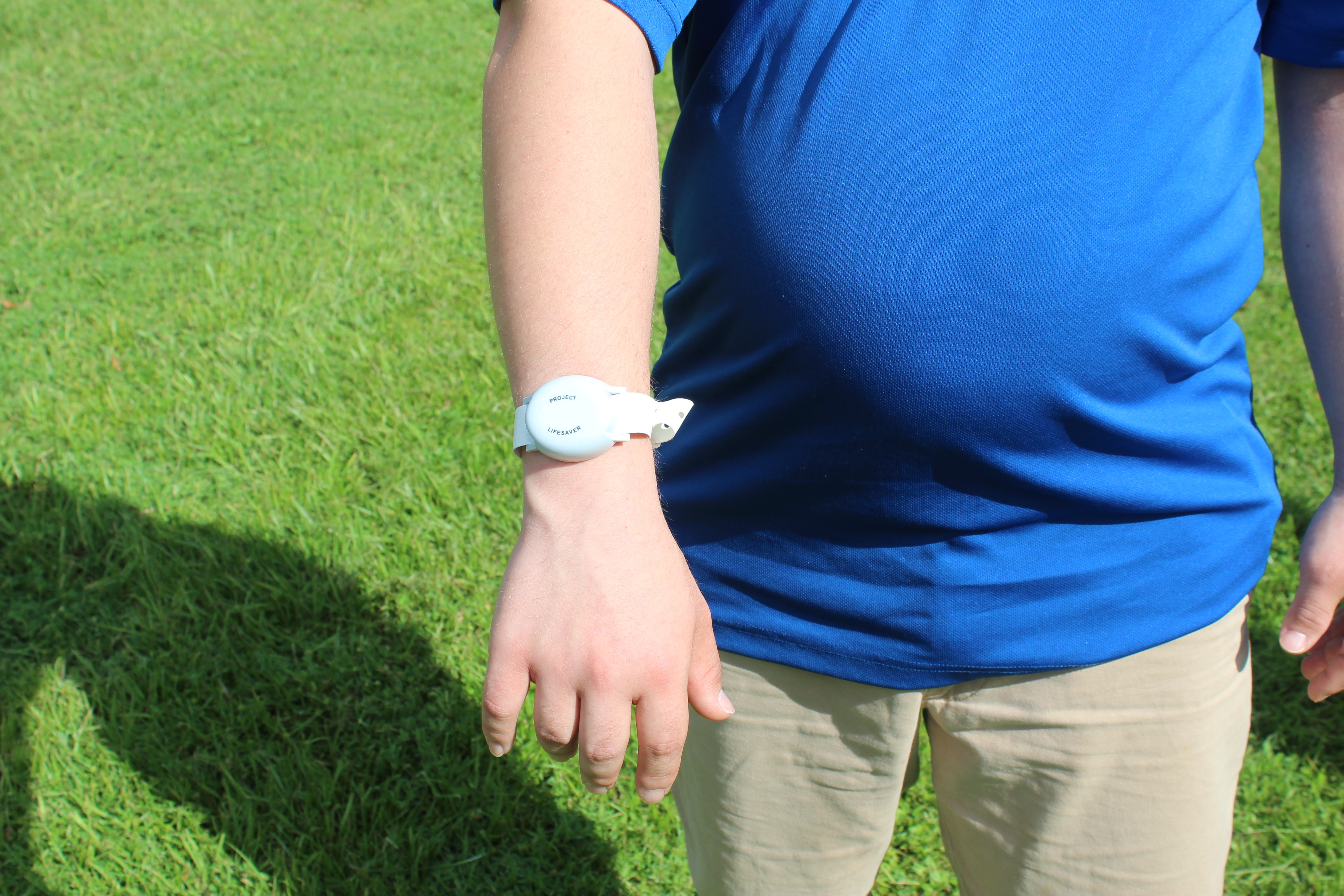
Enrollees in Project Lifesaver wear a waterproof personal transmitter around their wrist or ankle, about the size of a smart watch, which emits an individualized tracking signal. The batteries need replacing every 60-90 days.
Should they go missing, trained search specialists respond to the wanderer’s area and use signal technology to find the person easier. The signal has about a quarter-mile range on the ground and up to a mile in the air.
OCSO partnered with the non-profit Project Lifesaver International to provide the necessary equipment, including an aerial unit used in the Sheriff’s helicopter. Best of all, the program is currently free thanks to a three-year Department of Justice grant.
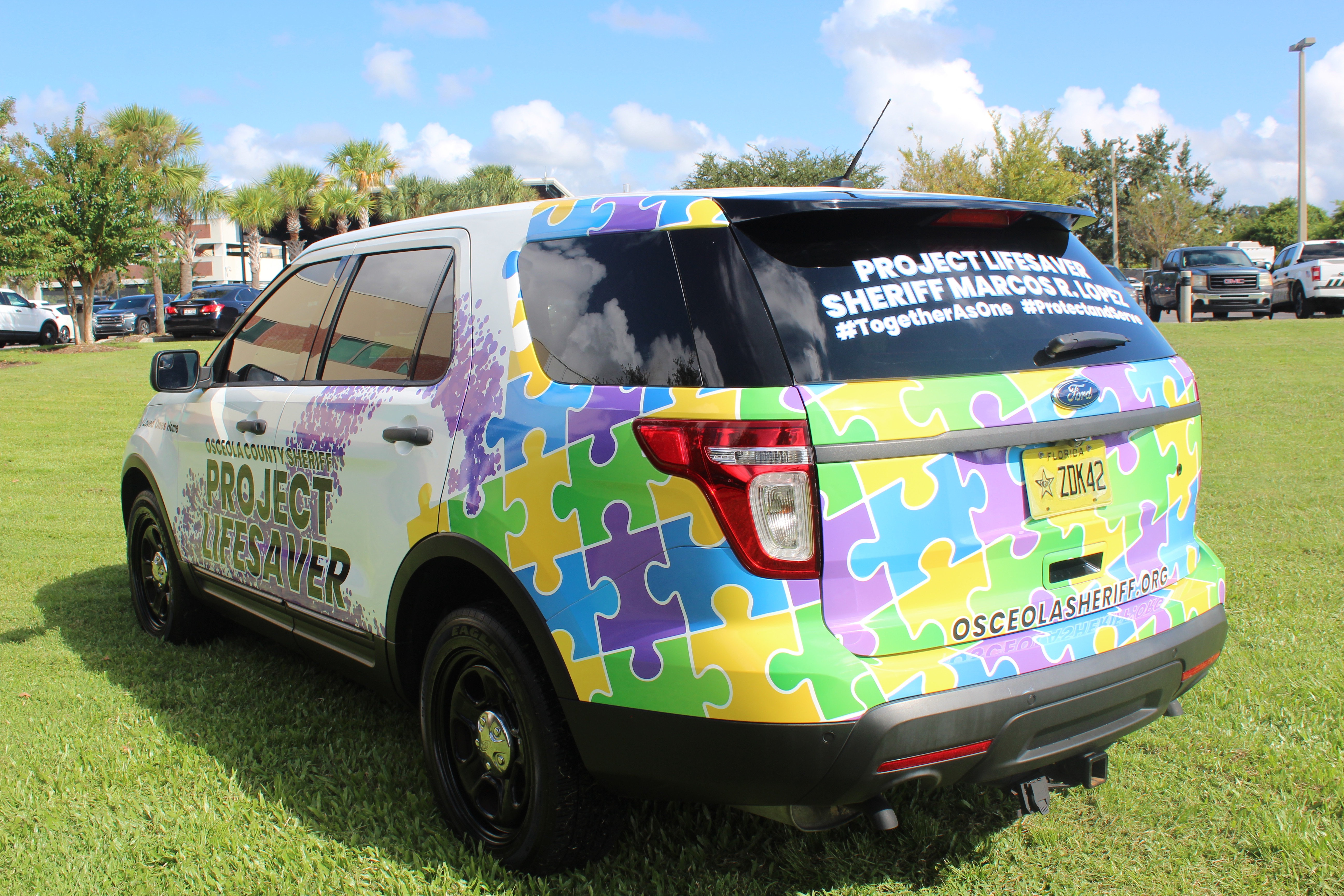
OCSO has a dedicated staffer to sign up clients and maintain the program, and it created a Sheriff’s cruiser loaded up with Project Lifesaver equipment to specialize in these services.
“We hope this helps us save lives, and cut down rescue times; the average rescue time using Project Lifesaver is about 30 minutes,” Sheriff Marcos Lopez said. “In the past it’s taken hours or sometimes days. That saves taxpayer money, as it reduces lengthy search times and personnel coverage. And, in the end, it could mean the difference between life and death.”
Sally Hale’s 21-year-old son has Down Syndrome and is enrolled, and feels safer knowing he can be tracked.
“One of his friends missed the bus one morning and wandered off and it took hours to find him,” Hale said. “This gives me peace of mind for no cost, and it teaches him that police are there to help if something happens.”
Those who wish to enroll loved ones can find information at www.osceolasheriff.org/project-lifesaver. Applicants must be Osceola County residents, have been diagnosed with a cognitive impairment or condition (such as Alzheimer’s, dementia, autism, Down Syndrome, or a traumatic brain injury), show history of behavior that could lead to wandering, be under 24/7 supervision and must not operate a motor vehicle.