

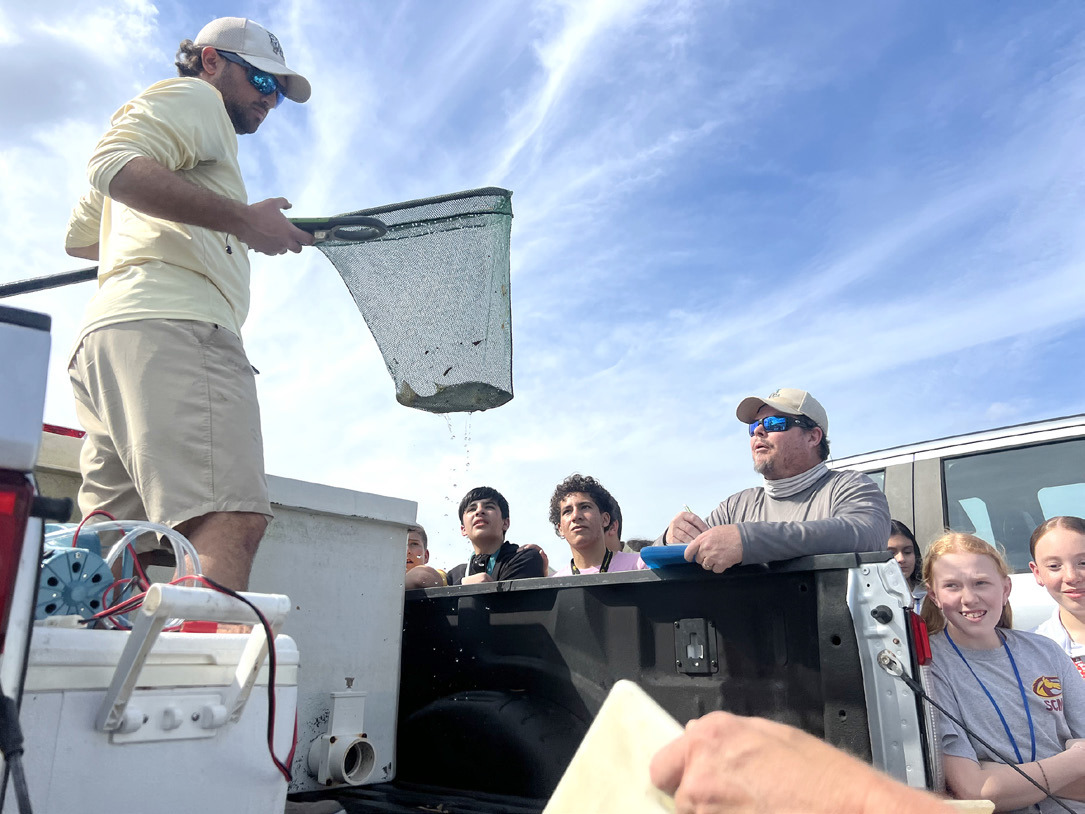
Anglers in John Prow’s STEM fishing class are diving deep into scientific research in conjunction with the Florida Fish and Wildlife Conservation Commission.
The St. Cloud Middle School students in the program will be collecting and submitting data from their catches to FWC for an ongoing project.
“This is a legit project, not some fun thing,” said FWC biologist Marty Mann. “It’s actually data that will be collected, and if enough of it is collected and we get some results out of it, it may even be published someday in the scientific literature.”
The question addressed in the study, Mann said, is whether uneducated fish — fish that have never been exposed to anglers, lures and the like — are more likely to be caught than educated fish – fish that have been fished and have learned over time what is real and what is not.
FWC researchers needed a specific environment for the study: a pond that is fished regularly only by a controlled number of people. That’s where Prow’s class came in. Since the school pond is only accessible to Prow’s class, the research can’t be compromised. Through electrofishing, FWC employees gathered 15 educated fish from Lake Toho and 15 uneducated fish from a strictly off-limit pond at Orlando International Airport. Microwire tags were inserted into the fish, and they were relocated into the SCMS pond.
Prow’s class will use a wand from FWC to scan each fish the class catches and will send the information back to researchers: whether it registers as an uneducated fish, an educated fish, or one of the untagged fish already present in the school’s pond.
“The students are thrilled to be a part of the study,” Prow said. “They were excited about FWC stocking more fish in the pond to begin with. The fact that we get to scan and track the fish we are catching has only added to the motivation to catch fish each time we go out!”
The information gathered from the study will be valuable when FWC stocks ponds for fishing events, as FWC wants to ensure that anglers are successful at those events.
“These urban fisheries are usually people who are not diehard anglers,” Mann said. “They are very busy in their own lives. They may not have even fished ever before in their life, and if they have, it’s probably pretty infrequent. So when they do go fishing, we want to make sure that they have the best chance of success, and that will breed future participation. If we can provide an excellent opportunity where you’re likely to be successful, that may breed future use, and that’s important to us.
“We want anglers for life, because they will buy a fishing license in the future. That’s money that we get, to be able to do the work that we do. So the more anglers you can get involved, the more money is involved, and that allows us to do more.”