

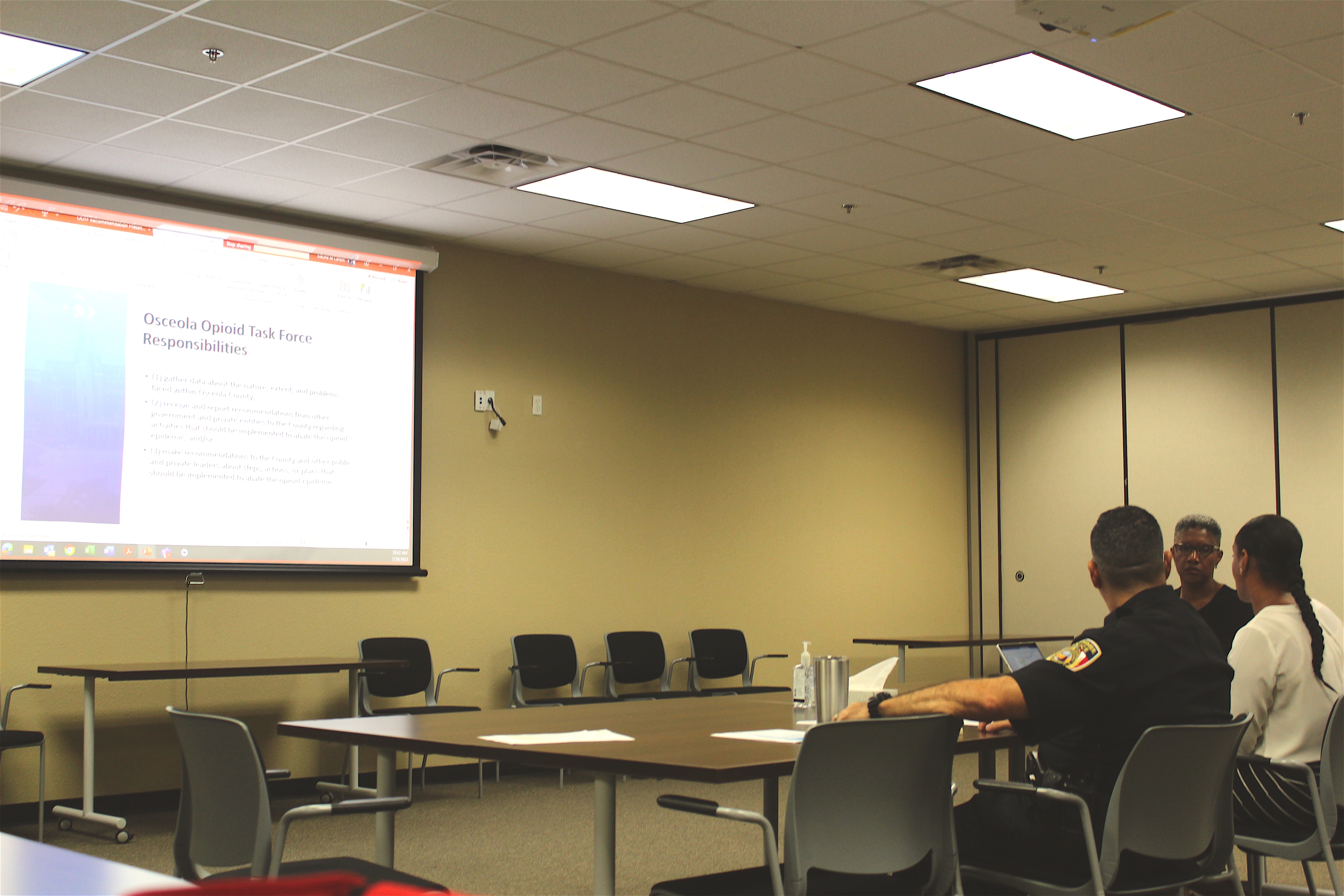
Local representatives from departments like Osceola’s Health Department, Housing and Community Services, mental health providers, corrections and law enforcement met Monday to present strategies and recommendations for how to implement an eight-figure settlement from drug companies and distributors.
The Osceola Opioid Task Force (OOTF) will present the final recommendations to the Osceola County Commission at next week’s meeting. The task force’s presentation will give those recommendations, to accomplish a number of strategies, for how to use over $12 million that will be collected over about 18 years to try and curb the opioid epidemic the courts say major drug manufacturers and distributors contributed to. The county will have access to about $2.5 million of it over the next two years.
That money came from a $3 billion state settlement with the drug companies associated with the opioid epidemic. In February 2018, Osceola became the first municipality in Florida to seek compensation coming from that finding.
“These recommendations came from a list of those that were mandated by the state,” said Vianca McCluskey, the director of the Florida Department of Health in Osceola County, and the chairperson of the task force.
Monday, task force members and local stakeholders met to pin down the bullet points to present to commissioners in order to best use the lawsuit funds to help those who most and best need it. For example, representatives from Park Place Behavioral Health care asked for focus to be on all age groups.
“We’re concerned about gap coverage for adults,” said Natalie Mullett, Park Place’s Director of Business Development. “Medicaid does not cover detox services.”
The strategies the task force highlighted Monday included providing increased access to naxalone, also known as Narcan, a real-time treatment in those experiencing overdose to fentanyl and other drugs. Providing medication and treatment for pregnant and post-partum women and the incarcerated, increased access to mental and behavioral health services for youth, and creating prevention programs that include media and in-school campaigns are also on the list.
Some of the recommendations that made their way into the task force’s presentation are expanding adolescent detox programs, recovery housing access and peer support for past and present users, funding access for transportation to programs and creating a community antidrug coalition that engages drug prevention efforts.
The County Commission will meet in its chambers on Monday at 1:30 p.m.