

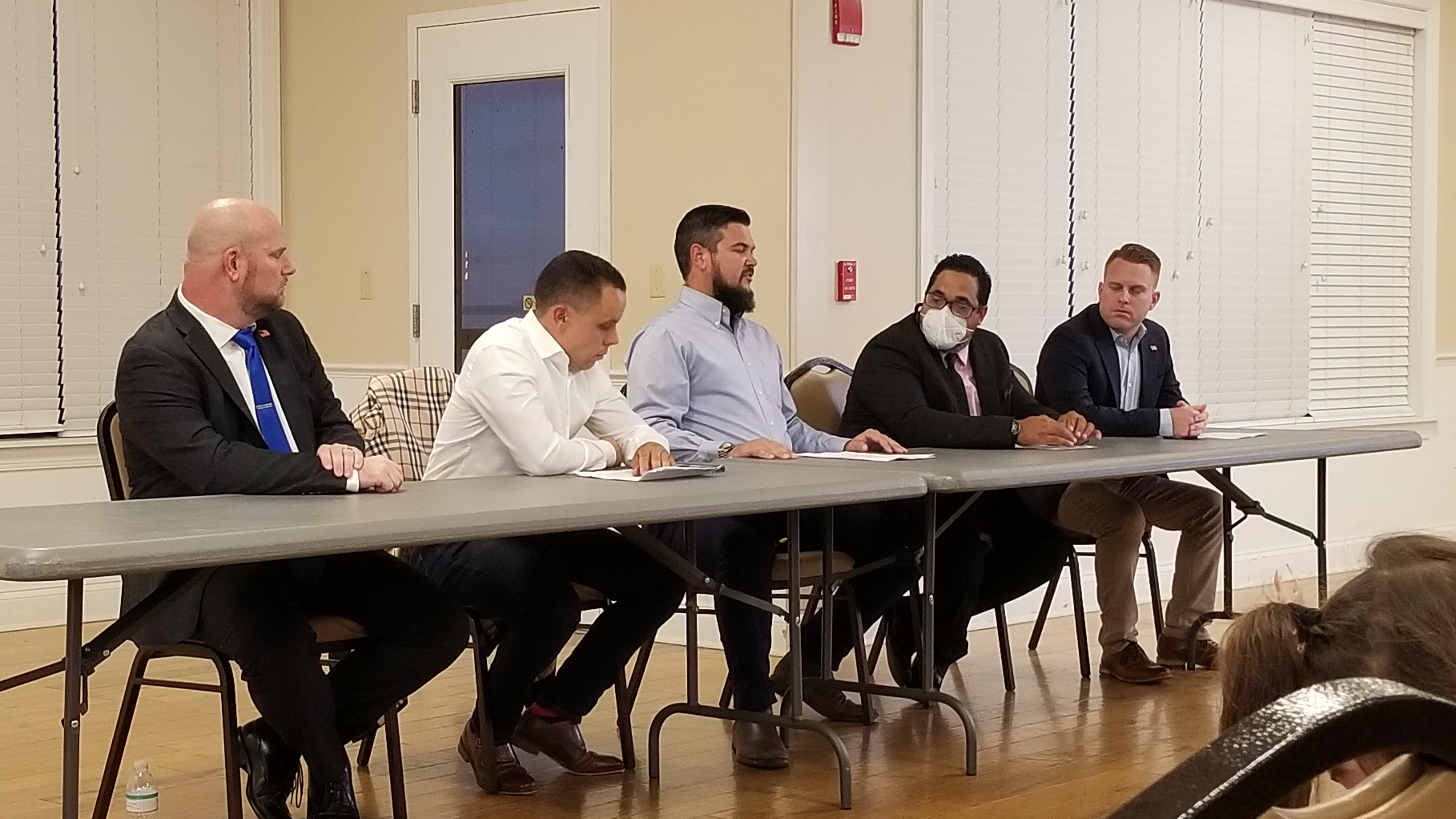
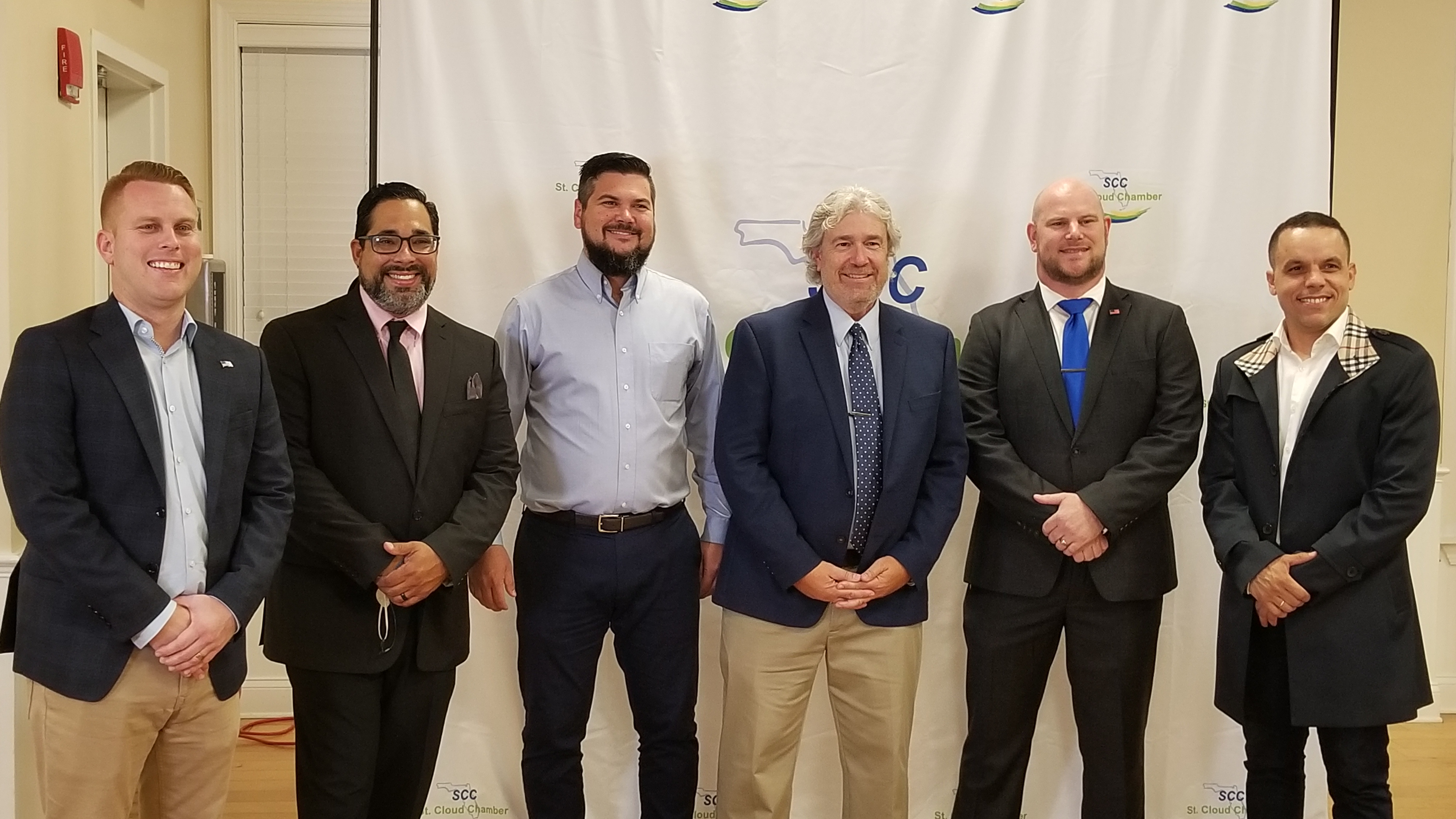
With polls opening for early voting in a special City Council election Sept. 25 and thousands of mail-out ballots sent by the Supervisor of Elections, the St. Cloud Chamber of Commerce gave residents a chance to meet and hear from the five candidates running to fill deceased Chuck Cooper’s Seat 3 in an Oct. 5 special election.
The public heard from Phil Lantry, Jose Martinez, Daniel Minckler, Victor Rivera and Kolby Urban regarding some of the city’s most pressing issues, like its ongoing water quality and how to best manage its growth.
Here is a synopsis of the candidates’ answers to the questions provided by the St. Cloud Chamber.
Their background in St. Cloud:
Lantry: A lifetime resident, back to days when the city had 10,000 people, now it has 40,000, so there’s a strong stake in this town. Changes have happened “that I haven’t liked,” so this is an opportunity to use his experience in tackling issues like sprawl and urban planning. Martinez: A businessman who’s spent 20 years “on the sideline, now I want to step up,” and use business sense instead of politics to participate in the city’s many changes. Minckler: A six-year resident with the experience of serving on the Kingsland, Ga., City Council, which he says would help with his learning curve. Rivera: A longtime small business owner, he’s running from a pure need to help people and raise security and safety, especially for the vulnerable like children, the elderly and veterans. Urban: A lifelong resident who has stayed because “it’s a special place.
Why they’re running:
Lantry: Wants to represent residents like himself, and that Seat 3 should be “a seat for the people.” Martinez: A pure intent to give back, in the legacy of Cooper. Minckler: As a downtown resident, this is an outlet to get involved and use his prior government experience. Rivera: A professional public adjustor, he wants to help people in the same government way as in his professional role. Urban: Wants to prioritize public safety, limited but responsible growth, increase higher-wage jobs and provide reasonably-priced clean water.
On a proposed Toho Water takeover of the city’s water system:
Lantry: Wants to know what that would mean to current city utility employees. Martinez: The city should take responsibility for its water quality issues rather than transfer to TWA. Minckler: The city must receive tangible numbers for customer savings before a decision is made. Rivera: Give another outfit like TWA an opportunity to fix the water issues. Urban: Not enough details have been provided yet, and that must be resolved before deciding.
How businesses should respond to growth:
Lantry: Integrate mixed-use properties as a tool the attract business owners to live and play, not just work, in the city. Martinez: St. Cloud should compliment what’s in Lake Nona, Orange County and other surroundings instead of competing with them. Minckler: Stop positioning the city as an affordable alternative to Lake Nona by fostering and promoting commercial growth. Rivera: Focus on helping city’s established businesses to grow and thrive. Urban: Incentivize commercial growth and do what the city can to make it a 50/50 split between commercial and residential growth.
What are the city’s economic advantages/disadvantages?
Lantry: Locations and space to grow/lack of recent responsible growth. Martinez: Strategic regional location/lack of marketing city as commercially friendly. Minckler: A supply of space/the way it’s been used. Rivera: The space to grow/Being a town resistant to change. Urban: Regional location/open land has been recently been solely used for residential growth.
How the city can support the business community:
Lantry: Expand on and incentivize the revitalization efforts taken in downtown. Martinez: Make the business permitting process easier and more streamlined. Minckler: Design city-specific zoning codes to be a leader in what a vibrant business scene should look like. Rivera: Embrace innovation to keep existing businesses thriving. Urban: By using his place on city’s Economic Advisory committee, will make sure city provides tools for successful businesses.
How to best balance residential and commercial bases:
Lantry: The city can be a catalyst in how a city should be integrated by using its parts better. Martinez: Create better zoning plans to plan for next 10-20 years, which change city’s reputation as a bedroom community. Minckler: Evaluate land development codes for future annexations that support the tax base; the city can be a leader in what that looks like. Rivera: Open up opportunities for school-age children to get high-wage job training. Urban: Incentivize commercial activity, and de-incentivize residential growth.