

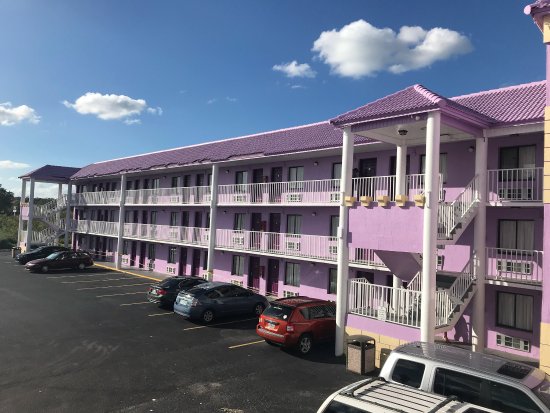
With a moratorium ending last week, County Commissioners approved the first reading of an ordinance that sets standards for future conversion of older hotels, predominately those along the U.S. 192 corridor, into muchneeded low-income apartment housing.
County staff will work to further refine the ordinance ahead of its second reading and potential adoption Monday.
The ordinance, which lays out the conditions, can be found here in agenda Item No. 25: https://docs.osceola.org/ onbaseagendaonline/meetings/ viewmeeting?id=785&doc Type=1
The intent, commissioners said, is to provide housing that isn’t merely a dressed-up hotel room. Rather, they should be upgraded to “standard multifamily residential living standards” that include full kitchens (sink, refrigerator, stove or oven) and their own electric and water meters that ensure residents won’t lose utility service if the property manager fails to pay for services.
Other parts of the ordinance deal with façade requirements, open space minimums, school bus stops off the right-of-way, requiring residential buildings of at least two stories, and a ban on conversions between Vineland Road and State Road 429.
“We want these done appropriately,” said Commissioner Viviana Janer, noting the number of affordable housing units built in the county in recent years.
Commissioner Cheryl Grieb said a balance needs to be struck in the tourism corridor between hotels and apartments — proper ones.
“This ordinance is restrictive, I think we have more work to do.”
Commissioner Peggy Choudhry echoed that, noting the cost can make it difficult to remodel existing buildings.
“I’ve spoken with staff on improving the ordinance,” she said. “These guidelines may be stringent, but we want people proud of where they live.”
Debbie Buxton, whose family owns and runs the Magic Castle Hotel on West 192, said they are “reluctant tenants of hardworking people,” who use their hotel rooms as their more-than-short-term residences.
“These are people who need affordable housing but may be forced into homelessness,” she said.
The new guidelines would mean a cost of $15,000 to $25,000 to revitalize each unit, she said.
In 2013 the County partnered with The Transition House, who received state and federal grants, to retrofit the former Four Winds Motel and open Victory Village featuring unfurnished one, two and three-bedroom units, one of the first such hotel-to-low income apartment transitions. To move in, families were required to meet income and background qualifications.
The meeting came on the heels of a survey by RentCafe, a nationwide apartment listing service, that shows Kissimmee features the sixth-most planned and future apartment conversions, just ahead of Cincinnati, Milwaukee and Buffalo.
The study notes projects scheduled for 2022 alone are set to create 1,312 new housing units, about a quarter from hotel redevelopments.