


Some children have conditions that require a little extra help navigating the public school system.
There is help for them, mandated by the federal government. But, it’s up to teachers, administrators and therapists in local schools to make sure that help is given. Sometimes, those good intentions, as part of an Individualized Education Program (IEP), aren’t carried out.
That’s when a professional can intervene on behalf of the student and their parents.
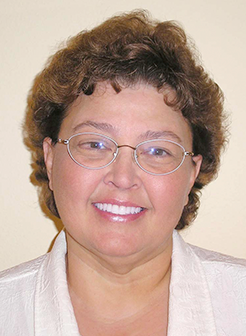
Enter the IEP advocate. Pam Lindemann was a former marketing professional who chose to invest time learning how the educational system assisted her daughter with cerebral palsy.
In 2003, a state agency appointed her to a policy board for early intervention and education, allowing her to become the voice of parents at the state level. In turn, she helped state education leaders understand what parents of children in public schools with special needs struggle with, while making sure those children get the support they need.
In 2009, Pam founded The IEP Advocate, Florida’s first advocate organization of its kind. At the head of the firm, she personally selects and trains the new advocates for her team. Many come from a place of experience, with children who have those special needs.
So, who is an advocate? Lindemann calls them, “Passionate people who can work with the school system to help students and parents achieve goals.”
“Parents can be protective of their children with special needs. Sometimes they get embarrassed to talk about their challenges at school and at home,” she said. “Public school districts have a legal obligation to intervene and identify those children’s needs. It’s the district’s responsibility to write a plan —with the parent’s participation. But, for parents, they can be so lost in this process. There are challenges just in raising a child with special needs. For them, navigating the public school system is an added challenge.”
According to the federal Individuals with Disabilities Education Act (IDEA), public school students who receive special education and related services must have an Individualized Education Program. The word “individualized” is key, as these plans are fully tailored and customized to that student’s needs and deficiencies.
The IEP guides the delivery of special education supports and services for the student with a disability. The guide is designed to help teachers, parents and anyone involved in the education of a child with a disability deliver the services and accommodations to carry out those provisions. Commonly, those added services include specialized physical, occupational or speech therapy.
But, Lindemann said getting those services, or getting all that are prescribed, can be difficult.
“Some schools are making these children somebody else’s problem, instead of intervening at a level they need to in order to help,” she said.
Intervention — that’s where the advocate steps in. After matching data of what services the students have received against what’s called for in their IEPs, the advocate mediates with school administrators, and therapists and psychologists if available, along with the parents, to fix deficiencies. That could mean scheduling extra therapy sessions to make up for what’s missed, or adding other accommodations.
“Parents can ask all the questions they have, school officials share their observations, and the advocate helps them come to an agreement,” Lindemann said. “Those meetings can be very adversarial. It’s unfortunate; we don’t want them to be.
“This is federal law that is blatantly ignored in some cases. In 25 years, this might be the worst I’ve ever seen it. We shouldn’t be needed in the numbers we are.”
Lindemann’s firm handles cases statewide, so to say problems are concentrated in an area like Osceola County would be an overstep. The firm does handle cases in the county, and statistics do show Orange County has high numbers of deficiencies.
“My wish is that parents, when they first see a problem, make the call and talk about their issues. But many wait, or try to just, ‘Get through the (school) year. Issues don’t fix themselves at the end of the year.”